

 Haciyev Reşit
The tokenization of real-world assets (RWA) on blockchain has opened the door to more sustainable and real-economy-based yield models within the DeFi ecosystem. Asset classes such as treasury bonds, private credit instruments, and payment financing which were traditionally accessible mainly through banks and large funds are now investable on-chain through tokenization. This model stands out because it bases returns on actual economic activity rather than speculative gains. One of the notable projects in this space is Nest Credit, which allows users to earn income from tokenized real-world assets in exchange for stablecoin investments. Positioned as the flagship staking protocol of the Plume ecosystem, Nest operates in a permissionless and non-custodial manner, meaning users retain control over their funds while earning on-chain yields. The nAlpha and nOpal vaults offer different risk-return profiles, giving investors alternative strategies.
What is Nest Credit (Nest)?
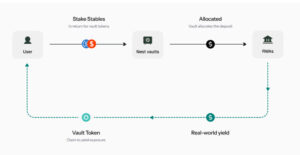
Nest Credit is a permissionless, non-custodial RWA staking protocol developed by Plume. Its primary goal is to bring real-world yields typically reserved for banks, fund managers, and institutional investors—onto the blockchain, enabling individual investors to access on-chain returns derived from off-chain economic activity. Users deposit pUSD into Nest and mint a corresponding vault token (nTOKEN). This nTOKEN represents a proportional share of the vault’s underlying assets. Unlike traditional staking models, yields are not distributed separately; instead, as the net asset value (NAV) of the vault increases, the value per nTOKEN rises. Returns are realized when investors redeem their tokens. Nest aims to create a global, permissionless on-chain economy where everyone can benefit from real-world yields.

How Does the Nest Vault System Work?
Nest vaults are fully on-chain smart contracts with a non-custodial structure, meaning no central entity holds user funds. All operations are transparent, and users retain control over their pUSD and nTOKEN assets.
Process Overview:
- Acquire and Deposit pUSD: Users first acquire Plume’s native stablecoin, pUSD, which is 1:1 backed by USDC reserves and fully on-chain. Depositing pUSD into a Nest vault initiates the yield process.
- Mint nTOKEN: Upon deposit, the system automatically mints an ERC-20 vault receipt token (nTOKEN), representing the user’s share in the vault. Instead of distributing separate staking rewards, yields are reflected in the increase of the nTOKEN value as the vault’s NAV rises.
- Yield Generation: Vault capital is allocated to real-world assets and strategies such as U.S. Treasury bonds, private credit funds, payment financing, income-focused ETFs, and delta-neutral crypto strategies. Revenue from these assets increases the vault’s NAV, directly raising the nTOKEN value.
- Redemption: Users can burn nTOKEN at any time to withdraw their principal and accumulated yield. Liquidity timing depends on the vault’s underlying assets, ranging from same-day redemption to 3–7 business days for more structured strategies.

Key Features of Nest Credit
Nest Credit differentiates itself from traditional DeFi yield protocols by generating on-chain returns from real-world assets, rather than inflationary token emissions or short-term incentives. This ensures yields are predictable, asset-backed, and linked to macroeconomic fundamentals.
Additional advantages include:
- ERC-20 Compatibility & DeFi Integration: nTOKENs can be used as collateral, liquidity, or in other yield strategies across DeFi, enabling efficient capital deployment.
- Permissionless Access: No KYC is required, allowing global participation, though AML screening is applied at the sequencer level for regulatory compliance.
- Non-Custodial & Transparent: Funds are never held centrally, and all transactions are traceable on-chain.
This architecture provides a secure, transparent, and compliant on-chain yield solution for both individual investors and DeFi applications.
nAlpha Vault Overview
The nAlpha vault is a diversified RWA income vault based on NAV, combining multiple asset classes to generate consistent yield and manage risk. Assets include U.S. Treasury bonds, private credit funds, structured credit instruments, and regulated income-producing financial instruments. Returns are reflected in nALPHA token value, rather than distributed separately.
Current Metrics (nAlpha):
- Vault APY: 9.87%
- APY Boost: +2.34%
- TVL: $8M
- Holders: 327
- Average Redemption Time: 30 min
- Max Redemption Time: 7 days

These figures indicate that nAlpha has a strong user base and increasing capital inflows. A TVL of $8 million and over 76,000 holders show that the vault is favored by a broad investor base. An average redemption time of 30 minutes also points to a highly competitive liquidity structure for an RWA-based strategy. As Plume’s flagship real-world income vault, nALPHA is specifically designed as a core on-chain allocation tool for treasury management, fund structures, and long-term capital.

nOpal Vault Overview
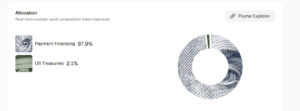
The nOpal vault tokenizes short-term credit card receivables via BlackOpal’s regulated payment financing infrastructure. Revenue comes from consumer and merchant card transactions, providing short-term, predictable cash flow.
Current Metrics (nOpal):
- Vault APY: 13.88%
- APY Boost: +1.17%
- TVL: $7M
- Holders: 785
- Average Redemption Time: 30 min
- Max Redemption Time: 4 days
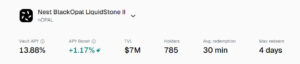
These figures indicate that the vault has a strong yield profile and offers a competitive liquidity structure. In particular, the average 30-minute redemption time is remarkably fast for an RWA-based credit strategy. The maximum 4-day redemption period provides a liquidity framework compatible with short-term credit cycles. nOpal is positioned for users seeking higher yield potential and exposure to short-term credit markets. Thanks to its payment-finance-based structure and supporting treasury/basis components, it offers a more dynamic income model compared to traditional fixed-income instruments, while still being designed within a structured risk management framework.
Supported Blockchains
Nest vaults are accessible via Plume, Ethereum, BNB Chain, and Solana. Multi-chain support allows users to choose the network that best fits their technical and cost preferences while expanding Nest’s liquidity and ecosystem growth. Nest Credit is an innovative RWA staking protocol that bridges traditional finance and DeFi by bringing institutional-grade credit, treasury, and structured income strategies on-chain for a broader user base. Vaults like nAlpha and nOpal provide alternatives for different risk-return profiles, from diversified income to short-term high-yield credit strategies.

Official Links:
- Website
- X (Twitter)
- Whitepaper