

 Emre Yumlu
NodeOps (NODE) stands out as an innovative platform in the blockchain and decentralized compute (DePIN) space. Initially established as a Node-as-a-Service (NaaS) provider, NodeOps is now evolving into a general-purpose decentralized compute orchestration layer.
In this article, we will explore what NodeOps is, how it works, its products, economic model, and future vision in detail.
What is NodeOps and What Does It Do?
NodeOps is a decentralized infrastructure marketplace that enables users to purchase, deploy, and manage blockchain nodes with a single click. Additionally, through NodeOps Network, it offers a DePIN (Decentralized Physical Infrastructure Network) orchestration layer that coordinates general-purpose compute resources. This allows the platform to support not only blockchain nodes but also AI model training, decentralized web hosting, and other compute workloads.
NodeOps’ primary goal is to make decentralized compute resources easy, reliable, and accessible. The platform is built on a two-layer technology stack:
- NodeOps Network: The core protocol that coordinates decentralized compute resources. This layer enables independent providers to offer compute resources through a global network, with security enhanced by Autonomous Verifiable Services (AVS).
- Product Suite: User-focused products such as NodeOps Cloud, NodeOps Console, NodeOps Validator, Agent Terminal, and Staking Hub. These tools provide a wide range of services, from node deployment to staking and security scanning.
NodeOps provides a decentralized alternative to the $313 billion cloud computing market dominated by centralized providers (AWS, Azure, Google Cloud), offering advantages like cost transparency, resilience, and accessibility.

NodeOps Products
NodeOps has developed a range of products to support the decentralized compute ecosystem. These products are designed to meet the needs of both technical and non-technical users.
What is NodeOps Console?
NodeOps Console is the flagship product of the platform, simplifying node deployment with a no-code interface. Users can easily deploy and manage various node types, such as full nodes, validators, RPC nodes, and light nodes, across over 80 blockchain networks.
Node Deployment Process:
- Login: Users sign in using an EVM-compatible wallet, email, or Google account.
- Payment Method: Payments are made using Console credits, fiat/crypto payments, or promotional codes. Support for NODE tokens will be added soon.
- Deployment Type:
- Auto-Assign: Matches with the best available provider.
- Profile Preference: Users select preferred providers.
- Custom: A specific provider machine is manually chosen.
NodeFolio Dashboard: Users can monitor node performance, logs, and reward management in real-time. Inactive nodes can be restarted or rescheduled to another machine.
NodeOps Cloud
NodeOps Cloud is a verifiable compute marketplace built on NodeOps Network, enabling various providers, from individuals to large data centers, to monetize unused compute resources. Users can rent compute power for AI models, blockchain nodes, RPC endpoints, and other workloads.
- YAML-Based Templates: Users utilize modular YAML templates to define workloads. These templates include service specifications (e.g., Docker images), resource allocation, and redundancy settings.
- Performance and Pricing: NodeWatch provides real-time performance monitoring, and AVS protocols automate rewards and penalties to enforce service-level agreements (SLAs). Pricing is transparent and market-driven.

Staking Hub
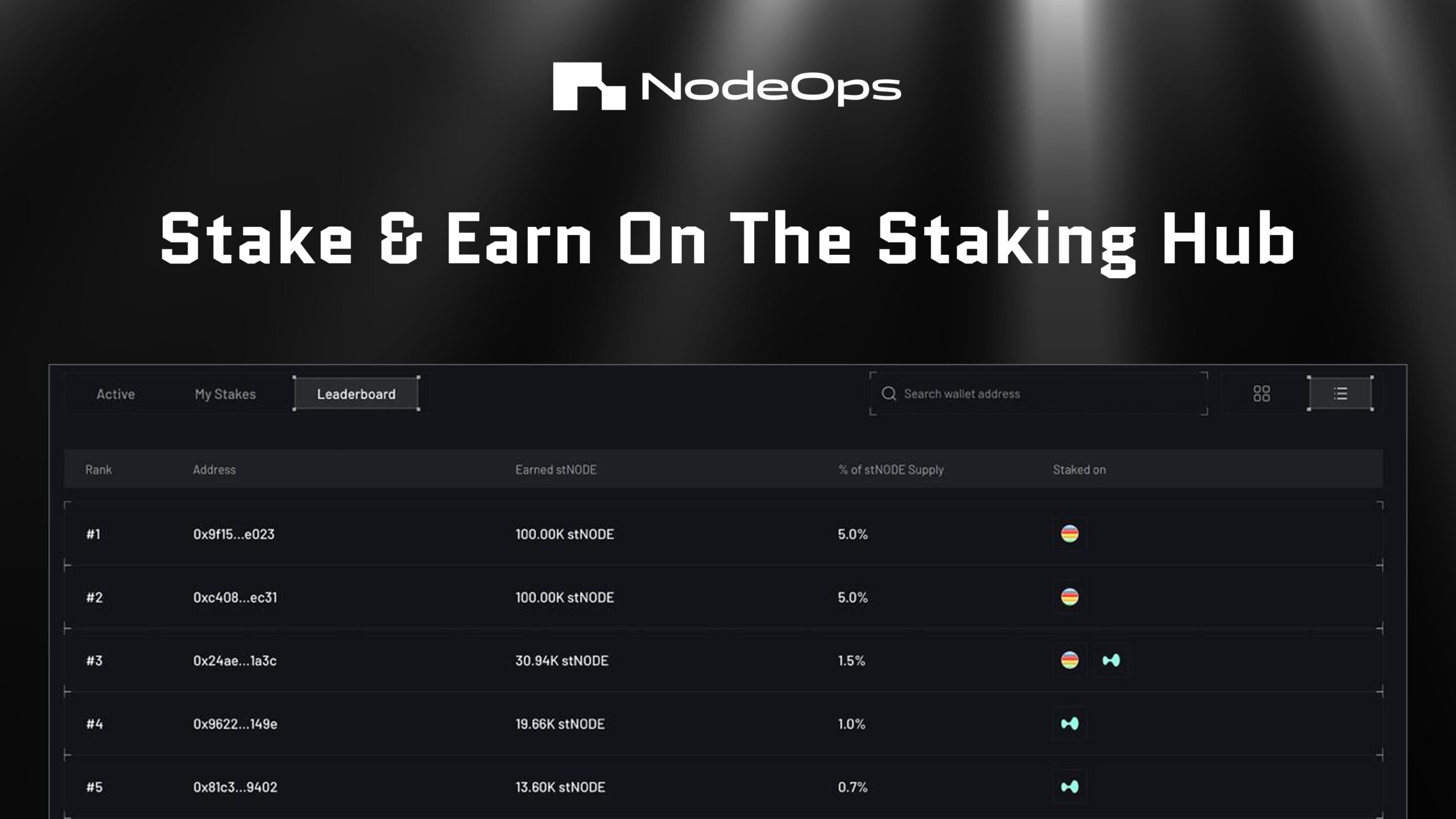
Launched in April 2025, Staking Hub is a no-code, non-custodial interface that simplifies token delegation across Proof-of-Stake (PoS) networks. Users can stake with just a few clicks without needing technical infrastructure setup. The platform caters to both non-technical users and institutions.
Features:
- Simplified Staking: Users delegate validator infrastructure to NodeOps, eliminating technical complexity.
- gNODE Points: Through the Stakedrop campaign, users earn gNODE points based on their staked amount. These points grant eligibility for future NODE token distributions.
- Dual Reward Model: Users earn native staking rewards alongside gNODE points, incentivizing long-term network growth participation.
Security Hub
Launched in May 2025, Security Hub is an AI-powered vulnerability scanner integrated into the NodeOps Network Dashboard. Users can scan codebases, repositories, and Docker images to detect and remediate software vulnerabilities in real-time.
Features:
- Real-time vulnerability scanning
- Verification of templates used in NodeOps Cloud
- Proactive security measures to enhance user confidence
Agent Terminal
Agent Terminal is a cloud-based AI development environment. Developers can access compute resources from NodeOps Cloud and test AI code and models in a secure sandbox environment. The AI Cloud Browser enables interaction with real-world data in a privacy-preserving manner.
NodeOps Validator
NodeOps Validator provides enterprise-grade blockchain node infrastructure and has partnered with protocols like OraiChain, EigenLayer, Beam Network, Movement Labs, 0G Labs, Symbiotic, Aethir, and CARV. This service meets the validator infrastructure needs of new L1 and L2 networks.
NodeOps Network
NodeOps Network is the platform’s decentralized compute orchestration layer. Initially launched as Atlas Network in August 2024, it was rebranded as NodeOps Network in February 2025. Secured by AVS protocols like EigenLayer, Babylon, and Solayer, it enables independent providers to offer compute resources through a global network.
Key Features:
- Permissionless Access: Users can access compute resources without centralized gatekeepers.
- NodeWatcher: Lightweight clients for decentralized monitoring ensure network quality control.
- Marketplace: Matches compute providers with demand.
Security with AVS: Restaking Operators leverage the crypto-economic trust of major blockchains like Ethereum, Bitcoin, and Solana to secure off-chain compute operations. Tasks include:
- Payment verification
- Reward calculation
- Node score calculation (provider reliability and performance)
NODE Token and Tokenomics
The NODE token is the economic engine of NodeOps Network, with its launch planned for Q3 2025. The token prices coordination, rewards participants, and enables self-governance of the network.
Token Functions:
- Staking: Providers stake 2,000 NODE to join the network, plus an additional 200 NODE per compute unit (CU) per machine.
- Rewards: Providers earn 25% of consumer fees and a share of the 15% of the total token supply.
- Payments: NodeOps Console will soon support subscription payments with NODE tokens.
- Governance: NODE holders can participate in network decisions.
Economic Model:
- Dynamic Mint & Burn: Token emissions are tied to network revenue, preventing speculative growth.
- NODE-to-Credits: Users can convert NODE tokens into platform credits to access services. Phase 1 includes a 60-day conversion window with a $5 million cap.
- Inflation and Rewards: A 10% annual inflation rate funds staking rewards for AVS operators and delegators.
NodePoints (NP) Program: Launched during the Atlas testnet, NodePoints rewards users for node deployment, community activities, and provider registrations. To date, 32.3 million NodePoints have been distributed, qualifying users for NODE airdrops.
UNO Token: Launched in March 2025, UNO is a profit-sharing and utility token. Benefits include:
- Quarterly profit sharing
- Priority access to NodePad projects
- Discounts on node deployments
- Early NODE unlocks and governance rights
Roadmap (2025)
NodeOps has outlined an ambitious roadmap for 2025:
- Q1 (Acceleration): NodePoints Wave 2, NodeOps Console V2, AI-powered vulnerability scanner.
- Q2 (Innovation): Stakedrop Portal, AVS expansion, NodeScore V2.
- Q3 (Activation): NODE token launch, TEE-based key management.
- Q4 (Dominance): AI-focused enterprise support, B2B integrations.
NodeOps Investors
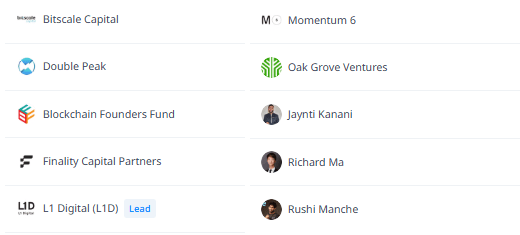
NodeOps successfully completed a $5 million seed funding round in 2024. This round will be used to accelerate the platform’s growth and support additional protocols. The leading institutional and angel investors participating in the round include:
- Institutional Investors: L1D (Lead Investor), Blockchain Founders Fund, Finality Capital Partners, Oak Grove Ventures, Double Peak Group, Momentum6, Bitscale Capital
- Angel Investors: Richard Ma (Quantstamp), Jaynti Kanani (Former Polygon Co-Founder), Rushi Manche (Movement Labs), Dorothy (AltLayer), and Sunil Sharma (Circle)
NodeOps Team
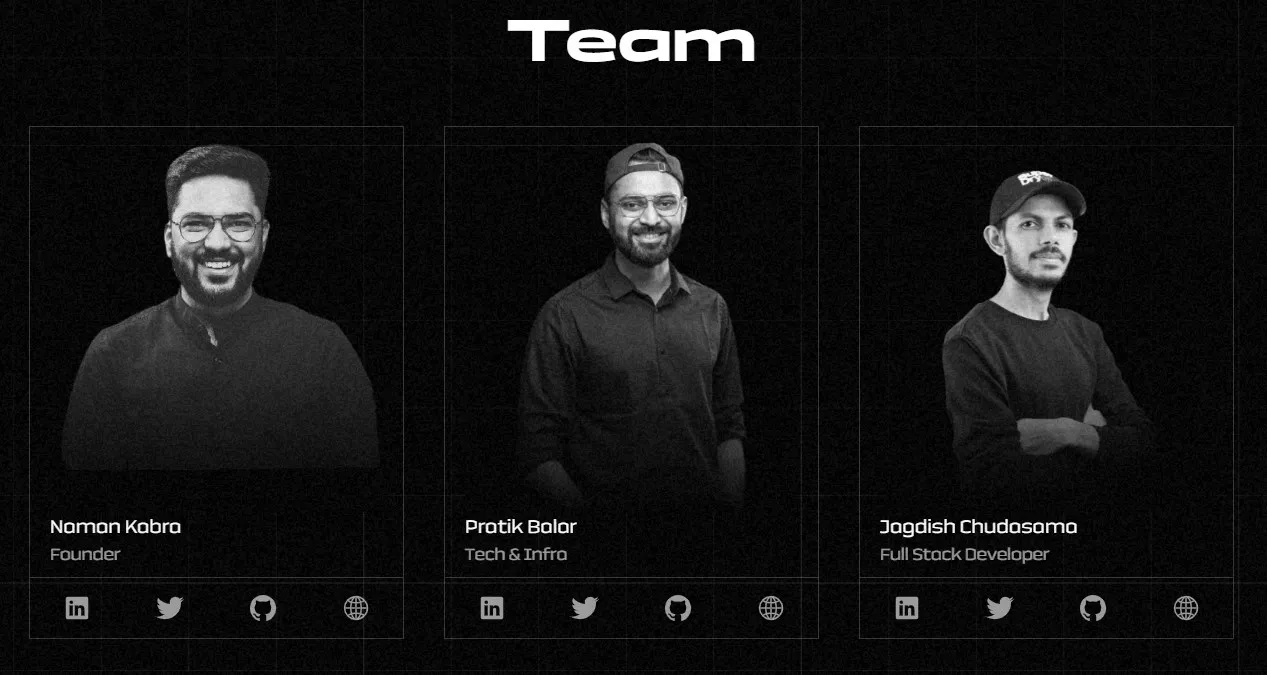
NodeOps, as a platform offering innovative solutions in decentralized compute and blockchain node management, is led by a strong founding team. The company’s founders and key team members are:
- Naman Kabra (Founder and CEO): One of the leaders shaping NodeOps’ vision. Kabra plays a key role in determining the platform’s strategic direction and advancing the decentralized compute ecosystem.
- Pratik Balar (Founder and Infrastructure Lead): Leads the development of NodeOps’ technical infrastructure. His expertise in infrastructure operations ensures the platform’s scalable and resilient growth.
- Chudasama Jagdish (Founder and Full Stack Developer): Plays a critical role in NodeOps’ software development processes. His expertise in developing user-friendly interfaces and no-code solutions enables the platform to reach a broad audience.
Official Links
You can also freely share your thoughts and comments about the topic in the comment section. Additionally, don’t forget to follow us on our Telegram, YouTube, and Twitter channels for the latest news and updates.