

 Haciyev Reşit
As the blockchain ecosystem continues to expand, transaction speed, scalability, and cost remain the biggest challenges for Layer-1 networks. While Bitcoin offers strong security, it is limited in scalability due to its constrained transaction capacity. Ethereum, despite being the leader in the smart contract ecosystem, faces criticism during periods of congestion because of high gas fees and network bottlenecks. This indicates that the balance between security, scalability, and decentralization has not yet been fully optimized. Quai Network positions itself as a next-generation Layer-1 project that approaches this challenge with the goal of achieving high throughput without compromising decentralization. Through its multi-chain architecture, it aims to process transactions in parallel, distribute network load, and deliver higher transaction capacity. Additionally, with PoEM (Proof-of-Entropy-Minima), an enhanced version of Proof-of-Work, the network seeks to maintain security while accelerating transaction finality. One of the project’s most notable aspects is its dual-token model. QUAI functions as the network’s utility token for transaction fees, smart contracts, and governance, while QI is designed as an energy-cost-referenced stablecoin aiming to provide a more stable value model. This structure presents a differentiated blockchain vision both technically and economically.
Quai Network Vision
Quai Network is designed with a hierarchical multi-chain architecture that operates multiple interoperable chains simultaneously. This structure prevents transactions from accumulating on a single main chain, distributing the load across different chains and enabling parallel processing capacity. As a result, the network aims to provide flexibility under increasing user demand. The architecture seeks to reduce congestion and sudden spikes in transaction fees during peak periods while preserving decentralization. As the network grows, it aims to maintain performance by distributing rising transaction volume across multiple chains. This approach positions itself as an alternative to the bottlenecks faced by traditional single-chain blockchains. Quai is also EVM-compatible, allowing Ethereum-based applications (dApps and smart contracts) to migrate more easily. Developers can integrate existing Solidity-based projects into Quai without major architectural changes, accelerating ecosystem growth—one of the most critical phases for any new blockchain network.
How Does Quai Network Work?
1) Multi-Chain Architecture & Parallel Processing: Quai’s execution shards process transactions independently while maintaining network-wide consistency and interoperability. Each chain manages its own transaction flow, but overall system integrity is synchronized in a decentralized manner. The goal is to overcome scalability bottlenecks inherent in single-chain designs. Through parallel processing, Quai aims to prevent performance degradation as user demand rises, supporting high transaction volume with a sustainable fee model.

2) Merged Mining Approach: Quai promotes a merged mining model that allows miners to secure multiple chains through a single process. Miners can contribute to several chains using the same computational power, enabling shared security across the network. This allows multi-chain security without requiring additional hardware or energy costs, offering efficiency advantages while maintaining decentralization.

3) PoEM Consensus
One of Quai Network’s differentiators is PoEM (Proof-of-Entropy-Minima), an optimized version of Proof-of-Work. PoEM aims to:
- Reduce block competition by minimizing simultaneous block conflicts
- Accelerate transaction finality and improve user experience
- Maintain the security and decentralization of PoW while increasing efficiency

What Are QUAI and QI Used For?
Quai Network’s economy is built around two tokens with distinct roles:
1) QUAI (Utility + Governance)
QUAI serves as the core utility token of the network:
- Transaction fees (gas-like payments)
- Running smart contracts and dApps
- Governance participation
- Ecosystem incentives (developer rewards, mining, network security)
The value of QUAI may increase depending on network adoption and usage, though it carries market volatility risk like other crypto assets.
2) QI (Energy-Backed Stablecoin)
QI differs from traditional fiat-pegged stablecoins. Its value is intended to reference energy costs rather than government-issued currencies. The concept is to anchor monetary value to a measurable physical cost rather than central bank policy.
QI’s positioning:
- Unit of account within the ecosystem
- Medium of exchange with lower volatility
- DeFi integrations such as lending and collateral
While QUAI represents growth and network value, QI aims to function as a stability layer within the ecosystem.
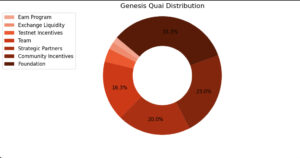
Token Allocation
The QUAI token allocation model is structured around sustainability and decentralization:
- Testnet participants and early supporters
- Community and ecosystem incentives
- Network development and operational fund
- Strategic reserve for partnerships and expansion
Transparency, vesting schedules, and circulating supply management will significantly influence long-term price dynamics.
Strengths and Risks
Strengths
- High scalability target through parallel processing
- PoEM optimizing PoW efficiency
- EVM compatibility attracting developers
- Differentiated economic model via energy-backed QI
Risks
- Highly competitive Layer-1 landscape
- Adoption and liquidity post-mainnet may take time
- Token economy sustainability depends on network usage
- Energy-backed stablecoin model remains untested at scale

Investors
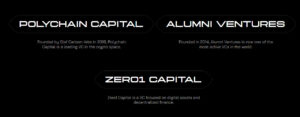
Quai Network is backed by prominent venture capital firms:
- Polychain Capital
- Alumni Ventures
- Zero1 Capital
While strong financial backing supports early development, long-term success depends on real-world adoption and ecosystem growth.
Team
The team includes experienced professionals in blockchain and distributed systems:
- Alan Orwick (Co-Founder & CEO)
- Karl Kreder (Co-Founder & CTO)
- Sriram Vishwanath (Co-Founder)
- Jonathan Downing (Chief Architect)
- David Kinitsky (COO)
- Raleigh Moore (CMO)
The combination of academic expertise and industry experience aims to balance technical strength with operational management.

Conclusion
Quai Network seeks to differentiate itself from traditional “faster L1” projects by combining technical scalability with an alternative monetary vision. Its PoEM consensus and multi-chain design aim to address scalability, while QI introduces a broader economic narrative. However, long-term success will depend on mainnet performance, real transaction activity, developer interest, ecosystem growth, and practical adoption of the QI model. Ultimately, Quai Network’s future will hinge on its ability to simultaneously scale technology, economic sustainability, and community growth within the competitive Layer-1 landscape.
You can also freely share your thoughts and comments about the topic in the comment section. Additionally, don’t forget to follow us on our Telegram, YouTube, and Twitter channels for the latest news and updates.