

 Emre Yumlu
Ripple USD (RLUSD) is a tokenized stablecoin designed to maintain a fixed value of one US dollar. Issued natively on the XRP Ledger and Ethereum blockchains, RLUSD is fully backed by a segregated reserve of cash and cash equivalents, redeemable 1:1 for US dollars.
What Is Ripple USD (RLUSD)?
Ripple USD (RLUSD) is a stablecoin developed by Ripple and issued through its subsidiary, Standard Custody & Trust Company, LLC (SCTC). It serves as a secure and regulated bridge between traditional financial systems and innovative Web3 technologies. With its stable value and programmable structure, RLUSD enables developers to seamlessly integrate Web3 payment solutions, connecting conventional finance with decentralized applications.
SCTC, a limited-purpose trust company licensed by the New York Department of Financial Services (NYDFS), issues RLUSD under its NYDFS charter and complies with stringent Know Your Customer (KYC) and Anti-Money Laundering (AML) requirements of New York banking laws.
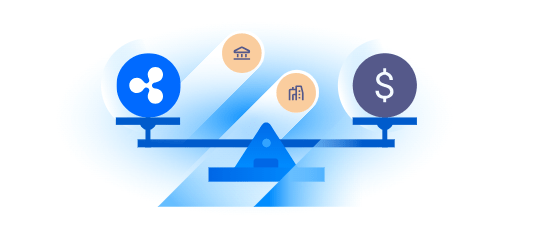
Advantages of Ripple USD
RLUSD combines stability and transparency to offer a range of benefits for both individual users and institutions:
-
Near Real-Time Transactions: RLUSD enables fast, low-cost global payments that settle in seconds on the XRP Ledger and Ethereum blockchains, with no need for a bank account.
-
Global Stablecoin Settlement: RLUSD can serve as a core trading pair for other crypto assets, an on/off-ramp for bringing fiat onchain, and a settlement asset for derivatives markets.
-
Compliant Crypto Transactions: Supports merchant and vendor payouts, fiat-to-RLUSD on/off-ramps, and global settlement for foreign exchange markets.
-
Programmable Finance: Enhances efficiency and accessibility for financial use cases like purchasing, on-ramping, and trading.
-
Multi-Chain Issuance: Issued on both XRP Ledger and Ethereum, it provides access to multiple ecosystems.
With over a decade of experience at the intersection of crypto and finance, Ripple collaborates with regulators and policymakers worldwide, positioning RLUSD as the first enterprise-ready stablecoin with a focus on regulatory compliance and transparency.
Reserves and Attestation Reports
RLUSD ensures reliability and transparency through fully backed reserves, consisting of US dollars and low-risk investment assets held securely at reputable US financial institutions. These reserves are meticulously audited monthly by a leading accounting firm, with attestation reports verifying their accuracy and proper management. This process guarantees the stablecoin’s consistent value and trustworthiness.
How to Access Ripple USD?
RLUSD offers accessible infrastructure for developers, businesses, and institutions:
-
Developers: Can integrate RLUSD into applications on the Ethereum and XRP Ledger blockchains.
-
Businesses and Institutions: Can onboard with SCTC to purchase RLUSD directly.
Crypto Wallets
RLUSD can be stored, managed, and transacted using hardware, software, or web-based crypto wallets, secured with private and public keys. Various wallets and digital asset platforms support RLUSD.
Ripple Custody
Ripple Custody is an advanced digital asset management platform designed for enterprise businesses and institutions, allowing users to manage RLUSD alongside other assets in a single interface.
Technical Structure of Ripple USD
RLUSD on XRP Ledger
On the XRP Ledger, RLUSD utilizes the native “Issued Tokens” functionality. An issuer holds real-world assets as collateral and creates equivalent tokens on the ledger. Users establish a trust line with the issuer to receive, hold, and transfer RLUSD. Transactions are fast and secure, leveraging the efficiency of the XRP Ledger. For more details, refer to the Ripple USD GitHub repository.
Networks: RLUSD is available on the XRP Ledger Mainnet and Testnet networks.
RLUSD on Ethereum
On the Ethereum network, RLUSD is an ERC-20 compliant token, ensuring broad compatibility with wallets, exchanges, and DeFi platforms, enhancing liquidity and security. It incorporates standard OpenZeppelin functions and custom functions developed by Ripple engineers.
Smart Contracts: RLUSD employs the proxy upgrade pattern, separating the token contract’s logic and data:
-
ERC-20 Implementation Contract: Contains the core business logic for the RLUSD token and is deployed first on the blockchain.
-
Proxy Contract: Acts as an interface to the implementation contract, delegating calls without containing business logic. Developers should use the proxy contract address when interacting with RLUSD. For technical details, see the Ripple USD GitHub repository.
Use Cases for RLUSD
Beta testing has proven RLUSD to be fast, reliable, and cost-effective, making it suitable for various financial applications:
-
Cross-Border Payments: RLUSD enables instant, low-cost global money transfers, ideal for the interconnected global economy.
-
On/Off-Ramps: Provides a volatility-free solution for traders entering and exiting crypto markets.
-
Daily Payments: Described by Ripple Labs as “digital cash,” RLUSD is intended for small, everyday transactions.
-
Asset Tokenization: Allows institutions to tokenize real-world assets like Treasuries, commodities, and securities, providing collateral for trading.
-
DeFi: With Ethereum integration, RLUSD serves as a trusted stablecoin for decentralized exchange trading pairs or lending protocol collateral.
Who Created Ripple USD (RLUSD)?
RLUSD was created by Ripple in 2024. Founded in 2004 by Jed McCaleb and Chris Larsen, Ripple predates even Bitcoin. In 2012, the company launched the XRP Ledger under the leadership of David Schwartz, Jed McCaleb, and Arthur Britto, initially operating as OpenCoin before rebranding to Ripple Labs.
Ripple collaborates with numerous global financial institutions to facilitate seamless cross-border payments, lending credibility and stability to RLUSD. With over a decade of expertise in integrating blockchain technology into financial services, Ripple positions RLUSD as a leading enterprise-focused stablecoin.

Official Links
You can also freely share your thoughts and comments about the topic in the comment section. Additionally, don’t forget to follow us on our Telegram, YouTube, and Twitter channels for the latest news and updates.