

 Emre Yumlu
Despite its trillion-dollar scale, the sports industry has long been managed by centralized structures, keeping fans mostly in a passive position. Fans produced content, shared it, and contributed to the global recognition of teams and athletes, but they did not directly receive the economic value of what they created. This is where Scor (SCOR) comes in, as an on-chain sports interaction protocol aiming to fundamentally change this structure.
SCOR offers a decentralized fan economy infrastructure that transforms both fan engagement and professional sports intellectual properties (IP) into programmable digital assets.
What is SCOR Protocol?
SCOR redefines the sports ecosystem along two main axes:
- On the fan side: It turns participation, skill, and loyalty into a verifiable on-chain identity.
- On the sports IP side: It makes licensed assets of teams, leagues, and athletes programmable.
With this structure, fan interaction in the sports world becomes measurable, verifiable, and an asset class with economic value for the first time.
SCOR-ID: Permanent On-Chain Fan Identity
At the center of the SCOR ecosystem is SCOR-ID. SCOR-ID is designed as a non-transferable (soulbound) structure that collects all interactions of a fan under a single on-chain identity.
Thanks to this identity:
- Achievements in games
- Rankings in competitions
- Event participations
- Long-term loyalty and contributions
are recorded permanently. Thus, the fan’s value accumulates under a single holistic identity instead of fragmented profiles across different platforms.
SCOR-ID is not just a badge or NFT; it is positioned as the digital representation of a fan’s proven role in the sports ecosystem.
Verifiable Fan Skill
One of SCOR’s most distinctive aspects is turning fan participation from an abstract concept into a verifiable skill. The protocol, with modules to be activated in the future, aims to create:
- Skill-based games
- Competitive rankings
- Long-term success records
These achievements, stored on-chain, become transparent, immutable, and recognizable across the ecosystem.
This approach turns the fan from merely a “consumer” into an active economic participant.
Programmable Sports IPs
SCOR’s second main pillar is turning sports intellectual properties (IP) into programmable digital assets. An athlete image, team logo, special moment, or tournament badge on SCOR can be:
- Defined with usage conditions
- Capable of generating revenue
- Protected on-chain
recorded as an asset.
This way, sports IPs can be securely integrated by different applications and continue to generate value per use. IP owners control how and where their assets are used, while fans are rewarded for interacting with these assets.
Shared Economy Model Eliminating Intermediaries
SCOR targets the “intermediary platform” problem in the traditional sports economy. Social media, content platforms, and centralized apps have long transferred the majority of the value created by fans to themselves.
Thanks to SCOR’s peer-to-peer architecture:
- Fans receive rewards proportional to their skills and contributions
- IP owners directly earn revenue from asset usage
- Value is distributed within the network instead of accumulating in the hands of central intermediaries
This structure aims to create a sustainable economic balance for both fans and sports organizations.
SCOR Dynamic Flywheel Mechanism
The SCOR ecosystem is built on a self-sustaining economic cycle:
- Fan skill is verified on-chain
- As the network grows, the value of on-chain assets increases
- Verified skill is rewarded with $SCOR token
- On-chain activities finance protocol growth
- $SCOR usage unlocks new utilities for IP assets
This cycle creates a structure where value increases as participation grows.

SCOR Tokenomics
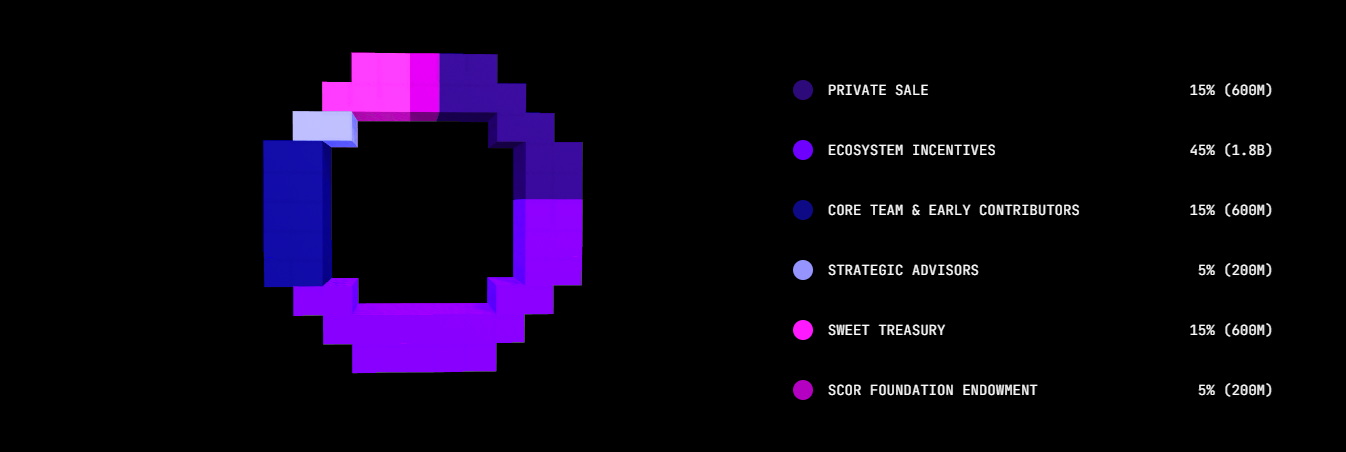
The native token of the SCOR ecosystem, $SCOR, is designed with a total supply of 4 billion and a deflationary model.
Token Distribution
- Private Sale – 15% (600 million) 1 year lock, 6 months vesting For platform development and growth
- Ecosystem Incentives – 45% (1.8 billion) Vesting spread over 10 years User growth, staking, and community incentives
- Core Team & Early Contributors – 15% (600 million) 1.5 years lock, 12 months vesting Founding team and main contributors
- Strategic Advisors – 5% (200 million) 1.5 years lock, 12 months vesting Strategic support during launch
- Sweet Treasury – 15% (600 million) Managed reserve over time For long-term sustainability
- SCOR Foundation Donation – 5% (200 million) Liquidity and foundation operations
In the token model, additionally:
- 33.3% of transaction values to community rewards
- 33.3% permanently burned
- 33.3% to protocol treasury
a three-way deflationary structure is in place.
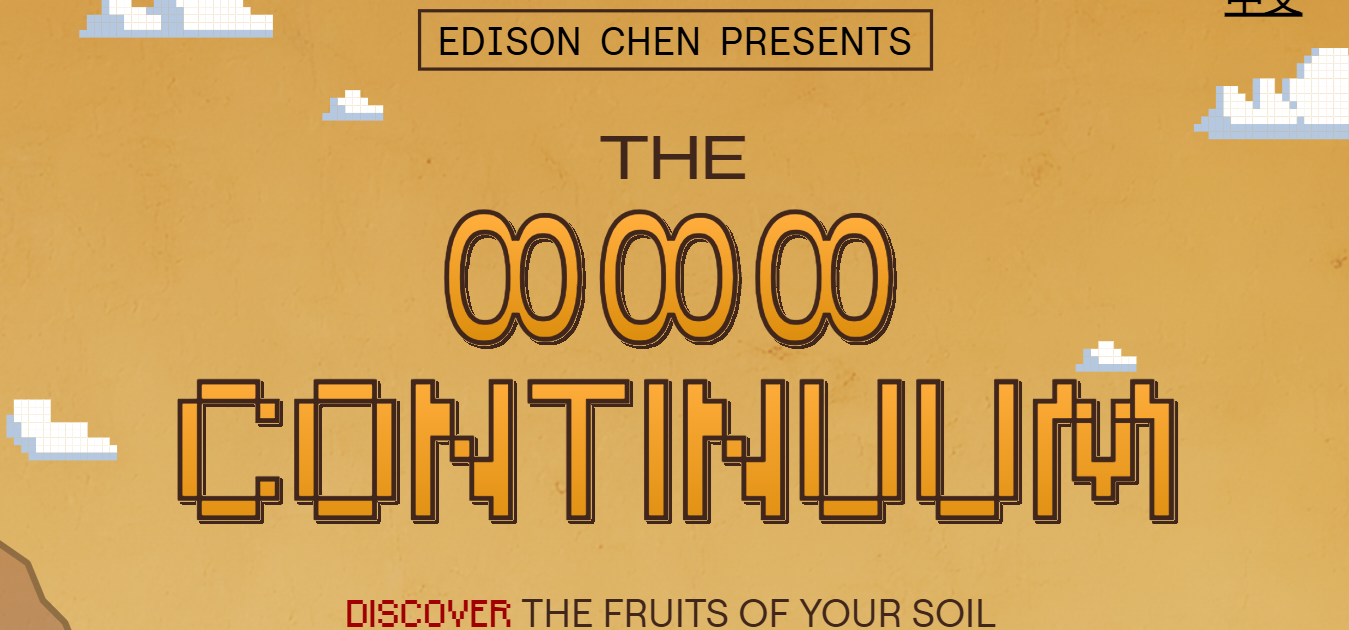
888 Continuum and Gamified Experience
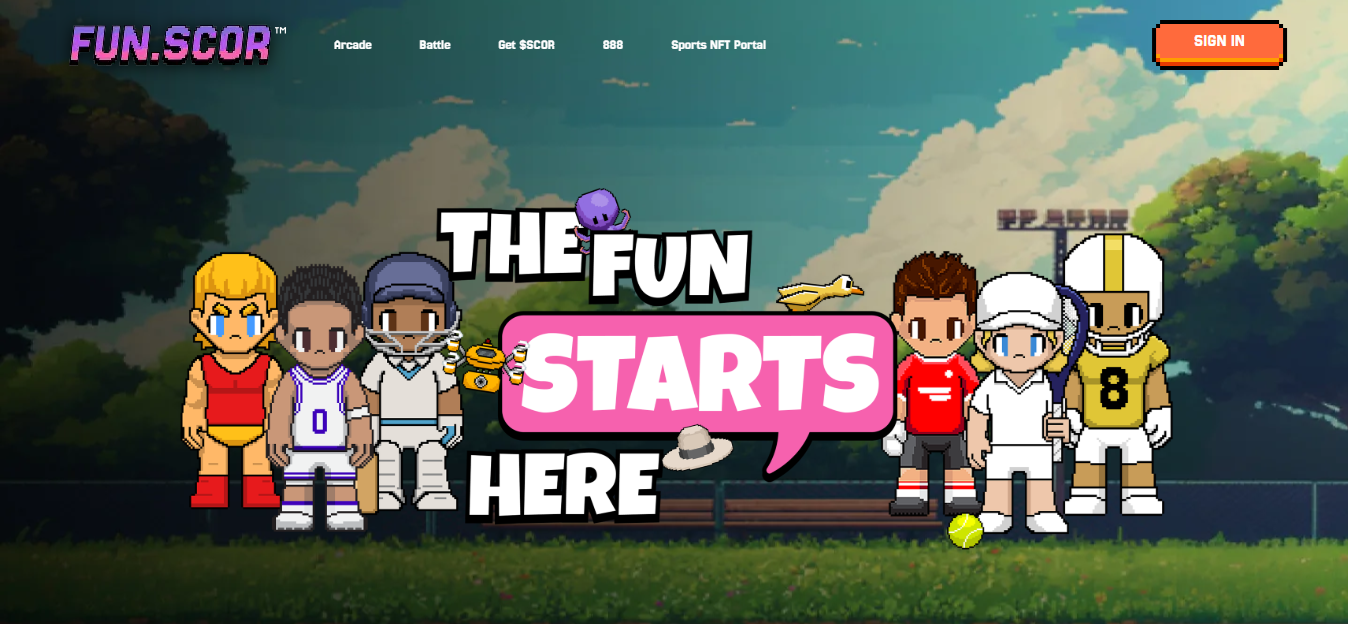
SCOR’s first flagship application, 888 Continuum, offers a gamified fan experience. Users:
- Can play games
- Accumulate Gems
- Collect equipment
- Rise on leaderboards
This structure turns fan participation from purely reward-focused into a long-term progression process.
SCOR’s Roadmap
SCOR advances with a three-phase vision:
- Phase 1: Flagship application and Fan Engagement Protocol modules
- Phase 2: SDK for third-party developers
- Phase 3: SCOR L1 mainnet for global fan economy
This process aims to turn SCOR not just into an application but into an infrastructure layer.
SCOR Team
The developer of the SCOR ecosystem is Sweet, whose founder and CEO Tom Mizzone stands out as the main figure behind the project. Sweet’s past work with NHL, MLS, NBA teams, and global motorsports is one of the most important elements showing that SCOR is not just theoretical.
Official Links
You can also freely share your thoughts and comments about the topic in the comment section. Additionally, don’t forget to follow us on our Telegram, YouTube, and Twitter channels for the latest news and updates.