

 Yeliz Akmaca
The gaming world has long struggled with a persistent issue: high-cost hardware and limited access. Consoles and high-end PCs are out of reach for most players. YOM changes this. The project creates a decentralized cloud gaming infrastructure (DePIN), making gaming accessible to everyone. The key difference: games run not from massive data centers, but from players’ local machines worldwide.
YOM (Your Open Metaverse) is a decentralized physical infrastructure network (DePIN) on Avalanche, aiming to solve the “cloud computing” problem in gaming. The project provides a distributed GPU network allowing anyone to play AAA games with low latency, without expensive consoles or gaming PCs. Essentially, it’s a “Netflix for Games” model executed via global user hardware instead of Amazon or Google centralized servers.

Leadership Team
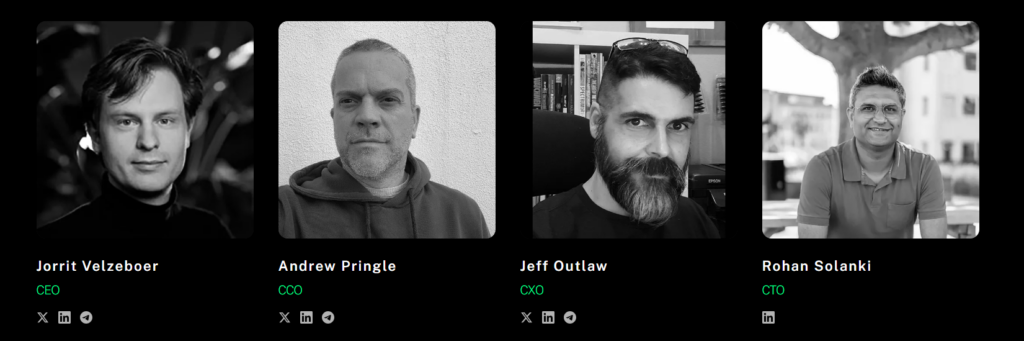
YOM is backed by industry-experienced professionals. CEO Jorrit Velzeboer launched the project after identifying limitations in centralized cloud infrastructure. CTO Rohan Solanki designed the technical backbone using large-scale blockchain tools and the HyperOrch scheduler. CCO Andy Pringle and CXO Jeff Outlaw manage studio and publisher relationships, while CMO Jeroen Elout optimizes growth and user experience. This team merges AAA gaming experience with blockchain technology.
Investors & Partners
YOM’s investor and partner ecosystem includes:
-
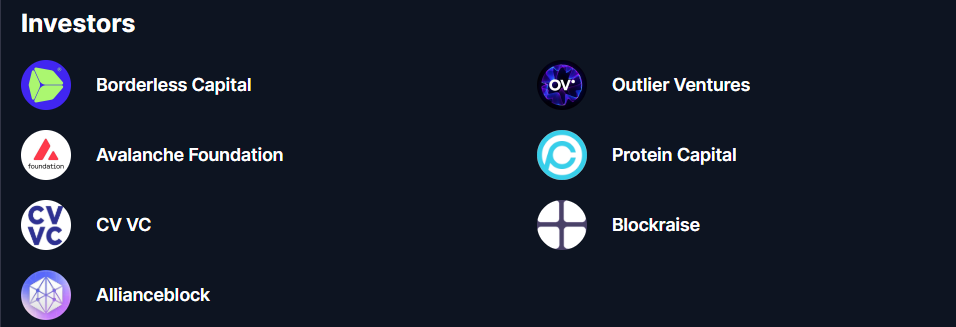
Investors: Outlier Ventures, Avalanche Foundation (AVAX), Borderless Capital. Seed and private rounds total ~$3–4M USD.
-
Technology Partners & Supporters: AWS, Google Cloud, Microsoft Azure, NVIDIA Inception Program, Intel, Flux, IO Net, Peaq blockchain, Blockchain Gaming Alliance (BGA). These partnerships are critical for infrastructure, cloud integration, and DePIN scaling.
-
Game Studios: 30+ studios, e.g., Blackmouth Games, K4 Rally, Bloxa, Luxx, Metagravity, Diamante.
-
Achievement: Won “Best Game Technology Investment Award” at Gamescom 2025.
YOM’s Goal & Solution
YOM targets the classic cloud gaming paradox: technology is ready, but costs and latency are a barrier. By turning idle GPUs into nodes, YOM streams games locally. Result: ultra-low latency, console-quality experience, and 95% cost reduction. The goal is not just streaming games, but creating a post-cloud economy where human contribution and local hardware have economic value.
What Happens When You Press “Play”?
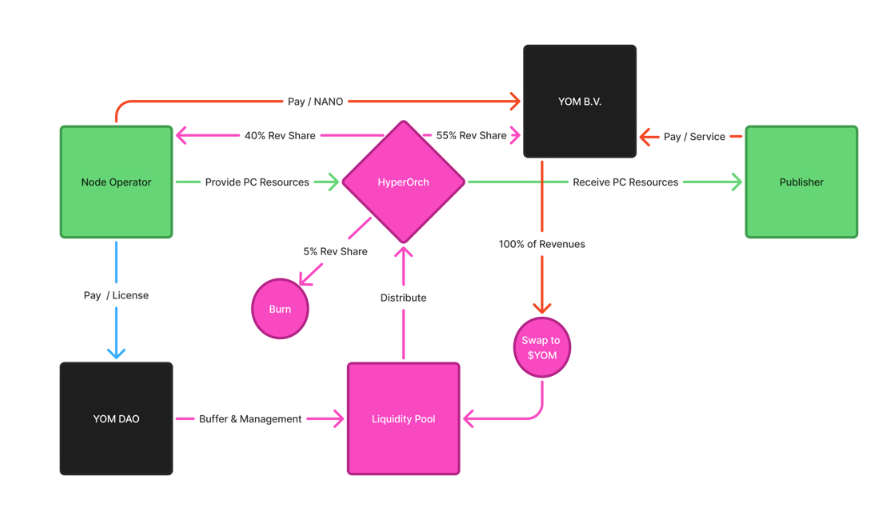
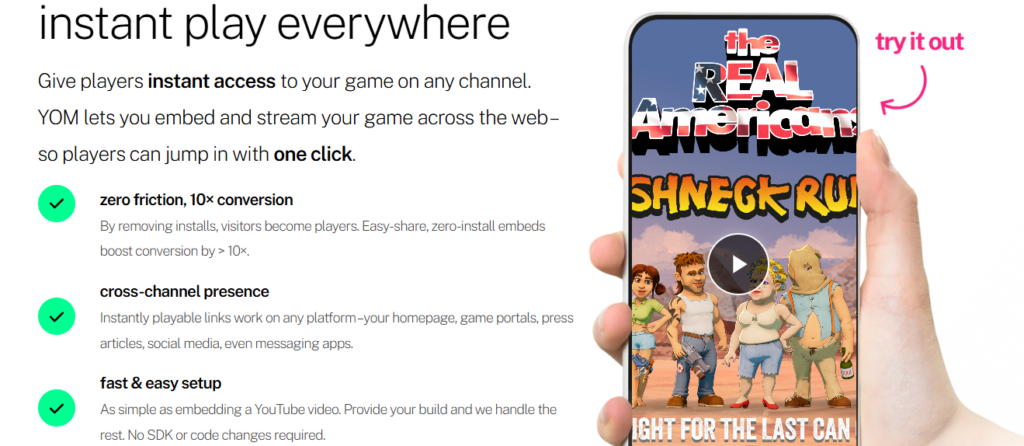
YOM’s user experience is straightforward: click the link, and AAA games launch within seconds. No downloads, no installation, no login. HyperOrch AI scheduler selects the optimal node, and the game streams via WebRTC. Games propagate peer-to-peer, all tracked on blockchain, and revenue distribution occurs automatically: 40% to node operators, 5% token burn, 55% to platform treasury.
This model is revolutionary for both players and studios. Traditional cloud gaming costs $1–2/hour; YOM reduces this to below $0.05. Audience reach expands, sales accelerate, and publishers retain 100% revenue control (removing the 30% store fee).
-
Nodes in Action: Players’ idle rigs join the network.
-
Game Flow: Studios upload games → Nodes handle rendering and streaming → Players play instantly on any device (2 MB stub vs. 7 GB download).
-
Token Economy: Each session triggers $YOM burn; regional tokens (e.g., $yEU, $yASIA) optimize pricing.
-
Rewards: Node operators earn $YOM or high APY; XP system boosts gains.
-
Integration: Unreal Engine 5 SDK enables easy embedding in web, apps, or social platforms; Telegram/Discord support ensures community engagement.
-
Performance Highlight: Roughneck Rumble saw +1316% DAU, +54% retention.
Governance
Long-term governance is via YOM DAO. Node operators and community members shape the ecosystem through an XP-based system. Platform updates and incentives are community-driven; malicious actions are automatically penalized.
Roadmap
-
January 2026 – Platform Maturity: YOM SDK released; user portal upgraded to V2; developer access optimized.
-
February 2026 – TGE & Token Launch: $YOM officially launched; network’s economic cycle fully operational.
-
Q1 2026 – Mainnet Live: Transitioned from testnet to commercial network; real-world usage begins.
-
Q2 2026 – AMD GPU Support: Expanded network to AMD GPUs; node operator potential greatly increased.
-
Q2 2026 – Unity SDK Launch: Thousands of indie games can easily integrate into the platform.
-
2024–2025 – Past Achievements: BGA Awards, Gamescom Startup Competition; testnet sub-40ms latency; 400 “Genesis” nodes sold out in 6 days.

Token Utility
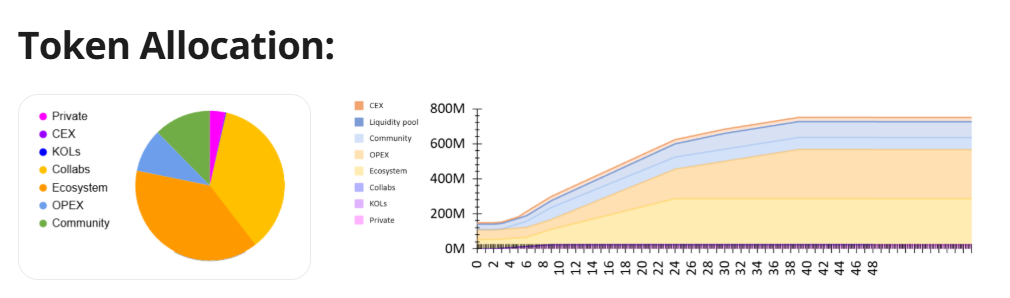
$YOM rewards node operators, grows the ecosystem, and maintains in-network economic cycles. Each transaction triggers token burn, reducing total supply. This ensures network growth benefits both players and node operators.
Token Information & Allocation
-
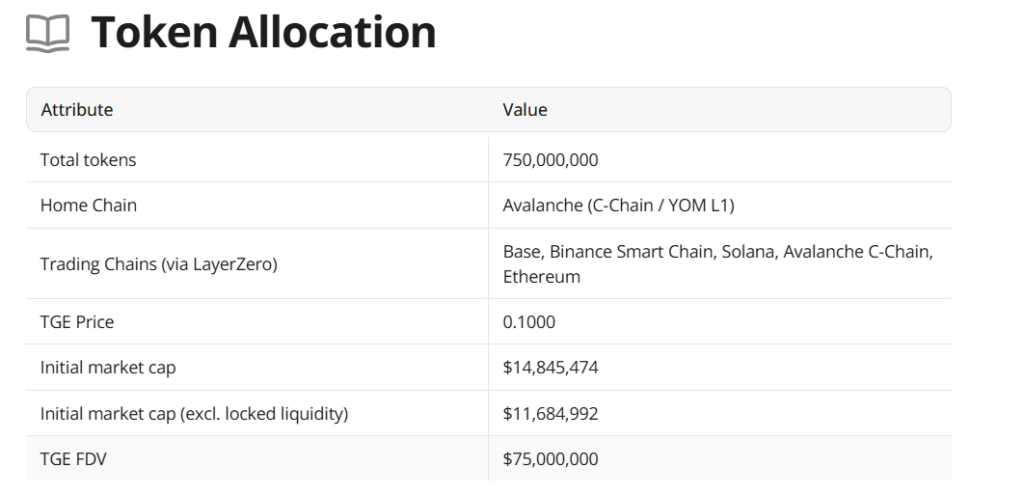
Total Supply: 750M YOM
-
Main Chain: Avalanche C-Chain (YOM L1)
-
Bridge Chains: Solana, Ethereum, BSC, Base
-
TGE Price: $0.10 USD
-
Circulating Supply: 116.84M YOM
Distribution:
-
OPEX: 37.5% (20% TGE, 9-month cliff, 30-month linear lockup)
-
Ecosystem: 34.9% (20% TGE, 6-month cliff, 18-month linear)
-
Liquidity Pool: 12% (35% TGE, 6-month cliff, 24-month linear)
-
Community: 9.1% (3–9 month cliff, max 18-month linear)
-
CEX Round: 3.2% (33% TGE, remaining 6-month cliff)
-
Private Round: 3% (3-month cliff, 10% TGE, 12-month linear)
-
KOLs: 0.1% (25% TGE, 4-month linear)
-
Collaborations: 0.1% (6-month cliff, 10% TGE, 12-month linear)
Features
YOM transforms gaming for players and studios. Instant gameplay without downloads or special hardware increases conversion 10x. Serverless, low-cost infrastructure saves ~20x compared to traditional cloud. Node operators earn high APY; each session triggers token burn supporting deflationary economics. Unreal Engine 5 SDK and embedding options ease integration. Energy-efficient, uses existing GPUs. Roughneck Rumble metrics: +1316% DAU, +54% retention.
Official Links
You can also freely share your thoughts and comments about the topic in the comment section. Additionally, don’t forget to follow us on our Telegram, YouTube, and Twitter channels for the latest news and updates.