

 Yeliz Akmaca
Growth in Web3 often relies on misleading metrics. Follower counts may appear high, but the number of real users is often much lower. Zesh AI Layer focuses directly on this problem. The platform combines AI agents, zkML verification, and on-chain data analysis to help projects distinguish real users, measure campaign ROI, and eliminate bots from their ecosystems.
In simple terms, Zesh is an AI-powered ecosystem designed not to generate hype, but to enable measurable and verifiable Web3 growth.
Although it was initially launched on the SUI blockchain, its Ethereum compatibility, Account Abstraction integration, and cross-chain expansion goals ensure that it is not limited to a single network.
Core Idea: Finding the “Real User” in Web3
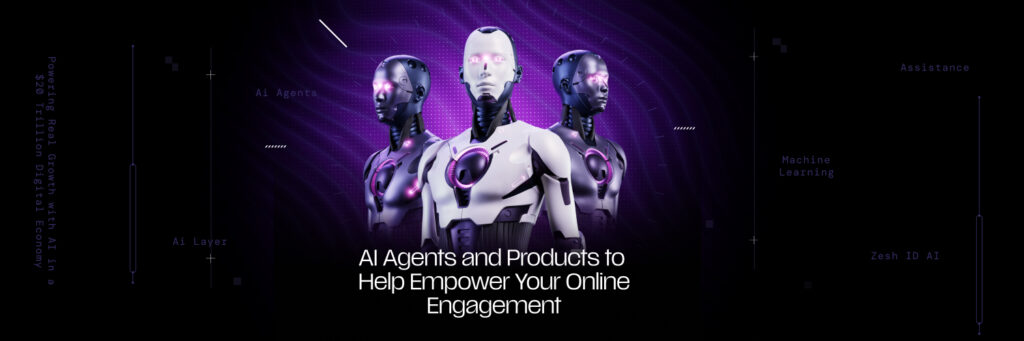
The biggest challenge for Web3 projects is not technical, but human-driven. Bots, Sybil attacks, and fake engagement distort campaign results and reduce efficiency. Zesh AI attempts to solve this problem directly at the data layer.
The platform is built on three core components:
-
AI agents that collect real-time data from platforms such as Discord, Telegram, and X
-
zkML verification that mathematically confirms whether contributions are genuine
-
Account Abstraction infrastructure that allows users to create wallets without gas fees or technical knowledge
As a result, users do more than just complete tasks. They also build a permanent on-chain reputation through Zesh ID and dynamic NFT profiles.
This approach combines Web2-style analytics with Web3 transparency, creating a potentially significant shift in how user authenticity is verified.
Key Components of the Zesh AI Ecosystem
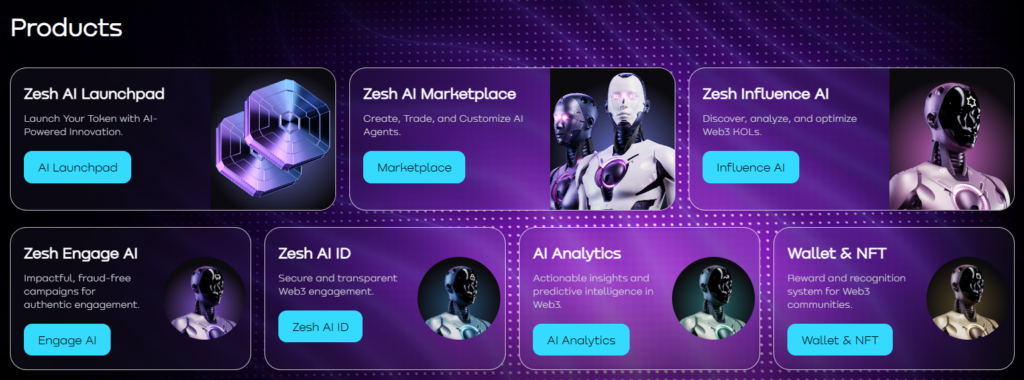
Zesh operates as a modular AI infrastructure composed of several integrated tools:
-
Zesh Influence AI: A data-driven engine designed to discover KOLs and optimize campaign performance
-
Zesh Engage AI: A quest-based system focused on real engagement rather than bot-driven interaction
-
Zesh AI ID: A behavioral bot-detection layer that provides portable on-chain reputation
-
Zesh AI Launchpad & Marketplace: A platform where AI agents can be tokenized, traded, and used to launch new projects paired with the $ZAI token
How the Platform Works
The process appears simple from the outside, but several layers operate simultaneously in the background.
The workflow typically follows these steps:
-
A Web3 project creates a campaign and locks rewards into a smart contract
-
Users create a wallet and Zesh ID with a single click
-
AI agents analyze user behavior and interaction patterns
-
zkML models verify whether contributions are legitimate
-
Bots are automatically detected and filtered
-
Rewards are distributed automatically
-
Campaign performance and ROI are tracked through a dashboard
This structure removes the need for centralized verification systems.
Ecosystem and Partnerships
Zesh is more than just a dashboard. It is part of a broader infrastructure with integrations and partnerships across major blockchain ecosystems.
Key ecosystem highlights include:
-
Launchpad infrastructure
-
AI Marketplace
-
Zesh ID reputation system
-
Dynamic NFT identity layer
-
Telegram Mini App (“To The Moon”)
-
Integration with over 200 Web3 projects as of 2024
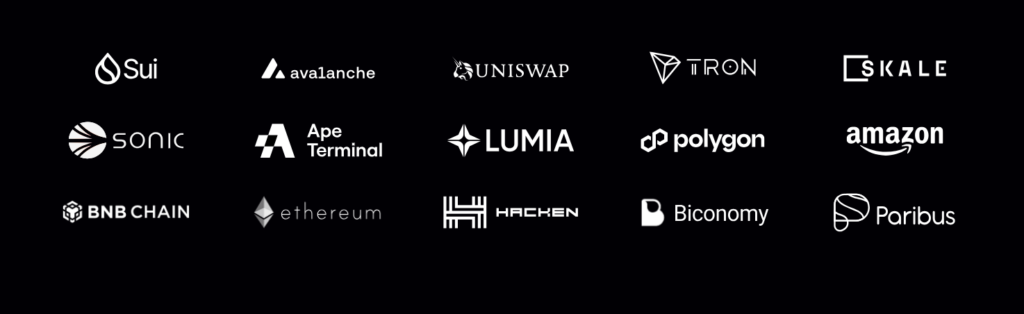
The project also reports ecosystem relationships involving networks and platforms such as:
-
SUI
-
Polygon
-
BNB Chain
-
Ethereum
-
Uniswap
-
Avalanche
On the investment side, supporters include:
-
ZBS Capital
-
Spyre Capital
-
Unreal Capital
-
Angel investor Ash Crypto
The project also integrates with AI-focused infrastructure providers such as Mind AI.
Team Behind the Project
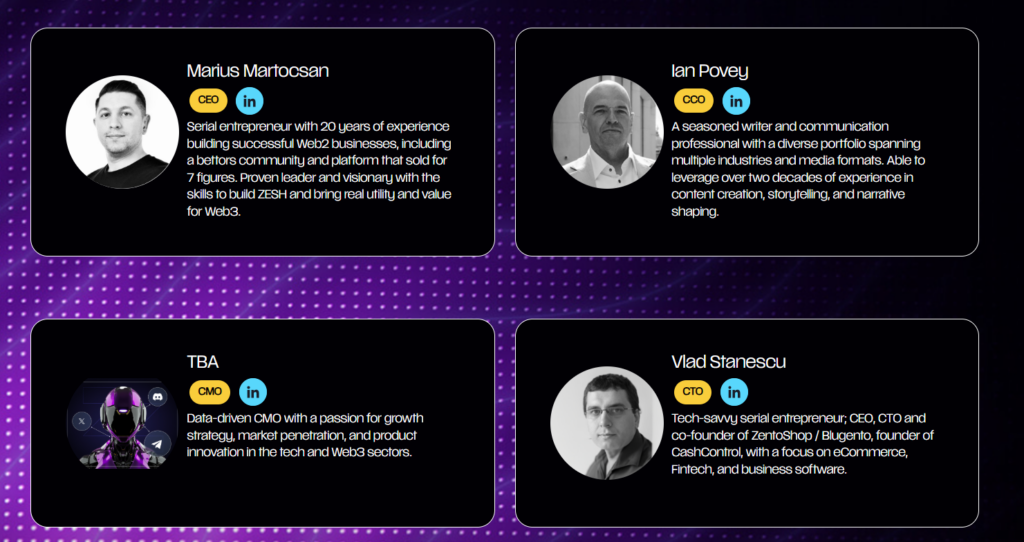
The Zesh AI team consists primarily of experienced professionals with Web2 backgrounds who transitioned into Web3.
Key team members include:
-
Marius Martocsan — CEO, with over 20 years of entrepreneurial experience
-
Vlad Stanescu — CTO, specializing in fintech and e-commerce infrastructure
-
Ioana Caramavrov — Chief AI Officer, expert in AI security and biometrics
-
Alexandru Ion — CISO, cybersecurity and penetration testing specialist
The company is reported to be based in Singapore.
Token Distribution and Financial Structure
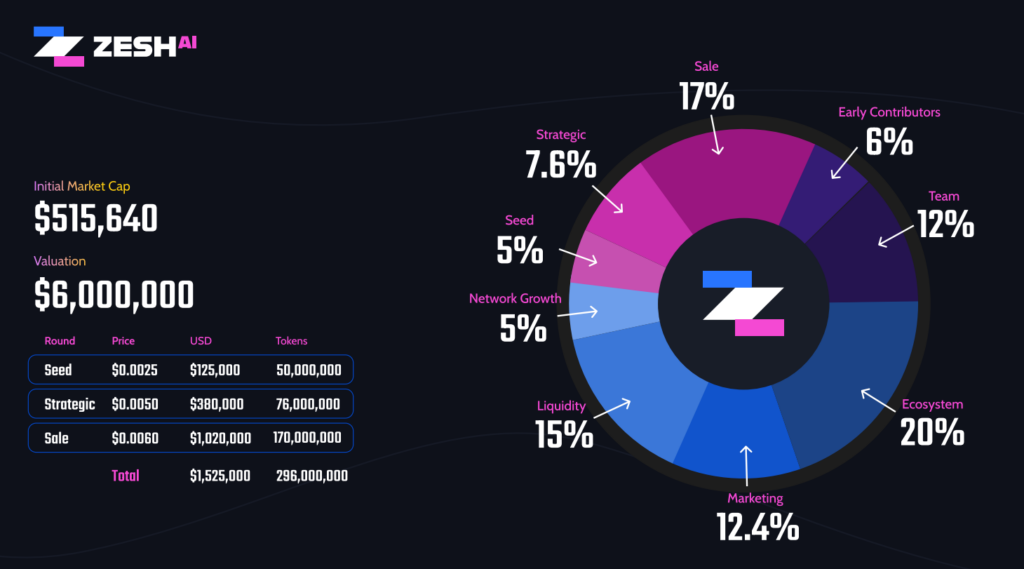
The Zesh AI Layer ($ZAI) token allocation is structured to support ecosystem growth while maintaining liquidity and market stability.
Token allocation breakdown:
-
Ecosystem — 20%
-
Sale — 17%
-
Liquidity — 15%
-
Marketing — 12.4%
-
Team — 12%
-
Strategic — 7.6%
-
Early Contributors — 6%
-
Seed — 5%
-
Network Growth — 5%
This allocation model emphasizes ecosystem expansion while maintaining liquidity reserves.
Financial overview:
-
Initial Market Cap — $515,640
-
Fully Diluted Valuation (FDV) — $6,000,000
-
Total Funds Raised — $1,525,000
-
Planned Circulating Supply — 296,000,000 ZAI
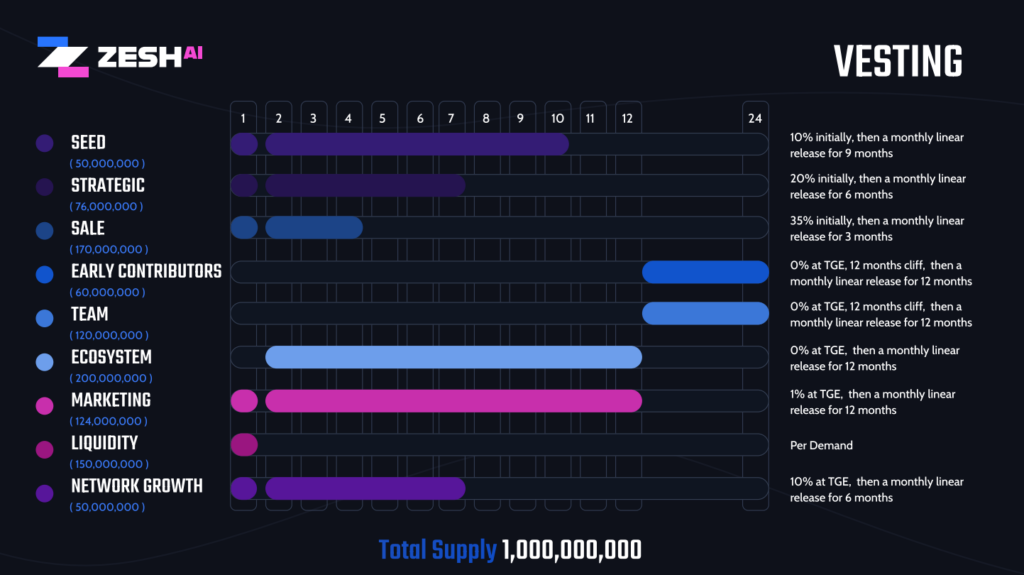
The token release follows a vesting structure, preventing immediate full circulation and reducing early sell pressure.
Governance and DAO Transition Plan
Zesh is not yet a fully decentralized autonomous organization (DAO), but the transition process has already begun.
Through the HODLers Voice governance system:
-
Token holders can vote on ecosystem decisions
-
Users can submit proposals
-
Participants can influence platform development
The long-term goal is to transition into a fully decentralized governance model.
Roadmap and Current Development Status
Completed milestones:
-
Zesh ID infrastructure
-
Dynamic NFT identity system
-
Staking contract deployment
-
Launchpad preparation
-
Token Generation Event (2025)
Ongoing and future objectives:
-
Expansion of AI Agent Launchpad
-
Marketplace growth
-
Cross-chain integrations
-
Increased ecosystem adoption
Strengths and Risk Factors
Strengths:
-
Focus on a real and measurable Web3 problem
-
Clear token utility
-
Integrated staking and deflation mechanisms
-
Portable on-chain reputation infrastructure
Risks:
-
Adoption remains in early stages
-
Competitive landscape includes platforms such as Galxe, Layer3, and Zealy
-
Execution and adoption will determine long-term success
-
Exchange liquidity and accessibility remain critical factors
Zesh AI Layer focuses on one of Web3’s core structural problems: distinguishing real users from fake engagement.
Its combination of AI agents, zkML verification, and on-chain identity infrastructure creates a technically strong foundation. However, the key factor will be adoption rather than technology alone.
If the ecosystem achieves meaningful adoption, the $ZAI token could evolve into a utility-driven asset. Otherwise, it may face the same adoption challenges seen in many AI-Web3 projects.
At its current stage, Zesh AI Layer can be categorized as a high-potential, medium-risk Web3 infrastructure project.
Official Links
You can also freely share your thoughts and comments about the topic in the comment section. Additionally, don’t forget to follow us on our Telegram, YouTube, and Twitter channels for the latest news and updates.