

 Yeliz Akmaca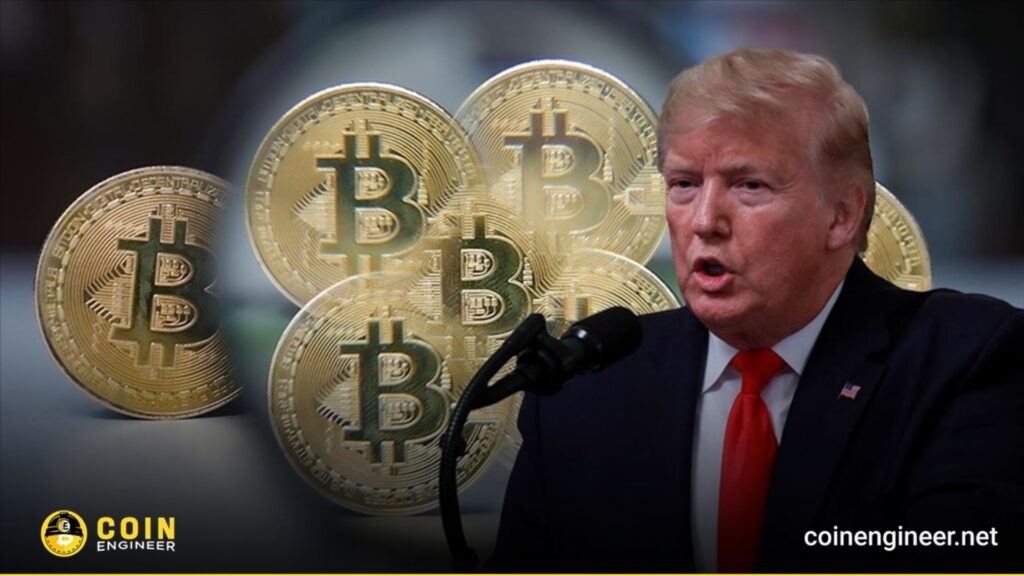
Bitcoin decline was not triggered by a sudden technical breakdown, but by Donald Trump’s claim that the US trade deficit had fallen by 78%. A familiar fear returned to the market: interest rates staying higher for longer. Investors focused less on whether the number itself was accurate, and more on what it could mean. Because when tariffs return to the conversation, the dollar strengthens—and risk appetite weakens.
Bitcoin Is Increasingly Trading Like a Macro Asset
Bitcoin is no longer behaving like a purely crypto-native asset. Increasingly, it trades like a macroeconomic instrument.
Over the past two weeks, Bitcoin’s price action has reflected macro developments far more than crypto-specific catalysts. Expectations around interest rates, the strength of the US dollar, and overall liquidity conditions have become the dominant forces shaping direction.
Tariffs sit at the center of this equation. They can increase import costs, creating inflationary pressure. That, in turn, complicates the outlook for central bank policy.
When markets begin to price in the possibility of higher rates for longer, a chain reaction tends to follow. The dollar strengthens first. Liquidity tightens globally. Risk assets begin to lose momentum. Bitcoin, despite its independent structure, does not remain immune.
Trump’s statement did not directly trigger this sequence. But it reactivated the possibility in investors’ minds. That alone was enough to shift positioning.
The Real Reason Behind Bitcoin’s Decline
In simple terms, the reason behind Bitcoin’s decline can be traced back to renewed tariff expectations and their potential macroeconomic consequences.
Rising tariff risks increase the likelihood of persistent inflation. This makes it harder for the Federal Reserve to cut interest rates quickly. A stronger dollar follows. As a result, investors rotate away from risk-sensitive assets, placing pressure on Bitcoin.
US Trade Deficit Data Adds Context, But Questions Remain
There is also real data behind the broader trade narrative. In January, the US trade deficit fell sharply to approximately $29.4 billion, one of the lowest levels since 2009.
Lower imports and stronger exports contributed to the shift. Tariff threats themselves may have already begun influencing supply chains and corporate behavior.
However, economists caution that the headline improvement does not necessarily reflect a fully structural change. Certain components, including non-monetary gold flows, may have exaggerated the decline. Beneath the surface, the underlying trend may be less stable than the headline suggests.
Markets recognized this distinction quickly. The focus shifted away from the number itself and toward whether tariff policies would continue shaping financial conditions.
Strong Dollar and Geopolitical Risks Continue to Pressure Bitcoin
Despite Bitcoin’s recent rebound toward the $67,000 level, the broader trend remains fragile. The crypto market is currently on track for its fifth consecutive weekly decline.
If confirmed, it would mark the longest losing streak since the nine-week drawdown recorded between March and May 2022.
Geopolitical risks continue to reinforce dollar strength. Rising military tensions in the Middle East have pushed both the US dollar and oil prices higher.
A stronger dollar historically creates headwinds for Bitcoin, given their inverse relationship. In this environment, Bitcoin’s short-term direction is increasingly tied to global macroeconomic forces rather than internal crypto developments.
When liquidity expands, Bitcoin responds quickly to the upside. When conditions tighten, it retreats just as fast.,
Fed Minutes Released: Is a Rate Cut on the Horizon?
What Comes Next for Bitcoin?
Markets are now watching one critical question: whether tariff rhetoric evolves into sustained financial tightening, or fades into political noise. If tariffs ultimately reinforce expectations of a stronger dollar and prolonged high interest rates, Bitcoin’s upside may remain constrained.
If the narrative loses momentum and financial conditions begin to ease, Bitcoin could regain strength through renewed liquidity flows.
What is clear is that Bitcoin’s trajectory is no longer shaped solely by crypto-specific events. Its direction is now intertwined with global economic policy, monetary expectations, and macro-level capital flows.
You can also freely share your thoughts and comments about the topic in the comment section. Additionally, don’t forget to follow us on our Telegram, YouTube, and Twitter channels for the latest news and updates.