

 Emre Yumlu
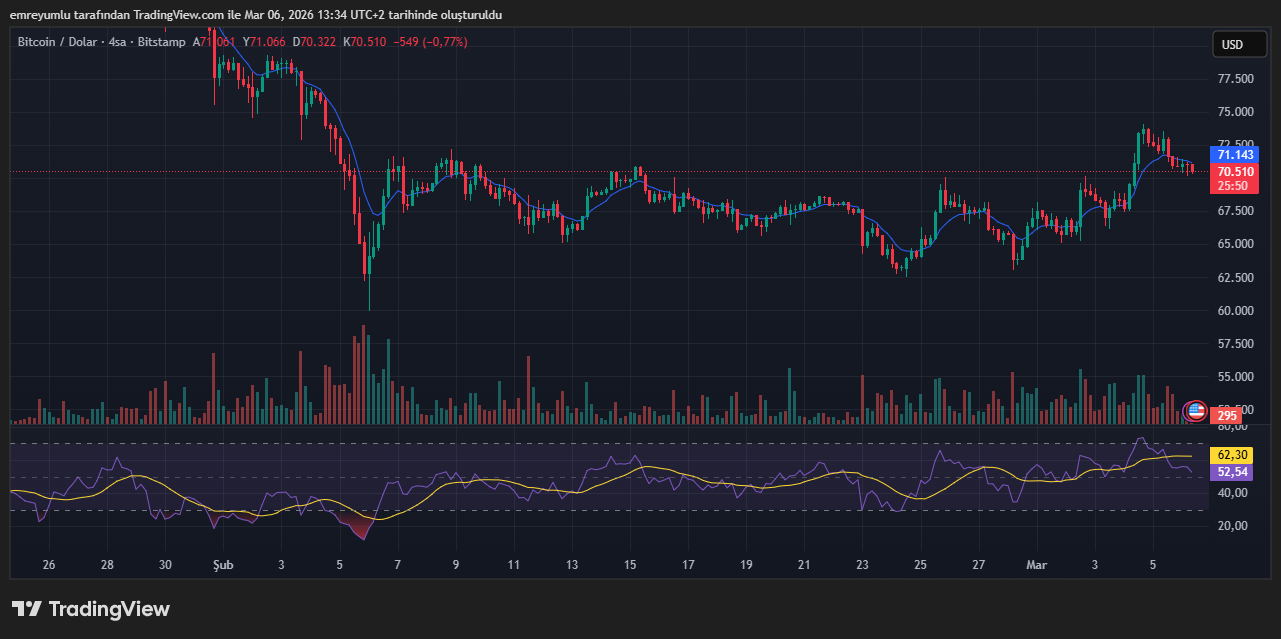
Bitcoin has recently come under renewed selling pressure as global financial markets adopt a more cautious tone. After climbing to around $74,000 earlier in the week, the world’s largest cryptocurrency has retraced toward the $70,000 level. The pullback reflects a broader shift in investor sentiment as geopolitical tensions and macroeconomic uncertainty push market participants toward safer assets.
While short-term volatility is common in the cryptocurrency market, the current move appears closely linked to developments across global financial markets rather than crypto-specific factors alone.
Rising Global Uncertainty Weighs on Risk Assets Such as Bitcoin
In recent days, investors have increasingly adopted a defensive stance. Escalating geopolitical risks and growing uncertainty in international markets are prompting traders to reduce exposure to higher-risk assets.
This shift in sentiment has not been limited to cryptocurrencies. Equity markets and commodities are also reacting to the changing risk environment. When global uncertainty increases, investors typically rebalance their portfolios by moving capital away from volatile assets and toward instruments perceived as more stable.
As a result, Bitcoin and other cryptocurrencies are experiencing temporary downside pressure alongside other growth-oriented assets.
Oil Prices Surge Amid Middle East Tensions
The impact of these developments is also being felt in the energy market. Oil prices rose above $88, increasing by 4.76% in the last 24 hours. This increase is believed to be influenced by the risks that tensions in the Middle East could create for energy supply.
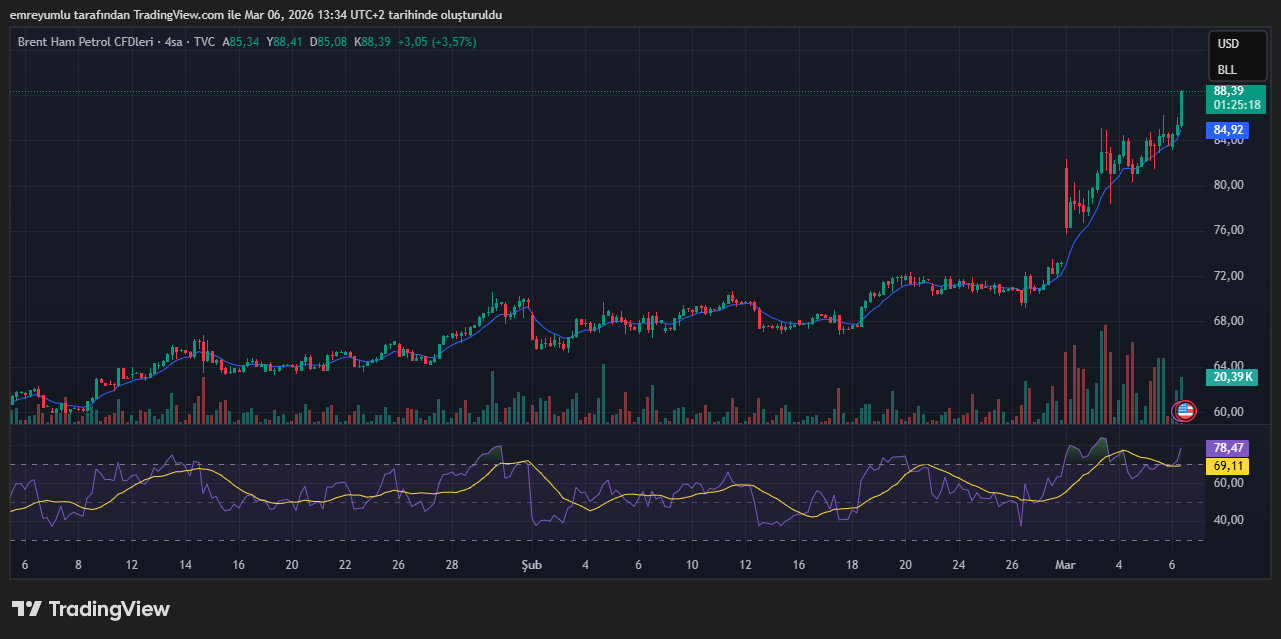
Market participants attribute the sharp rise primarily to concerns that escalating tensions in the Middle East could disrupt global energy supply. Any threat to oil production or transportation routes often triggers rapid price increases, as traders factor potential shortages into market expectations.
Higher energy prices can also influence broader financial conditions by increasing inflationary pressures and adding to global economic uncertainty.
Stronger Dollar and Higher Bond Yields Reflect Market Caution
The cautious mood is also evident in traditional financial indicators. The U.S. Dollar Index (DXY), which measures the dollar’s strength against a basket of major currencies, has moved above the 99 level. At the same time, the yield on the U.S. 10-year Treasury has risen to approximately 4.16%.
Both developments suggest that investors are gravitating toward dollar-denominated assets and government bonds, which are often viewed as safer during periods of market stress.
Technology Stocks and Crypto-Related Shares Under Pressure
The shift toward a risk-off environment is also impacting technology equities. The Invesco QQQ ETF, which tracks the Nasdaq-100 index, slipped about 0.5% in pre-market trading.
Companies closely tied to the cryptocurrency ecosystem have shown similar weakness. Shares of firms such as Strategy, Coinbase, and MARA Holdings have also declined in pre-market activity, reflecting broader caution among investors.
These movements highlight how cryptocurrency markets can at times move in tandem with traditional financial assets, particularly technology stocks.
Geopolitical Tensions are Putting Pressure on Risky Assets Like Bitcoin
The ongoing tensions in the Middle East remain one of the primary drivers behind the current market environment. The conflict, which has persisted for roughly a week, has already influenced energy markets and investor sentiment worldwide.
As geopolitical uncertainty rises, investors often prioritize capital preservation over growth opportunities. In such periods, riskier assets—including Bitcoin and high-growth technology stocks—can face short-term selling pressure.
Looking ahead, developments in global geopolitics and shifts in investor risk appetite are likely to remain key factors influencing both cryptocurrency markets and traditional financial assets.
Also, you can freely share your thoughts and comments about the topic in the comment section. Additionally, please follow us on our Telegram, YouTube, and Twitter channels for the latest news and updates.