

 Haciyev Reşit
The cryptocurrency market started the new week under heavy selling pressure. The leading digital asset, Bitcoin, fell below $65,000 amid rising global trade tensions and geopolitical risks. U.S. President Donald Trump’s announcement of a plan to increase global tariffs to 15% accelerated a wave of risk aversion in the markets and unsettled investors. As Bitcoin quickly lost nearly 5% of its value, the questions “Why is Bitcoin falling?” and “Will Bitcoin continue to decline?” have once again moved to the center of attention.
Why Is Bitcoin Falling?
There are multiple macroeconomic and geopolitical factors behind Bitcoin’s sharp sell-off. The most significant recent trigger has been the United States’ plan to increase global tariffs. President Donald Trump’s proposal to raise global import tariffs from 10% to 15% has created new pressure on international trade. Rising tariffs have intensified concerns about a potential resurgence of trade wars, prompting investors to move away from riskier assets. This shift has increased selling pressure in the crypto market. Jeff Mei, Chief Operating Officer at BTSE, stated that the sudden tariff increase directly affected investor behavior. According to Mei, higher tariffs have raised concerns about global economic growth and fueled expectations of a deeper market correction.
Mei commented:
“The increase in tariffs has led investors to anticipate a larger downturn, accelerating selling pressure across crypto assets.”
In times of uncertainty, investors typically exit highly volatile assets like cryptocurrencies and move toward safer havens.
Geopolitical Tensions Add Pressure
On the geopolitical front, tensions between the United States and Iran are also weighing heavily on the market. Military movements in the region and diplomatic statements have heightened the perception of uncertainty in global markets, causing investors to act more cautiously toward risk assets. The potential impact of a military conflict on energy supply and global trade routes is considered one of the main factors weakening investor risk appetite. Although Bitcoin is sometimes described as “digital gold,” recent price movements suggest that during crises, investors still prefer traditional safe-haven assets such as gold and the U.S. dollar. This indicates that despite being viewed as a long-term store of value, Bitcoin continues to be priced as a high-risk asset in the short term. As geopolitical tensions and global uncertainty persist, crypto assets are expected to remain sensitive to macro developments.
A Broader Correction?
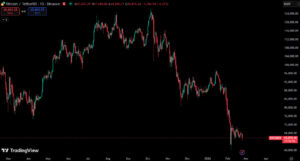
Bitcoin reached its all-time high above $125,000 last October. However, the selling wave that began after that peak has continued into the new year.
- Approximately 26% decline since the start of the year
- More than 47% drop from its all-time high
These figures suggest that the downturn may not be just a short-term move but part of a broader corrective phase.
Will Bitcoin Continue to Fall?
The current outlook shows that Bitcoin’s price remains highly sensitive to macroeconomic developments. Global tariffs, trade tensions, and geopolitical risks directly influence investor psychology. Since crypto markets tend to react faster than traditional markets, periods of uncertainty often lead to unavoidable spikes in volatility. The implementation of tariffs and future global political developments will likely be key factors shaping Bitcoin’s short- and medium-term direction. According to analysts, selling pressure could persist in the short term, while the long-term trajectory will depend on the global economic outlook and institutional investor behavior. Bitcoin’s drop below $65,000 signals that risk perception in the crypto market is being reshaped. Rising trade tensions, geopolitical risks, and macroeconomic uncertainty are directly influencing investor decisions. In the coming period, global developments and economic policy decisions will continue to play a decisive role in determining the direction of Bitcoin and the broader cryptocurrency market.
You can freely share your thoughts and comments about the topic in the comment section. Additionally, please don’t forget to follow us on our Telegram, YouTube and Twitter channels for the latest news and updates instantly.