

 Yeliz Akmaca
Gold prices are falling this week across global markets. The main reason behind the roughly 1% weekly decline is the surge of oil prices above $100, reigniting inflation concerns. This development reduces the likelihood of a near-term interest rate cut by the U.S. Federal Reserve, putting downward pressure on gold. Geopolitical tensions around the Hormuz Strait have raised energy costs, while safe-haven demand remains limited.
Rising geopolitical risks are complicating the picture further. Messages from Iran regarding the Hormuz Strait have heightened perceived energy risks. At this point, investors are closely watching both energy prices and today’s critical U.S. inflation data.
Oil Price Rally Pressures Gold
On Friday morning, spot gold traded around $5,112 per ounce, gaining roughly 0.7% intraday. April U.S. gold futures saw a slight decline, settling at $5,116.
The drop in the U.S. 10-year Treasury yield could provide some support for non-yielding gold. Nevertheless, weekly performance shows more than a 1% decline. The key driver remains energy prices: the return of oil toward $100 raises expectations for renewed inflation pressure in the U.S. In market terms, as oil rises, the likelihood of Fed rate cuts gets delayed.
Hormuz Strait Tensions Ignite Energy Market
Tensions in the Middle East have escalated this week. Iran’s Supreme Leader, Ayatollah Mojtaba Khamenei, said Tehran could use the strategic Hormuz Strait as leverage against the U.S. and Israel.
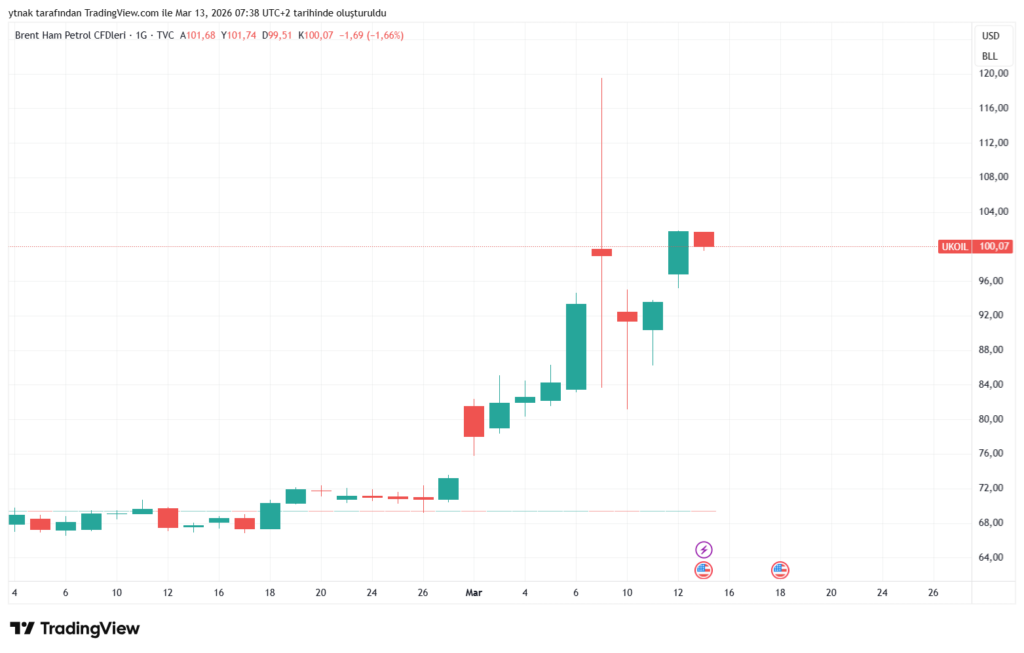
This statement triggered immediate reactions in the energy market. Attacks on Gulf oil tankers and stern warnings from Iran have undermined hopes that the conflict would ease quickly. Brent crude neared the $100 mark again, reviving global energy supply concerns and directly influencing inflation expectations.
Eyes on Fed Decision and PCE Inflation Data
Meanwhile, U.S. President Donald Trump again called on Fed Chair Jerome Powell to lower interest rates. Market expectations, however, point elsewhere.
According to CME FedWatch, investors anticipate the Fed will keep rates in the 3.5–3.75% range at its two-day meeting ending March 18.
The main focus for markets is today’s release of the U.S. January Personal Consumption Expenditures (PCE) index. As the Fed’s preferred inflation measure, this data could reshape expectations for the central bank’s interest rate path.
On the metals front, gains were modestly positive. Spot silver rose 1% to $84.59 per ounce. Platinum gained 1.2% to $2,157, while palladium increased 1.1% to $1,636 per ounce.
Energy prices saw a small pullback. The U.S. issued 30-day licenses allowing countries to purchase stranded Russian crude and petroleum products, slightly easing prices. Brent remained around $99.8, and WTI crude stayed near $95 per barrel.
Why Is Gold Falling?
Rising oil prices increase inflation risks, weakening expectations for a Fed rate cut. Higher interest rate expectations typically place downward pressure on gold prices.
Also, you can freely share your thoughts and comments about the topic in the comment section. Additionally, please follow us on our Telegram, YouTube and Twitter channels for the latest news and updates.