

 Emre Yumlu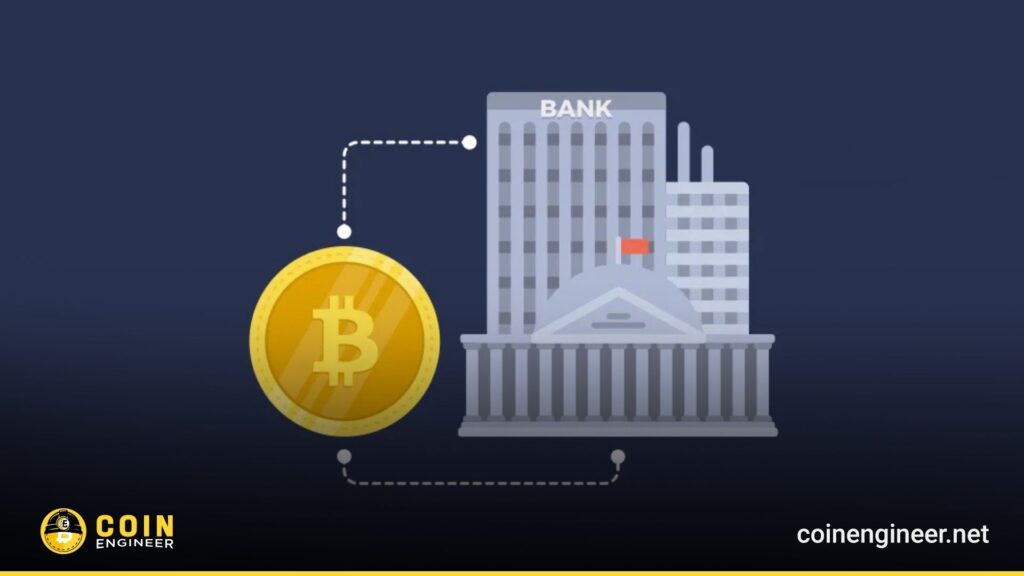
The use of cryptocurrencies is growing rapidly amid rising inflation, global economic uncertainty, and a broader desire among individuals to regain financial control. So where do traditional banks stand in this shifting landscape? According to industry experts, the relationship between banks and crypto is evolving from competition to convergence.
A Shift Toward Convergence?
Fabian Dori, Chief Investment Officer at Sygnum Bank, believes that the dynamic between banks and crypto is no longer a simple rivalry—it’s becoming a fusion. As digital assets like Bitcoin and Ethereum gain recognition as reserve assets, banks are starting to appreciate the benefits of crypto technologies such as real-time processing, transparency, and efficiency.
At the same time, crypto platforms are adopting the risk and compliance frameworks of traditional finance (TradFi). The question is no longer “do we need crypto?” but rather “how do we integrate it?”
Shawn Young from MEXC Research shares a similar view. He notes that by 2025, banks are starting to view blockchain not as a threat, but as the foundation of next-generation financial infrastructure. In his view, survival and competitiveness depend on collaboration.
Banks’ Strategy: Absorb, Package, Deliver
Gracy Chen, CEO of Bitget, argues that the relationship between banks and crypto is not purely collaborative or adversarial. Instead, banks are working to domesticate crypto by integrating it into their systems. Just like they’ve done with ETFs and derivatives, they aim to repackage crypto and offer it to traditional clients.
A large share of crypto assets now flows through bank-linked on-ramps, custody services, and regulated stablecoins. In other words, a significant portion of crypto capital is already intertwined with traditional finance.
What’s Next? Banks’ Crypto Ambitions
Major banks are now exploring projects beyond stablecoins. These include tokenization, staking, custodial services, and even proprietary Layer-2 blockchain solutions. These offerings aim to create new revenue models and accelerate digital transformation within banking systems.
According to Anthony Georgiades, some banks have already started offering crypto ETFs, staking rewards, and even crypto-backed loans. Others are venturing into tokenized securities or digitized real estate products.
Still, this evolution won’t be easy. Full crypto integration demands significant changes in both technology and regulation. Banks must now grapple with KYC, AML, wallet management, and blockchain node operations as part of their everyday business.
Growing Competition, Higher Standards
As more banking system enter the crypto space, competition naturally increases. But that doesn’t spell doom for crypto-native firms. In fact, banks often lack the infrastructure or in-house expertise and need external partnerships—opening doors for collaboration.
Chen points out that while banks bring scale and regulatory clarity, crypto-native companies maintain their edge in DeFi, Web3 integration, and protocol development. Dori also highlights that these firms excel in creating agile, user-focused solutions that continue to push innovation forward.
You can also freely share your thoughts and comments about the topic in the comment section. Additionally, don’t forget to follow us on our Telegram, YouTube, and Twitter channels for the latest news and updates.