

 Haciyev Reşit
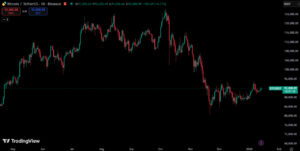
Since January 3, Bitcoin (BTC) has managed to stay above $90,000 but has yet to decisively break the $92,500 resistance. This sideways movement raises the question: “Who will determine the next direction?” Current data suggests that institutional investors, rather than retail traders, are likely to drive Bitcoin’s next major move.
Bitcoin Consolidation Continues
BTC has been trading within a tight range in recent weeks. Despite attempts to move higher, a sustained breakout has not occurred, signaling that the market is waiting for a new catalyst. Analysts believe this catalyst will likely come from macroeconomic data and institutional capital flows rather than individual retail investors. The path toward the psychological $100,000 level is closely linked to global liquidity conditions and the risk appetite of large funds.
Why Institutional Demand Is Critical
Analysis from Bitwise shows that the limited price movement in Bitcoin is largely due to slowed institutional demand. Reduced inflows from large-scale investors are suppressing BTC’s upward momentum.
Bitwise Europe CEO Bradley Duke summarized the situation:
“This pullback is not due to broken liquidity or long-term investor selling, but rather the slowdown in institutional demand.”
Bitwise Europe Research Head Andre Dragosch added that the current stagnation stems from cautious institutional positioning, not halving cycles or technical risks.
Macroeconomic Data Drives Institutional Decisions
Institutional investors base their moves heavily on economic indicators. Recent U.S. unemployment data, dropping from 4.5% to 4.4%, indicates a strong labor market. This fosters expectations for:
- Increased economic confidence
- Renewed risk appetite
- Potential Fed flexibility for future rate cuts
Such developments can accelerate liquidity inflows, supporting risk assets like Bitcoin.
ETFs Highlight Institutional Sentiment
U.S. spot Bitcoin ETFs remain a key gauge of institutional behavior. Managing over $126 billion in assets, these ETFs provide clear signals about market confidence. From November 2025, approximately $4.66 billion in net outflows occurred, reflecting cautious institutional sentiment.
However, a notable shift occurred in mid-January. On January 12, spot ETFs saw a net inflow of $116.67 million, coinciding with improved employment data—demonstrating the direct impact of macroeconomic developments on institutional decisions.
Quiet Accumulation in Institutional Reserves
Despite price pressure, institutional BTC reserves show no sharp sell-off. Total institutional reserves have increased to 4.06 million BTC, a ~1.06% rise over 30 days. This suggests measured accumulation rather than aggressive selling. While retail traders still influence short-term fluctuations, analysts agree that the main trend will be determined by institutional capital.
Spot exchange net flow data shows that while net inflows were positive from early December to early January, $58.24 million in net outflows occurred after January 12, indicating some retail investors are reducing positions.
Assessment: Who Will Move Bitcoin Next?
Current data indicates that Bitcoin’s next strong move will be driven less by retail interest and more by:
- U.S. macroeconomic data
- Institutional risk appetite
- Spot ETF inflows and outflows
If institutional demand accelerates again, BTC may first test the $92,500 resistance and potentially move toward the $100,000 level.
You can also freely share your thoughts and comments about the topic in the comment section. Additionally, don’t forget to follow us on our Telegram, YouTube, and Twitter channels for the latest news and updates.