

 Emre Yumlu
The cryptocurrency mining industry is facing increasing profitability pressure in the current market cycle. Declining block rewards, rising energy costs, and limited support from transaction fees are forcing many mining companies to rethink their traditional business models. According to recent market assessments, simply mining Bitcoin may no longer be sufficient for long-term sustainability. Instead, miners may need to adopt more active strategies for managing their BTC holdings.
Falling Mining Revenues Push Companies Toward Alternatives
For years, Bitcoin mining has relied on large-scale energy infrastructure located in regions with relatively low electricity costs. However, the gradual reduction of block rewards combined with shrinking margins has intensified operational pressure across the sector.
Halving events play a particularly significant role in this dynamic. Each reduction in block rewards cuts mining revenue, which encourages companies to explore new ways to remain profitable.
Some mining firms are therefore considering diversification strategies. One potential direction involves leveraging their existing power infrastructure to support artificial intelligence computing. High-capacity data centers used for AI processing require significant energy resources—something many mining operations already possess. While this shift could open new opportunities, transitioning to AI infrastructure requires substantial capital investment and operational restructuring.
Miners Hold a Significant Bitcoin Reserve
Over the years, many mining companies have adopted a strategy of holding a portion of the Bitcoin they produce rather than immediately selling it. This approach reflects the long-standing “HODL” culture within the crypto industry.
As a result, miners collectively control a notable amount of Bitcoin. Estimates suggest that mining entities hold close to 1% of the total BTC supply. Despite the size of these reserves, a large portion of these assets remains inactive on corporate balance sheets.
Active Treasury Management Could Offer an Advantage
Market analysts suggest that more dynamic treasury management could help miners improve financial resilience. Instead of holding Bitcoin as a passive reserve, companies may benefit from utilizing their BTC as a productive financial asset.
Several strategies could be considered. For example, miners could employ derivatives-based risk management tools, such as covered call strategies or collateralized options structures, to generate additional revenue streams. Another possibility involves allocating BTC to lending protocols in order to earn interest.
These types of approaches allow mining companies to monetize their holdings while still maintaining exposure to Bitcoin’s long-term value.
Competition May Intensify After Future Halving Events
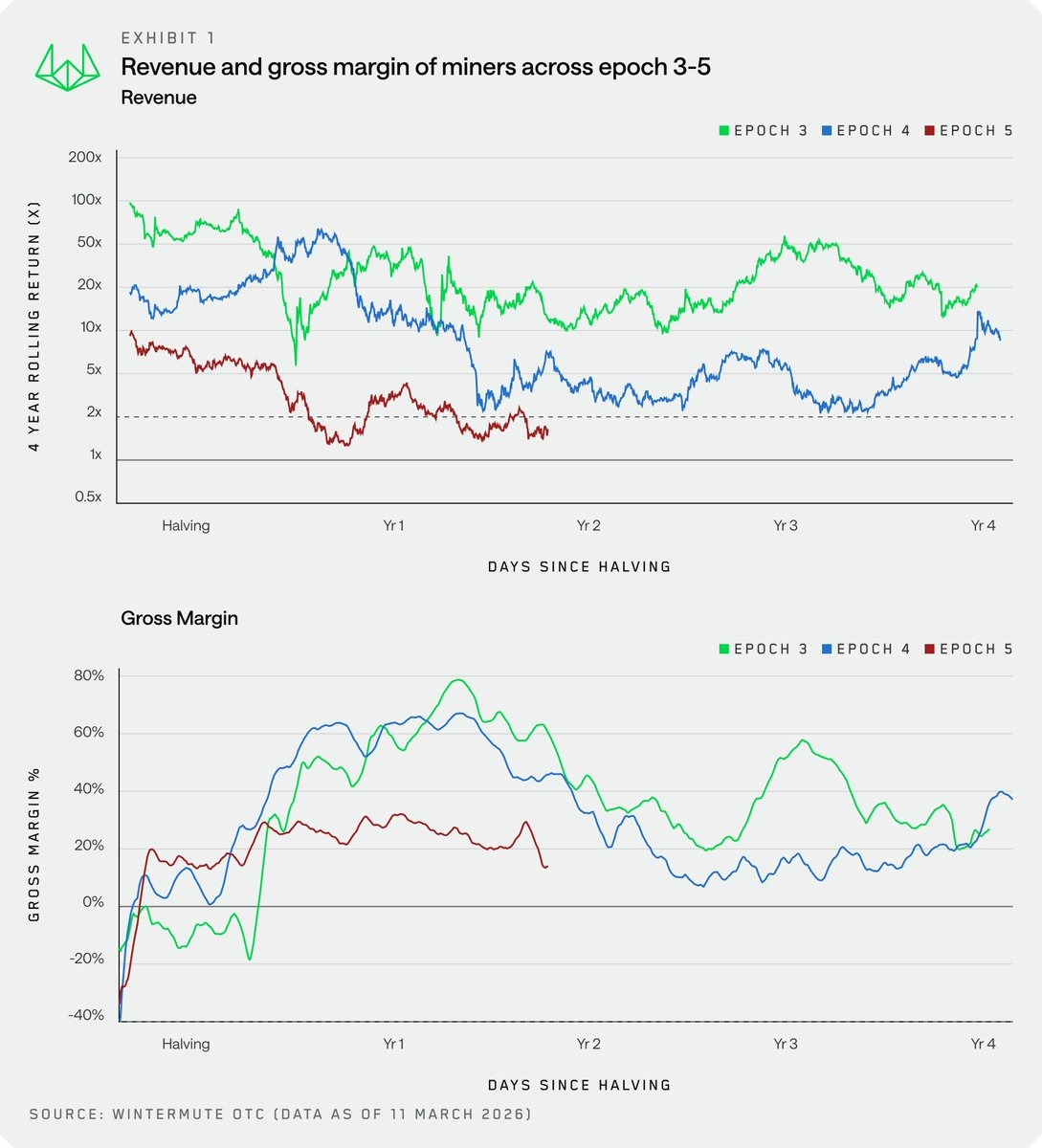
In previous market cycles, strong Bitcoin price increases often offset the revenue reduction caused by halving events. However, in the current cycle, price performance has not fully compensated for declining mining rewards. This has contributed to tightening profit margins across the industry.
At the same time, transaction fee income has proven inconsistent and insufficient to replace lost block rewards. Rising energy costs further amplify these pressures.
Many analysts view this environment as a natural restructuring phase for the industry. As margins tighten, inefficient operators may exit the market while more adaptable mining companies gain a competitive advantage.
Also, in the comment section, you can freely share your comments and opinions about the topic. Additionally, don’t forget to follow us on Telegram, YouTube and Twitter for the latest news and updat