

 Emre Yumlu
Caldera (ERA) is an innovative blockchain infrastructure protocol designed to address the scalability and user experience challenges of blockchain technology. Specifically built to overcome the limitations of Ethereum, such as high transaction fees and low throughput, it offers high-performance and customizable Layer 2 (L2) and Layer 3 (L3) rollups. By providing developers with fast, secure, and cost-effective blockchain solutions, Caldera leverages its Metalayer technology to enable seamless communication and liquidity sharing across different blockchain networks. In this article, we’ll explore what Caldera (ERA) is, its RaaS platform, Metalayer technology, ecosystem, and the utility of the ERA token in detail.
What is Caldera?
Caldera is a Rollup-as-a-Service (RaaS) platform that empowers developers to create high-performance, customizable Layer 2 rollups on Ethereum and other base chains. Utilizing leading rollup frameworks like Arbitrum Orbit, OP Stack, and ZK Stack, it allows projects to launch tailored blockchain networks in minutes. This enables developers to focus on their core application logic without dealing with complex infrastructure management or security audits.
Caldera’s modular flexibility lets projects choose their execution environment (e.g., EVM or SolanaVM), data availability layer (Ethereum mainnet, Celestia, or NEAR), and gas fee token (ETH or a native ERC-20 token). This customization makes it ideal for optimizing transaction speed, cost efficiency, and security based on specific project needs.
Metalayer: Revolutionizing Cross-Chain Interoperability
One of Caldera’s standout features is its Metalayer, a cross-chain interoperability framework that facilitates fast, secure, and low-cost communication between rollups. This technology enables transactions across over 100 rollups in seconds, eliminating the need for traditional cross-chain bridges. Key features of Metalayer include:
- Unified Liquidity Access: Metalayer provides access to shared liquidity pools, fostering more efficient markets and enhanced user experiences.
- Simplified Cross-Chain Operations: Developers can focus on application logic while Metalayer handles complex cross-chain communication.
- Intents-Based Execution: Developers define high-level intents rather than low-level transactions, streamlining cross-chain interactions and enabling rapid asset onboarding.
- Secure Messaging: Built on Hyperlane, Metalayer’s messaging system is automatically deployed on every Caldera chain, supporting secure data transfers and state reads.
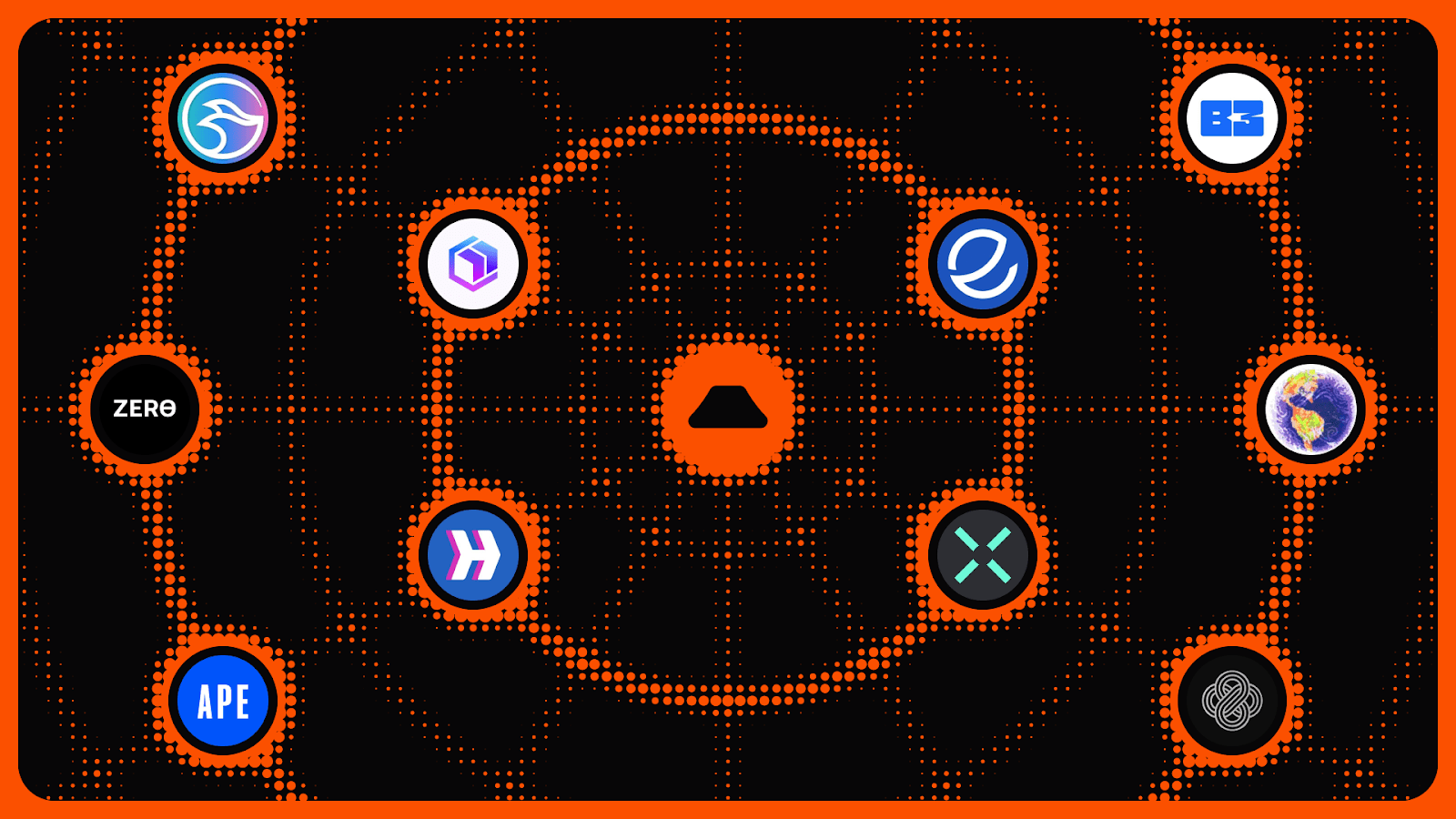
Metalayer empowers developers to build cross-chain dApps, aggregate liquidity, and establish secure bridges for high-value transactions. Integration with third-party bridges like Eco Routes ensures reliable messaging for long-tail or emerging chains.
Rollup-as-a-Service (RaaS) Platform
Caldera’s RaaS platform simplifies blockchain infrastructure setup and management for developers. With just a few clicks, developers can launch customized Layer 2 or Layer 3 rollups. Key benefits include:
- Rapid Deployment: Create rollups in minutes using frameworks like Arbitrum Orbit, OP Stack, or ZK Stack.
- Modular Design: Choose from various execution environments, data availability layers, and gas tokens.
- Cost Efficiency: Reduce gas fees to offer affordable transactions for users.
- Developer-Centric: Caldera manages infrastructure, security, and bridge configurations, freeing developers to focus on their applications.
What is the ERA Token?
The ERA token is the native utility and governance token of the Caldera ecosystem. It serves three primary functions:
- Omnichain Gas: Used to pay gas fees for cross-chain transactions on the Metalayer.
- Staking and Security: Validators stake ERA to secure the network and verify cross-chain messages.
- Governance: ERA holders can vote on Caldera Improvement Proposals (CIPs), influencing protocol upgrades, ecosystem grants, and foundation elections.
Caldera (ERA) Tokenomics
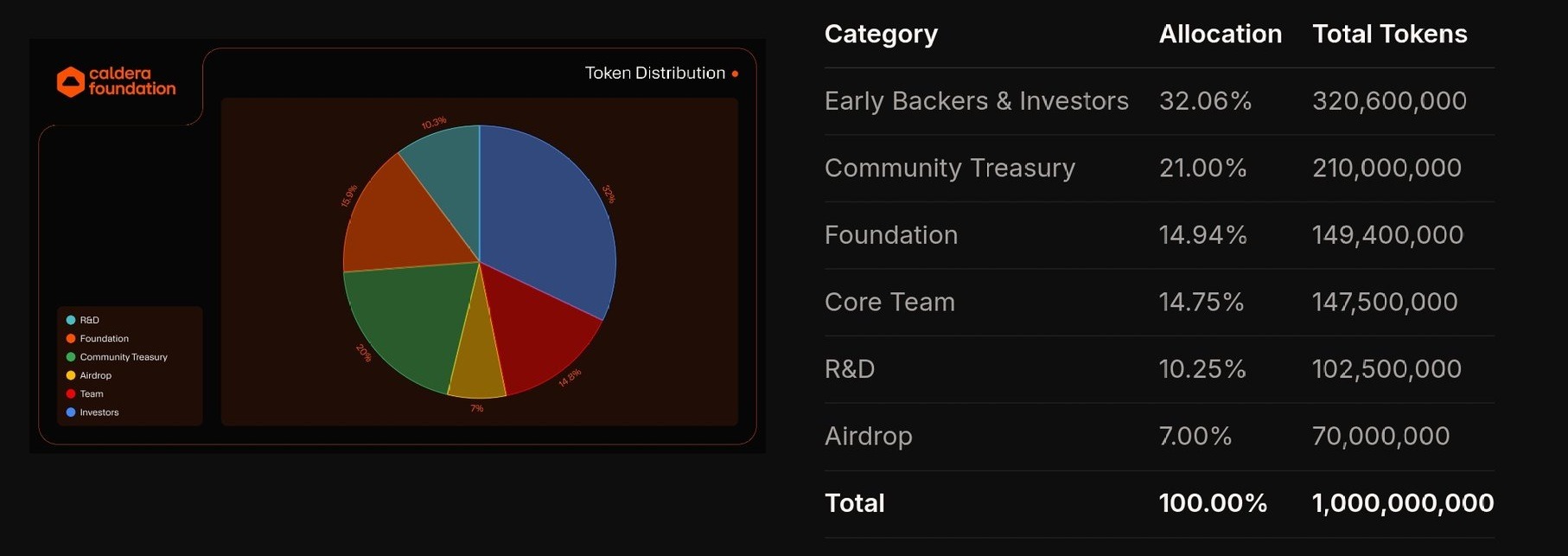
- Early Backers & Investors: 32.06%
- Community Treasury: 21%
- Foundation: 14.94%
- Core Team: 14.75%
- R&D: 10.25%
- Airdrop: 7%
Caldera Ecosystem
As of 2025, Caldera powers over 30 mainnet blockchains, accounting for approximately 25% of the Ethereum L2/L3 ecosystem. With a total value locked (TVL) exceeding $600 million, it has processed 370 million transactions across more than 10 million unique wallet addresses. Leading projects like Manta, B3, Kinto, ApeChain, and Bluwhale have launched their blockchains using Caldera.
Key Applications:
- RARI Chain: An NFT-focused rollup with royalty enforcement and near-zero gas fees.
- inEVM: Offers cross-chain DeFi operations with Celestia data availability and Hyperlane messaging.
- Ozean: An Optimism-based L2 for tokenized credit pools and corporate debt.
- zkXPLA: A gaming rollup with sub-second finality, bridging Polkadot and Ethereum.
- Kinto Network: A modular DEX with low fees and customizable order types.
Caldera (ERA) Investors
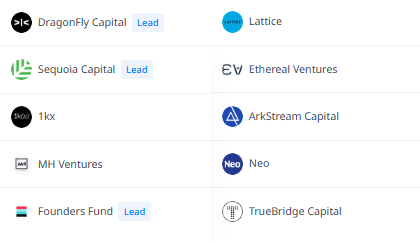
Caldera is backed by prominent investors, including DragonFly Capital, Sequoia Capital, Founders Fund, 1kx, MH Ventures, Lattice, Ethereal Ventures, ArkStream Capital, Neo, and TrueBridge Capital. These leading venture firms demonstrate strong confidence in Caldera’s RaaS and Metalayer technologies. This robust financial backing bolsters Caldera’s mission to deliver scalable and interoperable solutions in the Web3 space.
Caldera (ERA) Founding Team
Caldera is led by Matthew Katz (CEO), Parker Jou (CTO), and Abhi Raheja (Head of Marketing), driving the platform’s vision and growth in the blockchain ecosystem.

Official Links
Also, you can freely share your thoughts and comments about the topic in the comment section. Additionally, please follow us on our Telegram, YouTube and Twitter channels for the latest news and updates.