
 Emre Yumlu
Eclipse (ES) is a groundbreaking Layer 2 (L2) blockchain platform that leverages the Solana Virtual Machine (SVM) to address Ethereum’s scalability challenges. By combining Solana’s high transaction throughput and low costs with Ethereum’s robust security and liquidity, it empowers developers to build high-performance, scalable, and cost-effective decentralized applications (dApps). Powered by the ES token, Eclipse enables transformative applications in DeFi, gaming, and Decentralized Physical Infrastructure Networks (DePIN). This article dives into the features, technology, ecosystem, and tokenomics of Eclipse (ES).
What is Eclipse?
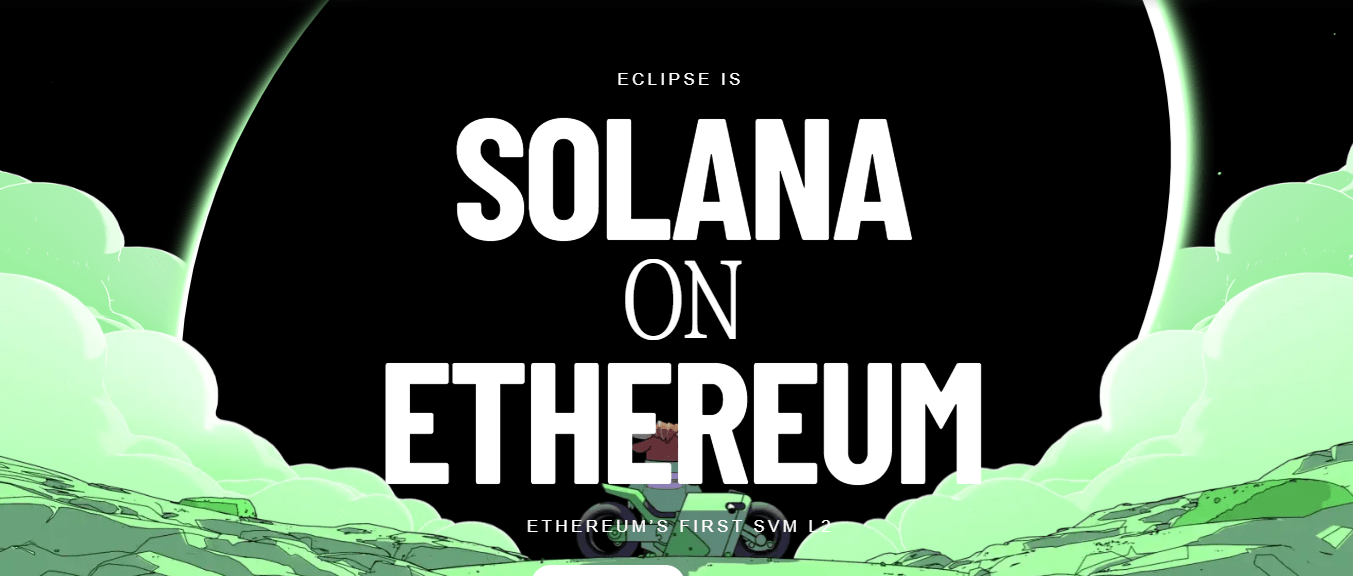
Eclipse is a Layer 2 solution built on Ethereum, utilizing the Solana Virtual Machine (SVM) to deliver unparalleled performance. It tackles the scalability, speed, and cost issues of traditional blockchains through a modular architecture. By integrating Celestia for data availability, RISC Zero for zero-knowledge proofs, and Hyperlane for cross-chain bridging, Eclipse ensures high transaction volumes and low latency, making it ideal for DeFi, gaming, and real-time data-intensive applications.
The platform maintains Ethereum’s security as its settlement layer while harnessing Solana’s parallel transaction processing to achieve over 100,000 transactions per second (TPS). Through Neon EVM integration, Eclipse offers EVM compatibility, allowing developers to use familiar Ethereum tools like Solidity and Vyper. This dual compatibility bridges the Solana and Ethereum ecosystems, enabling seamless dApp development for both developer communities.
Eclipse’s Technological Innovations
Eclipse employs a modular architecture to solve the blockchain trilemma—balancing scalability, security, and decentralization. Its core technological components include:
- Solana Virtual Machine (SVM): Enables parallel transaction execution for high throughput and low latency, with Sealevel technology leveraging multi-core processors for horizontal scalability.
- Ethereum Settlement Layer: Ensures transaction finality and security using Ethereum’s trusted infrastructure, with ETH serving as the gas token.
- Celestia Data Availability: Reduces storage costs and provides a scalable solution for high-volume transactions.
- RISC Zero Zero-Knowledge Proofs: Cryptographically verifies transaction validity, enhancing security without requiring intermediate state serialization.
- Hyperlane Cross-Chain Communication: Facilitates seamless asset and data transfers between Solana and Ethereum.
With its “GigaCompute” vision, Eclipse aims to deliver exponentially greater computational capacity than existing blockchains. The GSVM (Giga Scale Virtual Machine) utilizes a hardware-software co-design, incorporating SmartNICs, FPGAs, and GPU acceleration for high-performance transaction execution. Additionally, the “Hotspot Islands” technology isolates high-traffic applications to prevent performance degradation for other users.

Eclipse Use Cases
Eclipse’s high-performance infrastructure supports a wide range of innovative applications:
- DeFi Applications: Platforms like Orca, Solend, and Save leverage Eclipse’s high throughput and low fees to enable cross-chain liquidity aggregation.
- Gaming Ecosystems: Low latency and high TPS support real-time, fully on-chain gaming experiences for thousands of concurrent players. The Turbo Tap game showcases the platform’s scalability and user-friendly interface.
- DePIN Networks: Projects like Helium and Render utilize Eclipse to process high-volume transactions for millions of IoT devices.
- AI and Machine Learning: Eclipse’s computational capacity enables on-chain AI models and automated trading systems, supporting complex workloads.

ES Token and Tokenomics
The ES token is the native token of the Eclipse ecosystem, serving multiple functions:
- Airdrop and Liquidity: 15%
- Ecosystem and Development: 35%
- Early Supporters and Investors: 31%
- Contributors: 19%
- Public Sale: 0.01% (60,000 tokens)
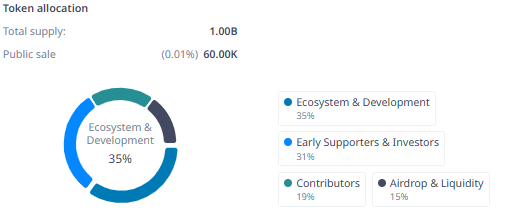
With a total supply of 1 billion ES tokens, the token supports airdrop campaigns, liquidity provision, and community initiatives. The tETH unified restaking token offers an innovative solution for liquidity and reward diversification. While Eclipse emphasizes a fair token distribution, some community members have raised concerns about the airdrop allocation’s balance.
Eclipse Ecosystem and Achievements
As of 2025, Eclipse boasts over $200 million in total value locked (TVL) and 1 million active wallets, reflecting rapid growth. Since its mainnet launch, the platform has integrated over 60 dApps and service providers, building a robust ecosystem across DeFi, gaming, and consumer applications. The migration of leading Solana applications like Mango, Orca, and Solend to Eclipse highlights its cross-chain capabilities.
Eclipse (ES) Investors
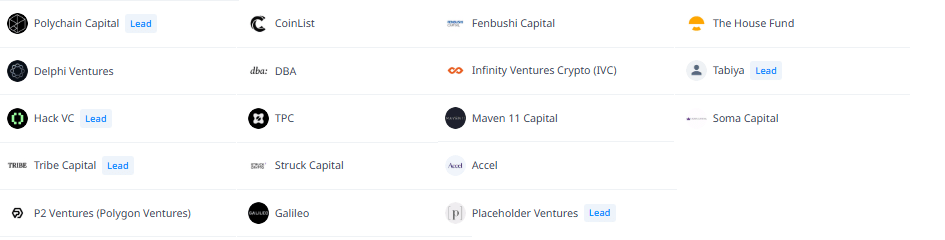
Eclipse is backed by prominent investors, including Polychain Capital, Placeholder Ventures, Hack VC, Tribe Capital, P2 Ventures (Polygon Ventures), Delphi Ventures, Fenbushi Capital, Infinity Ventures Crypto, Maven 11 Capital, Accel, CoinList, DBA, TPC, Struck Capital, Galileo, The House Fund, Tabiya, and Soma Capital. Having raised $65 million, the project underscores its leadership in Web3 scalability and performance solutions. These investors reflect confidence in Eclipse’s vision to bridge the Ethereum and Solana ecosystems.
Eclipse (ES) Founding Team
Eclipse is led by Neel Somani (Founder), Vijay Chetty (CEO), and Ben Livshits (CTO). With experience from leading DeFi projects like Uniswap, dYdX, and Ripple, the team drives the platform’s innovative vision forward.

Official Links
You can also freely share your thoughts and comments about the topic in the comment section. Additionally, don’t forget to follow us on our Telegram, YouTube, and Twitter channels for the latest news and updates.