

 Yeliz Akmaca
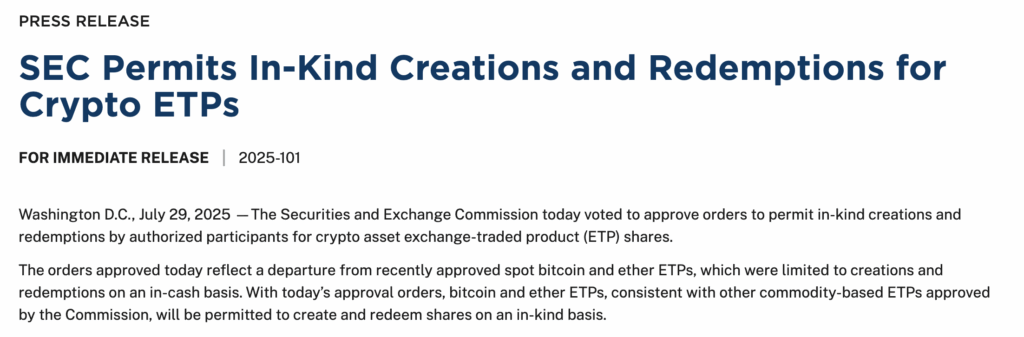
The U.S. Securities and Exchange Commission (SEC) has implemented a significant change for exchange-traded funds (ETFs) based on cryptocurrencies. With the new rule, Bitcoin and Ether ETFs are now allowed to process “in-kind” transactions — meaning shares can be created or redeemed directly with crypto assets instead of cash.
SEC Chairman Paul Atkins described this move as the beginning of a new era for crypto markets. According to Atkins, the change will lower costs and bring greater efficiency for ETF issuers and investors alike.
Previously, only cash-based transactions were allowed. Now, authorized participants can use digital assets directly when creating or redeeming ETF shares. This shift reduces pressure on the market and allows for smoother, more cost-effective operations.
What Does the New System Offer? Greater Efficiency in Crypto ETFs
Jamie Selway, Director of the SEC’s Division of Trading and Markets, said the in-kind mechanism provides flexibility and cost advantages for fund issuers. Additionally, funds can now operate without having to sell crypto assets, which helps minimize tax burdens.
To recall, the SEC approved spot Bitcoin and Ether ETFs back in 2024, but limited them to cash-based processes. Since then, the crypto industry has consistently called for in-kind options.
Just last month, SEC Commissioner Hester Peirce acknowledged the demand during her speech at the Bitcoin Policy Institute conference. In short, this regulatory move marks a long-anticipated shift within the crypto sector.
Meanwhile, recent developments in Congress have also accelerated this transition. Lawmakers passed three major crypto-related bills addressing market structure, stablecoin regulations, and opposition to a surveillance-driven central bank digital currency (CBDC). These legislative changes align with the Trump administration’s pro-crypto stance.
Growing Demand for Bitcoin and Ethereum ETFs
U.S. spot Bitcoin ETFs have recorded over $6.6 billion in inflows across the last 12 trading days. According to Bitbo data, these funds now hold approximately 1.298 million BTC — valued at around $152.1 billion.
On the Ethereum side, BlackRock’s iShares Ethereum ETF has gained attention for its rapid growth. The fund surpassed $10 billion in assets in just 251 days, becoming the third-fastest ETF to reach that milestone.
In summary, with SEC approval of in-kind transactions, crypto ETFs enter a new chapter. This rule not only boosts efficiency but also supports broader regulatory reform across the digital asset landscape.
You can freely share your thoughts and comments about the topic in the comment section. Additionally, don’t forget to follow us on our Telegram, YouTube, and Twitter channels for the latest news and updates.