

 Emre Yumlu
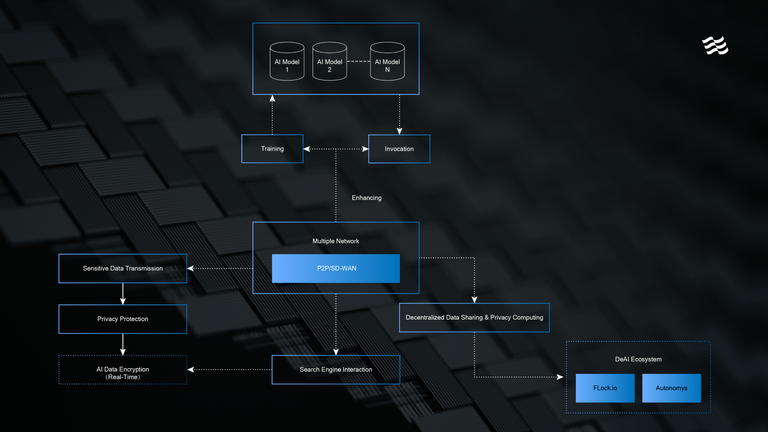
Multiple Network (MTP) is a Web3-based private acceleration solution for artificial intelligence (AI), offering data privacy protection and data acceleration services leveraging P2P and SD-WAN technologies. By aggregating the bandwidth of distributed nodes, it provides anonymous communication and encrypted data transmission.
What Is Multiple Network (MTP)?
Multiple Network delivers high bandwidth and low latency, widely utilized in AI model invocations, search engine interactions, and the encryption and acceleration of large-scale sensitive data, enhancing the efficiency and security of AI model training and inference.
As an emerging decentralized privacy network (DePIN Unicorn), Multiple Network’s core mission and vision are to build a decentralized network that promotes the transmission of private, encrypted digital data. Through its innovative De-WAN (Decentralized Wide Area Network) technology principles, Multiple Network utilizes blockchain, software-defined wide area network (SD-WAN), peer-to-peer (P2P) networks, and encryption technologies to enhance its privacy and data acceleration capabilities.
Empowered by De-WAN technology, Multiple Network has created an innovative decentralized platform that ensures secure, seamless, and high-speed data transmission for diverse network users, from large corporations to small-medium enterprises and individual users, regardless of their location. Multiple Network provides robust support for AI applications.

Multiple Network’s Impact on AI
Speed and Stability for AI Training and Inference
- High Bandwidth and Low Latency: Multiple Network aggregates the bandwidth of distributed nodes using P2P and SD-WAN technologies, enabling fast data transfer. This allows AI models to quickly access and transmit data during training and inference.
- Stability Assurance: SD-WAN’s dynamic routing optimization selects the best paths during network interruptions or high traffic, ensuring stable data flow and reducing transmission fluctuations.
Privacy and Security
- Anonymous Communication: The anonymity features of P2P networks conceal participant identities during data transmission, protecting user privacy.
- Encrypted Transmission: End-to-end encryption ensures data cannot be intercepted or tampered with during transfer, critical for handling sensitive data.
- Secure Data Exchange: Provides high-security standards for API calls and data exchanges during AI model usage, effectively preventing cyberattacks and data leaks.

De-WAN (Decentralized Wide Area Network) Technology
De-WAN is an innovative platform designed to enable the decentralized sharing of computing resources among nodes. As a pioneer in De-WAN technology, Multiple Network has built a sophisticated decentralized network layer and protocol for digital assets and data transmission. Leveraging blockchain, SD-WAN, P2P, and encryption technologies, De-WAN enables resource owners to contribute idle bandwidth and underutilized computing resources (CPU, memory, storage, etc.) to the network.
What Is the UDT (UDP-Based Data Transfer) Protocol?
Multiple Network adopts the UDT (UDP-Based Data Transfer) Protocol as its core protocol for real-time data transmission, distinguished by the following features:
- More Effective Congestion Detection and Management: UDT optimizes congestion control with adaptive algorithms that monitor network conditions in real-time, avoiding performance bottlenecks of traditional TCP in high-latency and high-packet-loss environments. It uses a rate-based congestion control mechanism instead of window-based control.
- More Accurate and Timely Packet Loss Detection and Recovery: UDT employs enhanced ACK (acknowledgment) and NAK (negative acknowledgment) mechanisms to promptly detect packet loss and initiate retransmission, ensuring data integrity while maintaining high transmission efficiency.
The combination of De-WAN architecture and the UDT Protocol enables Multiple Network to achieve superior transfer speed performance compared to traditional TCP Protocol. For offline data transmission, Multiple Network uses IPFS technology to provide an effective file sending and receiving mechanism.
AI Acceleration
- High Bandwidth and Low Latency: Optimizations based on P2P and SD-WAN technologies aggregate distributed node bandwidth for high-speed data transmission services.
- Stability Assurance: SD-WAN’s dynamic routing optimization switches to optimal paths during network interruptions or high traffic, ensuring stable data flow.
- Cross-Regional Data Synchronization: Rapidly synchronizes distributed datasets globally, reducing training and inference times, particularly for real-time tasks like search engine interactions or large-scale data processing.
DeAI Integration
- Distributed Network Architecture: Multiple Network operates through a decentralized architecture of distributed nodes, eliminating reliance on a single central server, enhancing attack resilience, and avoiding single points of failure.
- DeAI Ecosystem Support: The decentralized network model provides foundational support for the DeAI (Decentralized AI) ecosystem, facilitating equitable global sharing of data, models, and computational power.
Advantages of Multiple Network
- Low Entry Barriers: Supports various operating systems (Windows, Mac, Android, iOS, Linux, Unix) and device types, requiring only an internet connection and minimal hardware, making it accessible to all.
- Low Cost: Unlike costly traditional carrier lines and SD-WAN providers, Multiple Network reduces operational costs by utilizing participants’ idle computing resources.
- Decentralized with Strong Privacy: Fully decentralized and controlled by participating nodes, ensuring robust privacy and data security.
- Flexible Deployment: Requires no complex applications or lengthy preparations; users can deploy instantly, cancel anytime, and use a pay-as-you-go model.
- Stable and Robust: Globally distributed P2P nodes enhance network stability and robustness, ensuring continuous data transmission via alternate routes during failures.
Multiple Network (MTP) Tokenomics
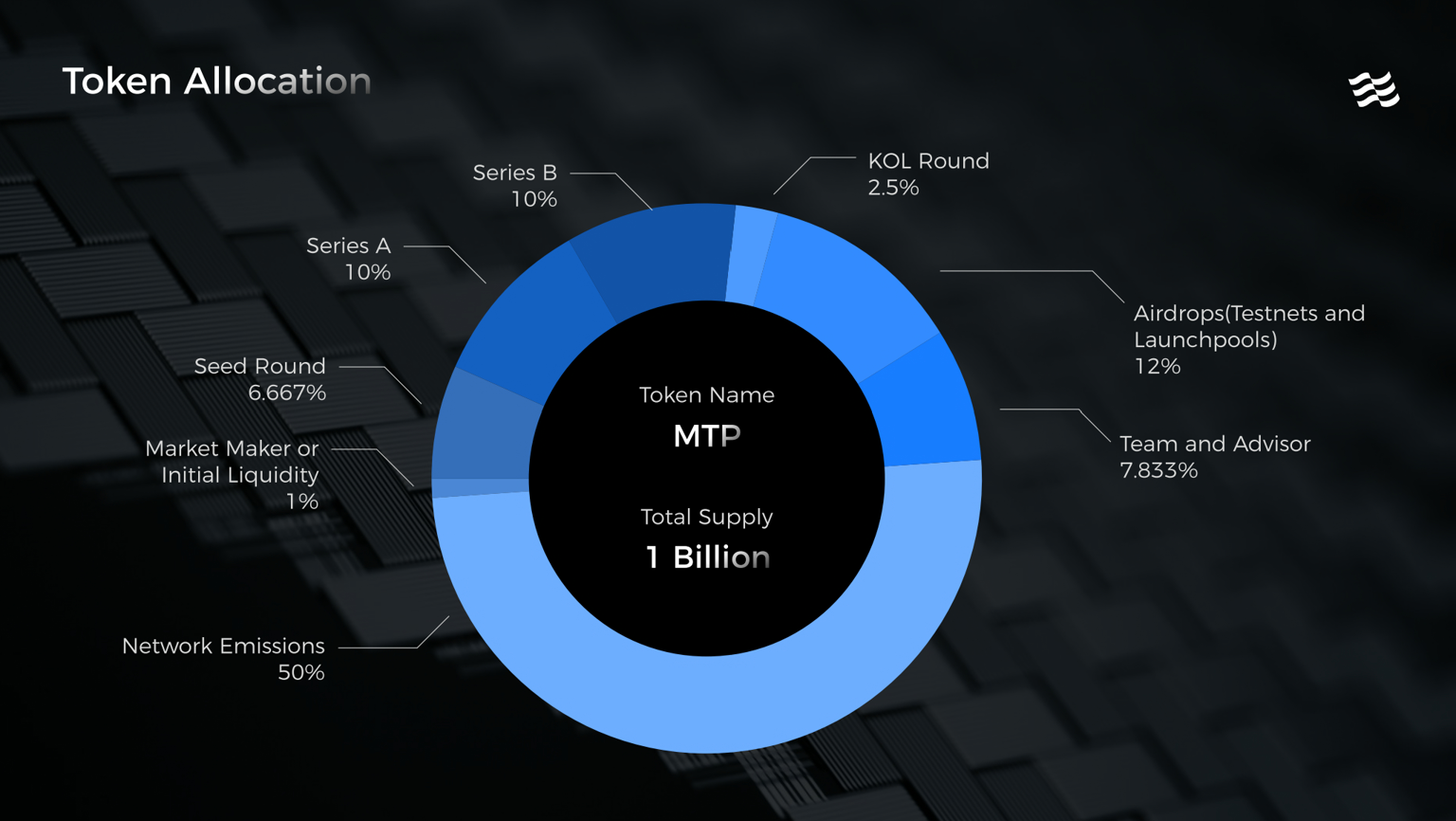
- Network Emissions: 50%
- Airdrop (Testnet and Launchpools): 12%
- Series A: 10%
- Series B: 10%
- Team and Advisors: 7.833%
- Seed Round: 6.667%
- KOL Round: 2.5%
- Market Maker or Initial Liquidity: 1%
Total Supply: 1 billion
Multiple Network (MTP) Roadmap
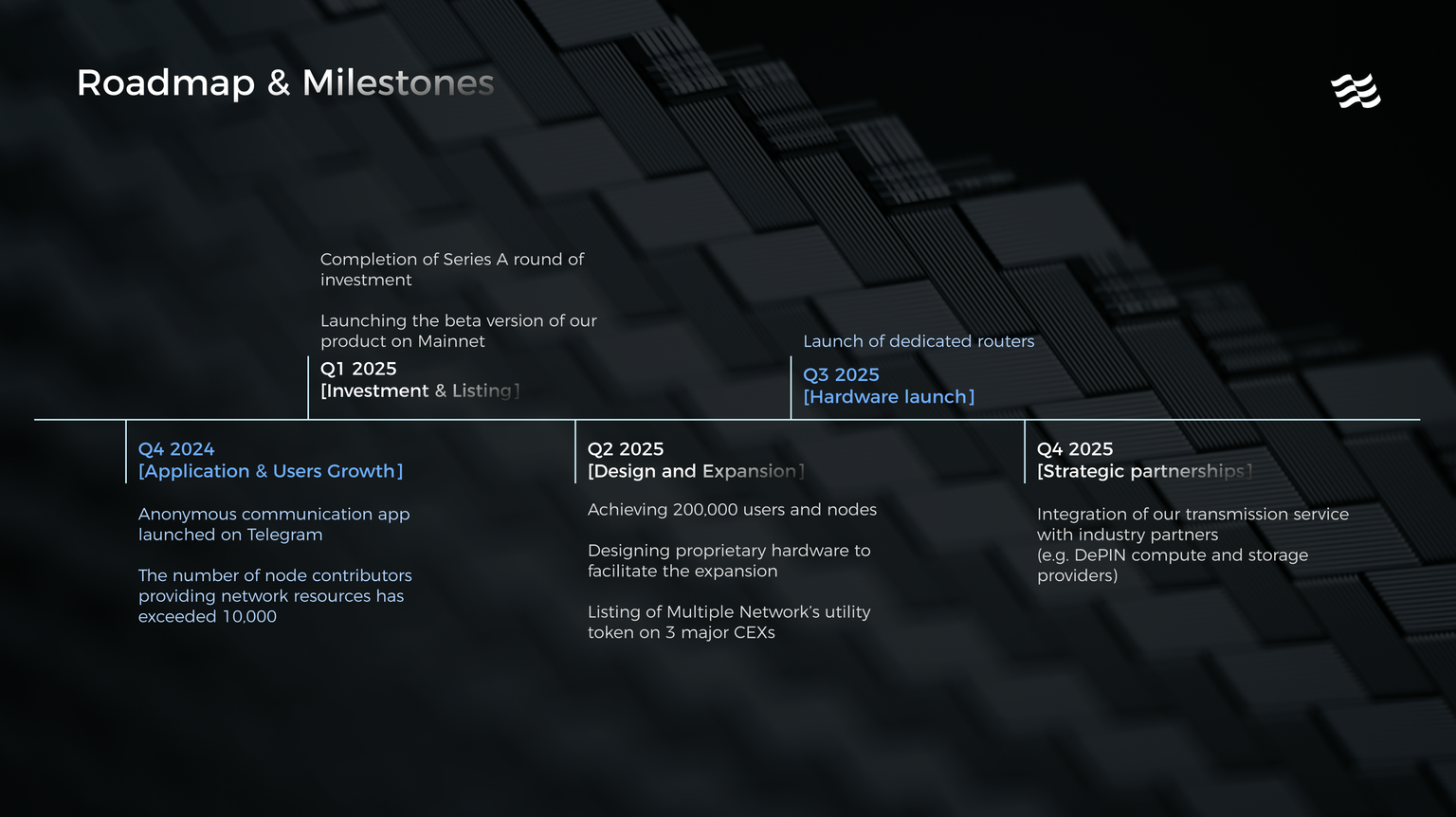
- 2025 Q1: Completion of Series A investment round, launch of beta product on mainnet.
- 2025 Q2: Achieving 200,000 users and nodes, designing proprietary hardware for expansion, listing MTP token on three major centralized exchanges.
- 2025 Q3: Launch of dedicated routers.
- 2025 Q4: Integration of transmission services with industry partners (e.g., DePIN compute and storage providers).
Multiple Network (MTP) Team
The Multiple Network team comprises experienced professionals with an innovative vision. Zeus Chen, co-founder, leads the project, while Frank Cao, head of product, oversees product development. With expertise in decentralized network technologies, the team aims to position Multiple Network as a leader in the data transmission industry.

Official Links
You can also freely share your thoughts and comments about the topic in the comment section. Additionally, don’t forget to follow us on our Telegram, YouTube, and Twitter channels for the latest news and updates.