

 Ahmet Bedirhan Arvas
Ethena Labs USDtb product is designed as a USD stablecoin backed by tokenized corporate money-market funds (BlackRock BUIDL) and a limited stablecoin reserve. Its issuance structure is managed through a centralized Pallas (BVI) entity, with a mint/redeem flow operating via off-chain RFQ and on-chain EIP-712/EIP-1271 signatures, requiring KYC/whitelist participation. The project also takes a different, more “RWA-backed / corporate” approach compared to Ethena’s previously launched USDe (delta-neutral, futures basis-trade-based) model.
What is Ethena Labs (USDtb)?
USDtb is a USD stablecoin developed by Ethena Labs, positioned as a “digital dollar for the internet economy.” Its key features include:
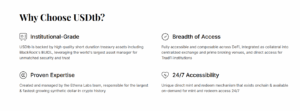
- Reserve Infrastructure: The main component of USDtb’s reserves consists of tokenized forms of corporate short-term treasury/money-market products, such as BlackRock’s USD Institutional Digital Liquidity Fund (BUIDL). Additionally, a limited amount of stablecoin reserve is maintained for quick liquidity.
- Issuance/Redeem (mint/redeem): Issuance is conducted by Pallas (BVI) Ltd. (Pallas Foundation / Pallas Fund structure); the mint/redeem flow settles on-chain, but pricing and approval are handled via an off-chain RFQ server (last-look / verification). Participation generally requires KYC/whitelist.
- Corporate Partners: The project reportedly collaborates with intermediary institutions such as BlackRock (BUIDL), Securitize (tokenization/transfer agent), and BNY Mellon, along with listing/liquidity partners (Bybit, Zodia, Copper, etc.).
How Does Ethena Labs (USDtb) Work?
-
Legal/Corporate Structure: USDtb is issued by Pallas (BVI) Ltd.; Pallas Foundation and Pallas Fund are structured to manage the reserves and ensure the stablecoin’s stability. This setup aims to keep the issuer and reserves “bankruptcy-remote” (isolated from liquidation/insolvency risk).
-
Reserve Components: Reserves consist of tokenized money-market/treasury products (e.g., BlackRock BUIDL) and stablecoins held in corporate custody for instant liquidity. Tokenization and fund transfer agency roles are coordinated with Securitize and similar institutions.
-
Mint / Redeem Flow (Technical):
-
The user or institution becomes an eligible “Mint User” (whitelisted, KYC-compliant) for issuance.
-
Pricing/transaction details are determined through an off-chain RFQ server; this RFQ server submits EIP-712 / EIP-1271 signed orders on-chain. The RFQ server has “last-look” verification authority to filter malicious orders.
-
On-chain mint/redeem is approved by a contract controlled by admin authorities (Pallas); per-block maximum mint/redeem limits and asset-specific limits exist, providing a control layer against liquidity shocks.
-
-
Security / Audit / Transparency: Ethena claims that smart contracts underwent a comprehensive audit program; reports from Quantstamp, Cyfrin, and Pashov have been published (no critical/high issues reported). Additionally, reserve attestations and real-time dashboards are provided.
-
On-Chain Identity: The USDtb token contract is publicly available on Ethereum; transfers/mint activities can be tracked via Etherscan. (Contract address and transaction history can be verified with public records.)
The design is a hybrid on the axis of “corporate trust + blockchain accessibility.” Due to control authorities (admin/RFQ last-look, whitelist), it is not fully permissionless; this is a deliberate choice for regulatory compliance.
What is the Purpose of Ethena Labs (USDtb)?
The main goal of USDtb is to provide a stablecoin compatible with the traditional financial system, regulated, and with high liquidity. This allows it to serve both the decentralized finance (DeFi) ecosystem and users in traditional financial institutions. USDtb has also been launched as a regulatory-compliant stablecoin in the U.S. under the GENIUS Act.
Who Founded Ethena Labs (USDtb)?
The project’s development and operational intellectual ownership belong to Ethena Labs; the founder and CEO is Guy Young. Ethena was founded in 2023 and quickly gained attention with USDe; it established its presence in the market with token and treasury strategies. Pallas (BVI) Ltd., Pallas Foundation, and Pallas Fund are documented as the legal issuer of USDtb; additionally, a management structure similar to Athene handles reserve management (docs.usdtb.money). Therefore, the technical and corporate implementation combines Ethena Labs with a separate BVI issuance structure.
Who Are the Investors of Ethena Labs (USDtb)?
Early investors in Ethena include Dragonfly (lead seed), Arthur Hayes / Maelstrom, major derivatives exchanges, and various VC/trading firms; later rounds reportedly included strategic partnerships with corporate players such as Brevan Howard Digital and Franklin Templeton. In USDtb’s reserve mechanism and distribution, BlackRock’s BUIDL product (fund manager/sponsor), Securitize (tokenization/transfer agent), and BNY Mellon are shown as partners; liquidity/trading partners include Bybit, Zodia, Copper, among others. These partnerships are crucial for both liquidity and corporate access.

$USDtb Tokenomics
1. Key Numerical Metrics (Snapshot):
- Price: ~1 USD (peg target).
- Market cap and circulating supply: Sources like CoinMarketCap / CoinGecko show USDtb’s market cap in the billions (e.g., CoinMarketCap reports ~1.48B market cap, circulating supply ~1.484B tokens — figures are variable; always verify latest numbers via CMC/CG/Etherscan).
2. Contract & On-Chain Information:
- USDtb token contract is publicly available on Ethereum; transfer/mint activities can be tracked on Etherscan. Contract activity and inflows/outflows from centralized exchanges can be verified here.
3. Supply Control / Stabilization Mechanism:
-
Mint/Redeem: Supply is dynamically managed via mint/redeem. Since issuance is controlled by Pallas, supply is added or removed according to market needs. Off-chain RFQ + on-chain settlement ensures price and quantity control; per-block limits and asset-specific limits are implemented.
4. Backing Distribution – Risk Profile:
-
Main backing: tokenized money-market/treasury products (e.g., BlackRock BUIDL). This connects USDtb to a “fiat-money market” RWA basket, targeting lower volatility. However, the tokenization process introduces transfer-agent/custody and third-party administrative risks. The maintained stablecoin reserve is also used for instant liquidity.
5. Security Audits & Transparency:
-
Firms like Quantstamp, Cyfrin, and Pashov have audited USDtb smart contracts and published reports; Ethena ecosystem also provides reserve attestations and real-time dashboards. However, even though audit reports show “no critical” issues, the scope, parametric assumptions, and off-chain components (custody, tokenization) should be separately reviewed.
6. Liquidity & Integrations:
-
Listings on Bybit, promotions on Aave/Morpho/Euler, and CEX margin acceptance increase liquidity. Additionally, according to CoinDesk, collaboration with Anchorage for U.S. onshore issuance under the GENIUS Act could expand corporate access.