

 Emre Yumlu
The cryptocurrency market, with its high volatility and constantly changing dynamics, presents both opportunities and challenges for investors. In this fast-paced environment, analyzing market trends quickly and developing appropriate strategies is critical for success. This is where algorithmic trading operations come into play. Algorithmic trading optimizes cryptocurrency trading through mathematical models and automated systems. This strategy eliminates emotional decision-making, enabling fast, disciplined, and data-driven transactions. In this article, we will explore in detail what algorithmic trading is, how it works, its advantages, disadvantages, and its significance in the crypto market.
What Are Algorithmic Trading Operations?
Algorithmic trading (algo-trading) is a method that automates the buying and selling processes in financial markets. Using computer programs and mathematical algorithms, it executes transactions based on predefined rules. In a 24/7 active and highly volatile environment like the cryptocurrency market, this method allows investors to respond instantly to market movements. By minimizing human intervention, it provides fast and precise decision-making processes.
Algorithmic trading is often known by the following names:
- Automated Trading
- High-Frequency Trading (HFT)
- Black Box Trading
- API Trading
- Crypto Bot Trading
These systems are preferred by a wide range of users, from individual investors to large investment funds. According to a 2019 study, 92% of transactions in financial markets were conducted through algorithmic trading systems. This rate is rapidly increasing in the crypto market as well.
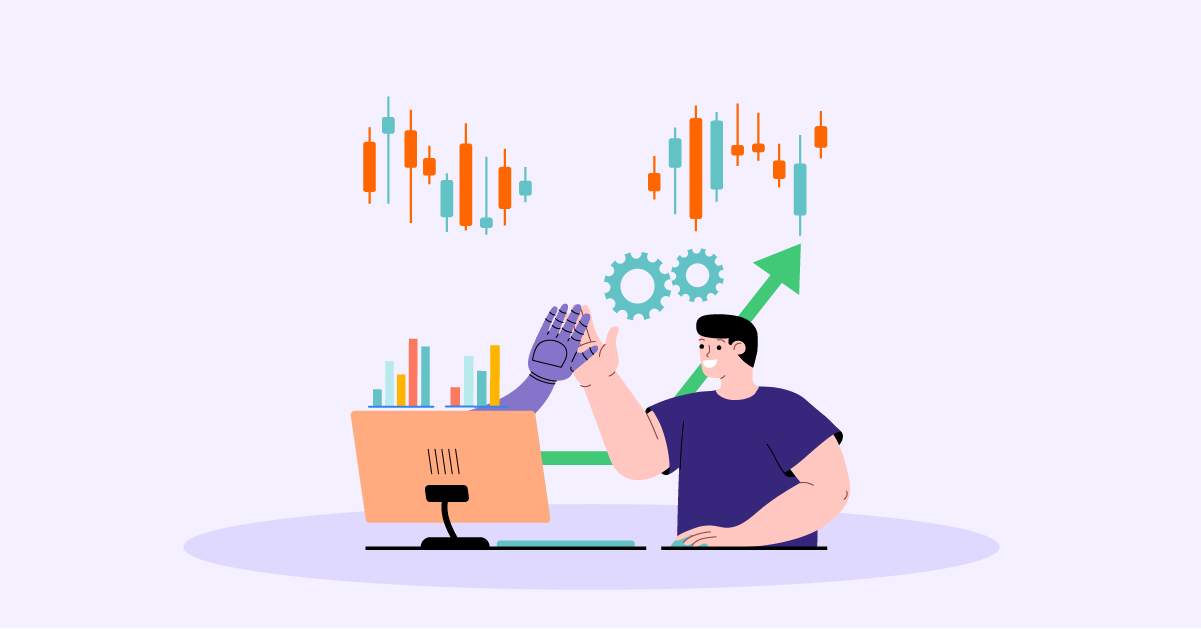
Core Principles of Algorithmic Trading
Algorithmic trading is built on several fundamental principles:
- Automation: Algorithms continuously analyze market data and execute buy or sell orders automatically based on predefined rules. These rules rely on technical analysis, statistical models, or risk management strategies.
- Speed and Efficiency: It minimizes errors caused by human factors (e.g., emotional decisions). Algorithms can execute hundreds of transactions in seconds, ensuring market opportunities are not missed.
- Diversification: Investors can diversify their portfolios with different strategies and asset classes. For example, an algorithm can evaluate arbitrage opportunities between Bitcoin, Ethereum, and other altcoins or trade simultaneously across multiple markets.
How Does Algorithmic Trading Work?
At the core of algorithmic trading are software systems that analyze market data and execute transactions automatically. These systems monitor real-time price movements, trading volumes, and other market indicators. Algorithms act based on pre-programmed strategies. For instance, an algorithm may buy a specific cryptocurrency when its price drops by 5% or sell when it rises by 5%.
The Process of Algorithmic Trading
- Market Analysis: Real-time data (price, volume, volatility) is collected and analyzed. Technical indicators (RSI, moving averages) or statistical models are used in this process.
- Strategy Execution: The algorithm automatically executes trades based on the investor’s predefined rules. For example, a trend-following strategy may detect bullish market trends and issue a buy order.
- Arbitrage Opportunities: Algorithms instantly identify price differences across exchanges, seizing the opportunity to buy low and sell high.
- Risk Management: Algorithms use tools like stop-loss or take-profit to limit losses and maximize profits.
Example: Algorithmic Trading Strategy
A Bitcoin investor may set up an algorithm to buy when the price drops by 5% and sell when it rises by 10%. The algorithm continuously monitors these parameters and executes trades automatically under the right conditions. This allows the investor to capitalize on opportunities without needing to monitor the market 24/7.

Advantages of Algorithmic Trading
Algorithmic trading offers numerous advantages in the crypto market:
- Speed and Precision: Algorithms execute trades much faster than humans, capturing market opportunities in fractions of a second.
- Emotion-Free Decision Making: It eliminates emotional factors like FOMO (fear of missing out) or FUD (fear, uncertainty, doubt). Investors stick to logic and data-driven strategies.
- Market Liquidity: High trading volumes contribute to market liquidity. More frequent and faster orders reduce price slippage.
- Portfolio Diversification: Algorithms can trade multiple assets and strategies simultaneously, spreading risk.
- Cost Reduction: It lowers transaction fees in high-volume trades.
- Backtesting Capability: Investors can test strategies with historical data to evaluate performance.
Disadvantages of Algorithmic Trading
Despite being a powerful tool, algo-trade has its risks:
- Technical Errors: Software or network issues can lead to incorrect trades or losses. For example, algorithmic systems played a significant role in the 2010 “Flash Crash.”
- Black Swan Events: Algorithms may fail to predict unexpected market crashes or sudden events (e.g., regulatory bans), potentially causing significant losses.
- High Initial Costs: Algorithmic trading requires software, data sets, and robust computer systems. Additionally, programming and market knowledge are essential.
- Need for Human Intervention: In some cases, algorithms may require manual intervention to respond to unexpected market movements. Without this, losses can escalate.
- Learning Curve: Algorithmic trading requires knowledge of mathematics, statistics, and programming, which can be complex for beginners.
Popular Algorithmic Trading Strategies
Algo-trade can be applied with various strategies. Here are some of the most common ones:
1. Pair Trading
- Definition: Aims to profit from price discrepancies between two assets. For example, if a cryptocurrency’s price is lower on one exchange and higher on another, the algorithm performs arbitrage.
- Example: If Bitcoin is $60,000 on Binance and $60,200 on Kraken, the algorithm buys low and sells high.
2. Arbitrage
- Definition: A strategy to profit from price differences across markets. Algorithms detect these opportunities within seconds.
- Advantage: Offers low-risk profit potential but requires high speed and low latency.
3. Mean Reversion
- Definition: Assumes that an asset’s price will revert to its long-term average. The algorithm identifies when the price is too low or high and trades accordingly.
- Example: Buys Ethereum when its price falls below its 30-day average.
4. Trend Following
- Definition: Detects bullish or bearish market trends and trades accordingly. Algorithms use indicators like moving averages or MACD.
- Advantage: Capitalizes on significant market movements but may incur losses during trend reversals.

Importance of Algo-Trade in the Crypto Market
The cryptocurrency market, with its 24/7 operation and high volatility, is an ideal environment for algorithmic trading. Here are the key reasons why it is significant:
- Adaptation to Volatility: Sudden price swings in the crypto market can be turned into opportunities with the fast response capabilities of algorithmic trading.
- Eliminating Emotional Decisions: It reduces the risk of errors caused by emotional reactions like FOMO or FUD. Algorithms make decisions solely based on data.
- Multi-Market Operations: Algorithms can trade across multiple exchanges and assets simultaneously, enabling diversification.
- Arbitrage Opportunities: Price differences across crypto exchanges can be instantly exploited through algorithmic trading.
- Market Liquidity: High-frequency trading contributes to market liquidity and enhances price stability.
How to Start Algorithmic Trading in Crypto?
For those looking to begin algorithmic trading, here are some recommended steps:
- Learn Fundamental and Technical Analysis: Understand market behavior, technical indicators, and risk management. Online courses and books can be helpful.
- Acquire Programming Knowledge: Languages like Python, JavaScript, or C++ are commonly used for algorithm development. Learning API integrations is also essential.
- Choose a Platform: Use APIs from exchanges like Binance, Coinbase, or Paradex to conduct algorithmic trading. Alternatively, Telegram or Discord-based crypto bots are also popular.
- Perform Backtesting: Test your strategies with historical data to evaluate their performance.
- Risk Management: Use tools like stop-loss, take-profit, and portfolio diversification to manage risks.
- Ready-Made Solutions: Beginners can use pre-built algorithmic trading platforms. However, understanding how these platforms work is crucial.
Algorithmic Trading and Crypto Bots
Crypto trading bots are a specialized type of algo-trade tool. Designed specifically for crypto markets, these bots leverage features like decentralized exchanges or MEV protection. They can perform the following:
- Liquidity Provision: Act as market makers to profit from spreads.
- Copy Trading: Automatically replicate the strategies of successful traders.
- Airdrop Hunting: Participate in token distributions of new projects.
For example, platforms like Paradex offer a low-fee, high-speed environment optimized for algorithmic trading. Supported by ZK-proof technology, these platforms enable bots to trade quickly and securely.
Difference Between Algorithmic and Automated Trading
- Algorithmic Trading: The investor sets the trading rules, and the algorithm operates based on these rules. Human intervention is required during the strategy creation phase.
- Automated Trading: All decisions are made by the computer without human input. Crypto bots typically fall into this category.
The Future of Algo-Trade
As the cryptocurrency market and DeFi ecosystem mature, the popularity of algorithmic trading is growing. Once exclusive to large funds or banks, this technology is now accessible to individual investors through APIs from exchanges like Binance and Coinbase, as well as Telegram/Discord-based bots.
However, success in this field requires technical knowledge, market analysis, and robust risk management. Additionally, new regulations from authorities may shape the future development of algorithmic trading.
You can also freely share your thoughts and comments about the topic in the comment section. Additionally, don’t forget to follow us on our Telegram, YouTube, and Twitter channels for the latest news and updates.