

 Emre Yumlu
While the Web3 gaming sector has long held significant potential, it struggles to achieve mass adoption due to issues like technical complexity, fragmented ecosystems, and poor gaming experiences. Redbrick (BRIC) positions itself as an AI-powered next-generation game engine and content platform that directly targets these core problems.
Redbrick aims to bring together both Web2 and Web3 worlds, enabling anyone to easily create, publish, and monetize games. Catering to a broad audience—from individual content creators to professional studios, regardless of technical expertise—the platform is built on the vision of “democratizing game production.”
Why is the Web3 Gaming World Problematic?
Redbrick’s starting point lies in the structural problems of the current Web3 gaming ecosystem. Most Web3 games today prioritize token economics over entertainment, turning games into “profit-focused tasks” rather than enjoyable experiences for players.
Key Problems
- Game development is too slow: Even producing a simple prototype can take weeks or months. Developers must deal with complex tools, thousands of lines of code, and continuous testing processes.
- Proliferation of blockchains: Choosing which chain to develop on creates significant uncertainty for developers. Each network has different tools, user bases, and standards.
- Fragmented communities: Web3 gaming communities are divided across different chains and platforms, making it difficult to build a sustainable user base.
- Poor gameplay quality: Many Web3 games prioritize financial incentives over entertainment, causing mainstream gamers to shy away from Web3 gaming.
How Does Redbrick Engine Solve These Problems?
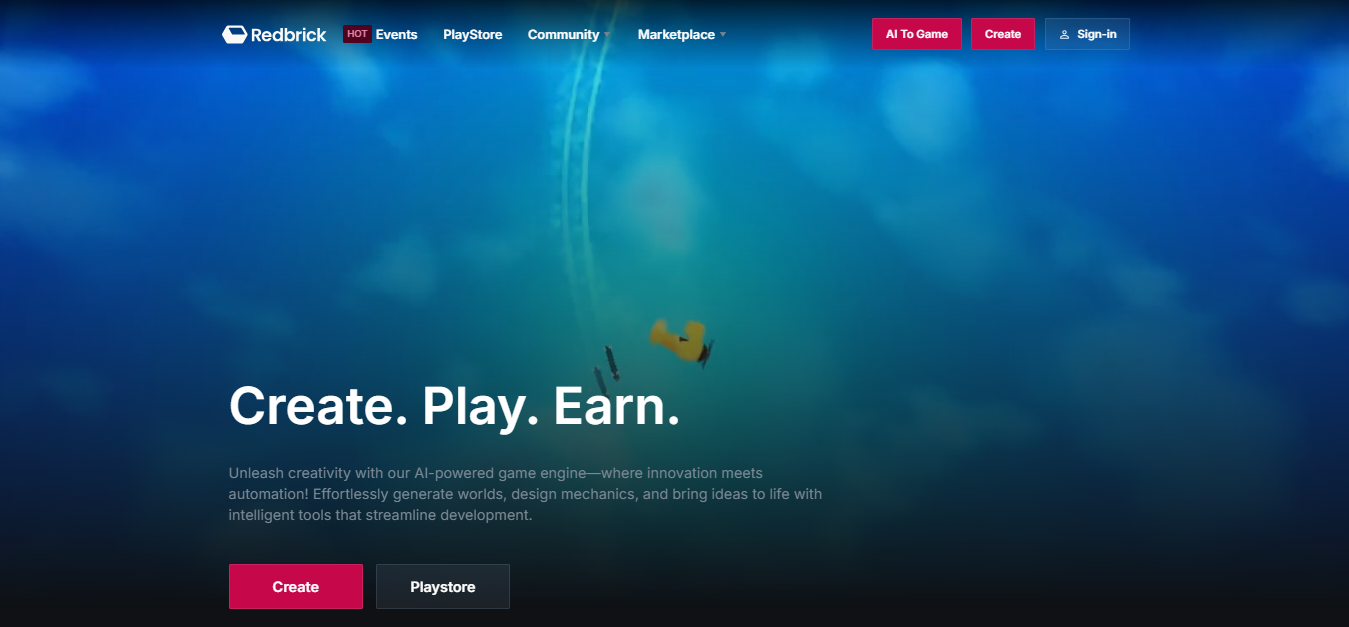
Redbrick adopts an AI-centric approach to accelerate and make game production accessible. The platform’s AI-powered game engine allows users, even those without coding knowledge, to create games.
The Redbrick Engine offers a structure that generates a game’s logic, assets, and core mechanics from text inputs, reducing content creation time from weeks to hours.
Redbrick (BRIC) Platform and Ecosystem Data
Redbrick already boasts a strong user and content creator community:
- Over 7.6 million registered users
- 5.9 million active wallets
- More than 53 million games played
- Over 78 million on-chain transactions
- Daily average of over 60,000 active users
- Monthly over 170,000 active users
- Over 51,000 unique active wallets
On the community side:
- Over 368,000 Discord members
- More than 500,000 X (Twitter) followers
- Over 200,000 content creators
- More than 600,000 created content pieces
Why is Redbrick (BRIC) Different?
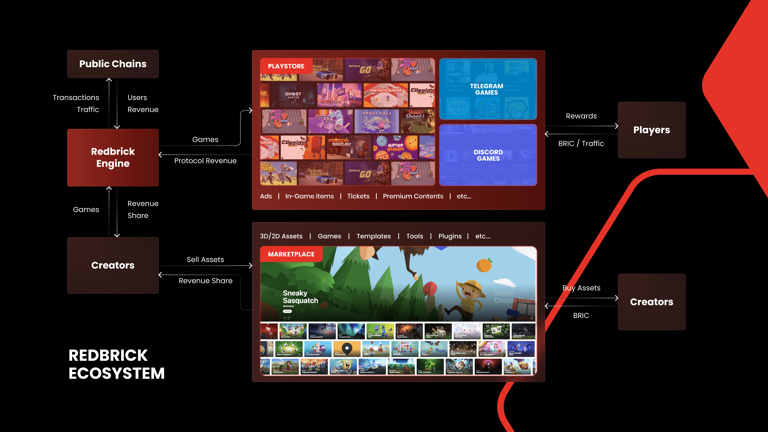
Redbrick enables the production of both Web2 and Web3 games on the same infrastructure through its cloud-based AI game engine and advanced content service layer. This structure makes the platform not just a game engine but also a comprehensive content and economy platform.
Redbrick for Content Creators
Redbrick enables everyone, developer or not, to create games.
Offered Tools
- Text-to-game production
- Visual block coding system
- Unity integration
- NFT and token integration
- Telegram and Discord integrations
Content creators can build games, educational modules, branded worlds, or IP-based experiences. In-game assets can be produced, sold, and monetized.
Redbrick for Players
Players can play both Redbrick Originals and community-created games on the Redbrick platform. They can participate in tournaments, win rewards, and support content creators.
BRC:ID Standard
With Redbrick’s BRC:ID standard, players can:
- Package their in-game progress
- Achievements
- Assets
into a single on-chain asset. This package can be minted as an NFT and bought or sold on marketplaces.
Redbrick for Partners
Redbrick’s chain-agnostic structure enables game production on various blockchains. Partners can:
- Directly use the AI game engine
- Collaborate with the content creator network
- Develop custom games for NFT collections and Web3 projects
Technology Infrastructure
AI Engine
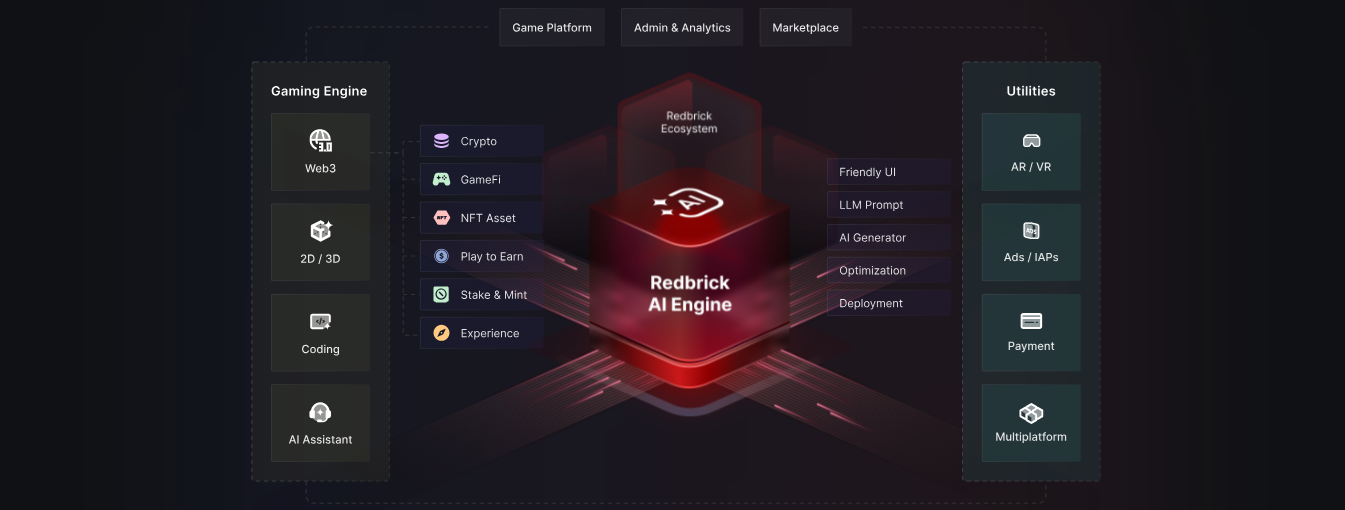
At the heart of Redbrick lies the AI Engine, consisting of three main components:
- AI Game Engine: Game and asset production from text inputs
- 2D / 3D Engine: 2D, 3D, VR, and AR experiences
- Visual Coding Engine: App development without writing code
This structure caters to both professional developers and beginners.
Multi-Chain and Account Abstraction
The Redbrick Engine works compatibly with Ethereum, BNB Chain, Polygon, Monad, and various L2 solutions. Thanks to account abstraction, users can:
- Create wallets more easily
- Interact without feeling the complexity of gas and transactions
This approach brings the Web3 gaming experience closer to Web2.
Redbrick (BRIC) Tokenomics
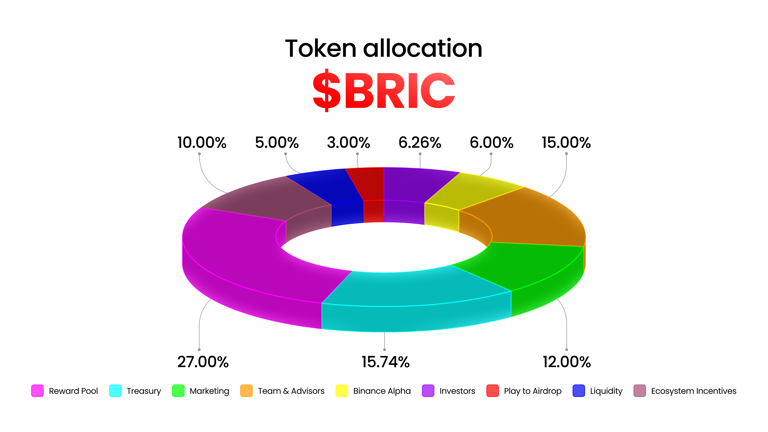
The BRIC tokenomics structure is designed to ensure long-term sustainability and balanced growth in the Redbrick ecosystem.
Token distribution offers a balanced structure between reward mechanisms incentivizing content creators, ecosystem development, and operational continuity. This approach aims to create a robust economic model for both users and developers.
Total Supply: 1,000,000,000 BRIC
- Reward Pool: 27%
- Treasury: 15.74%
- Marketing: 12%
- Team and Advisors: 15%
- Binance Alpha: 6%
- Investors: 6.26%
- Airdrop Participation: 3%
- Liquidity: 5%
- Ecosystem Incentives: 10%
Redbrick (BRIC) Token and Use Cases
$BRIC is the utility token at the center of the Redbrick ecosystem.
For Content Creators
- Earning BRIC as games are played
- Share of advertising revenue
- In-game asset sales
- Bonus rewards tied to growth targets
- Paying platform fees with BRIC
For Players
- Earning points by playing
- Converting points to BRIC
- Earning tokens from tasks and events
- In-platform payments
Staking
- Earning rewards by staking BRIC
- Access to exclusive tournaments
- Early access to new games
- Increased visibility for content creators
Protocol Revenue Model
Redbrick’s revenue sources include:
- AI Engine premium plans
- Advertising revenue
- In-game transactions
- Marketplace commissions
- Platform service fees
A portion of these revenues is used for token buybacks and burns.
Creator Economy
Redbrick uses a dual-currency system:
- Off-chain points: Used for engagement, tasks, and donations
- On-chain BRIC: Used for real economic value, asset trading, and monetization
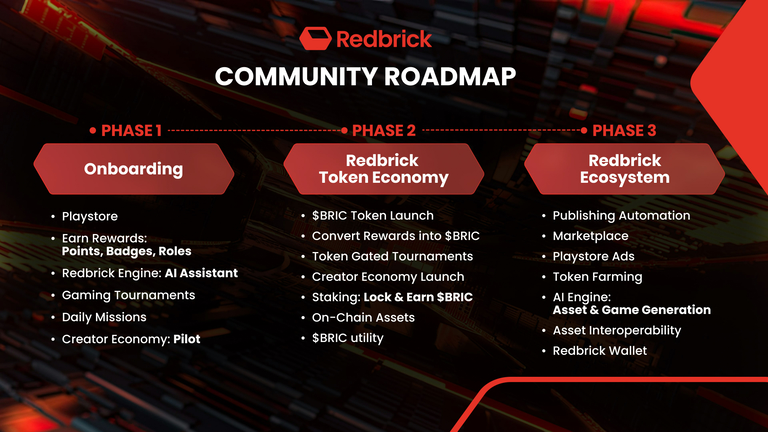
Vision and Roadmap
Redbrick’s vision is to create an inclusive ecosystem where content creators and players can directly convert their skills into economic value.
Roadmap Summary
- Phase 1: Onboarding and gaming infrastructure
- Phase 2: BRIC token economy and staking
- Phase 3: Marketplace, automation, wallet, and asset interoperability
Redbrick (BRIC) Partners
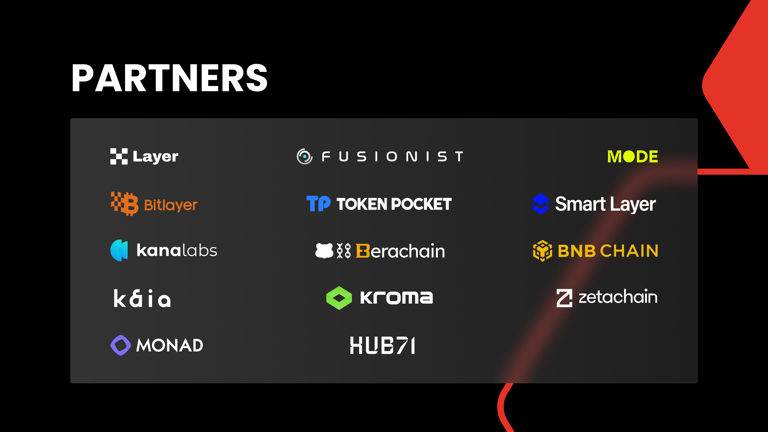
Redbrick continues its efforts with a broad network of partners to strengthen its multi-chain and scalable gaming infrastructure. Strategic partnerships with various blockchain networks, infrastructure providers, and Web3 projects significantly enhance the platform’s technical capacity and ecosystem reach.
The partner network includes Layer, Fusionist, Bitlayer, MODE, Token Pocket, Smart Layer, Berachain, BNB Chain, Monad, ZetaChain, Kaia, Kroma, and Hub71, among others.
Official Links
Also, you can freely share your thoughts and comments about the topic in the comment section. Additionally, don’t forget to follow us on our Telegram ,YouTube and Twitter channels for the latest news and updates.