

 Emre Yumlu
Acurast (ACU) is an innovative blockchain protocol that aims to fundamentally redefine the decentralized compute space. By transforming smartphones worldwide into verifiable and secure processors without relying on traditional data centers or server infrastructure, it creates a globally distributed compute network. This approach seeks to reduce costs while eliminating trust and access issues stemming from centralized structures.
Today, the rising demand from artificial intelligence applications, big data processing needs, and Web3 infrastructures requires massive computational power. Acurast responds to this need by turning billions of smartphones into potential compute resources, offering a decentralized alternative designed “by people, for people.”
How Does Acurast Work?
Acurast’s core architecture consists of two main layers: the consensus and orchestration layer, and the execution layer.
In the consensus layer, there is an orchestrator and a reputation engine that manage the network’s operations. This structure ensures that workloads on the network are matched with the most suitable processors. Participants’ past performance, reliability, and service quality are measured to target sustainable and efficient network operation.
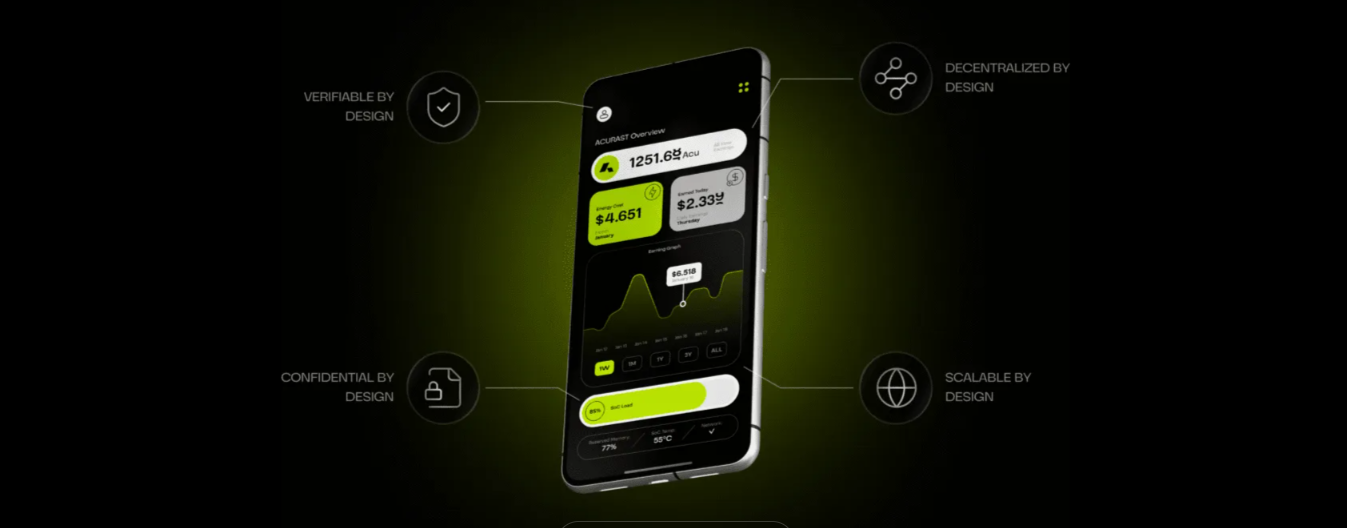
In the execution layer, Acurast Secure Hardware Runtime (ASHR) and Zero-Knowledge Runtime (AZKR) solutions come into play. Thanks to Trusted Execution Environment (TEE) technology found in modern smartphones, computations are executed in a private and verifiable manner without needing to trust the device owner. This makes Acurast not only scalable but also suitable for applications requiring high security.
Global Compute Network Without Data Centers
One of Acurast’s most distinctive aspects is its ability to operate completely independent of traditional data centers. During the incentivized testnet process to date, over 158,000 smartphones have joined the network, making Acurast one of the world’s most decentralized verifiable compute networks.
Active in more than 140 countries, this network is growing with contributions from tens of thousands of participants. This community, referred to as “Cloud Rebels,” is building a truly global infrastructure by turning idle smartphones into secure and revenue-generating nodes.
Scalability and Security Approach
Acurast is a protocol that has proven its scalability not just in theory but in practice. The execution of over 250 million transactions during the testnet process demonstrates that the system can operate stably even under high load. Performance analyses supported by academic studies reveal that Acurast has an architecture capable of competing with centralized solutions.
On the security side, Acurast secures over $200 million in digital assets across different blockchain networks. Hardware verification mechanisms based on TEE prevent fake hardware, while data privacy is protected without needing the device owner. This structure provides a critical trust layer, especially for enterprise and AI-focused applications.
Web3 and Enterprise Use Cases
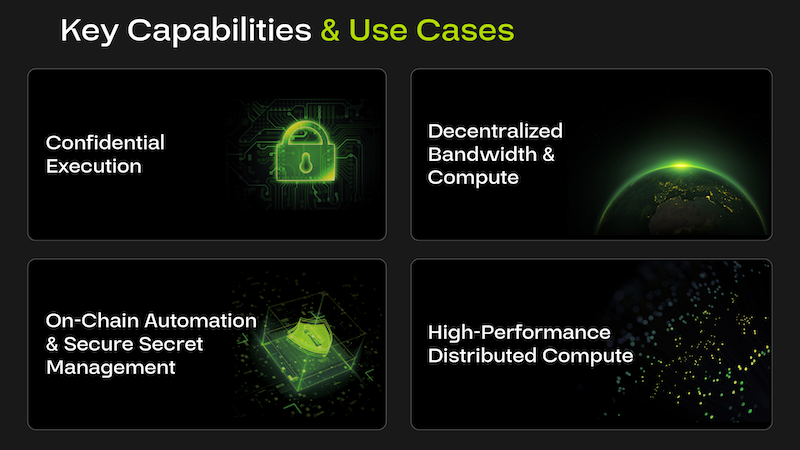
Acurast offers natural integrations with Web3 ecosystems, enabling developers to easily access decentralized and private compute services. With its compatible structure with ecosystems like Ethereum, Solana, and Polkadot, it provides a powerful backend solution integrable with smart contracts.
Beyond that, Acurast is not limited to crypto-native projects. It also creates a cost-effective alternative for SMEs and large-scale companies in confidential AI applications, edge compute solutions, and workloads requiring data privacy.
Acurast (ACU) Tokenomics
At the center of the Acurast ecosystem is the ACU token. The token economy is designed with long-term sustainability and a community-first distribution approach.
- Initial Supply at TGE: 1,000,000,000 ACU
- Annual Inflation: 1% – 5%, variable based on on-chain metrics
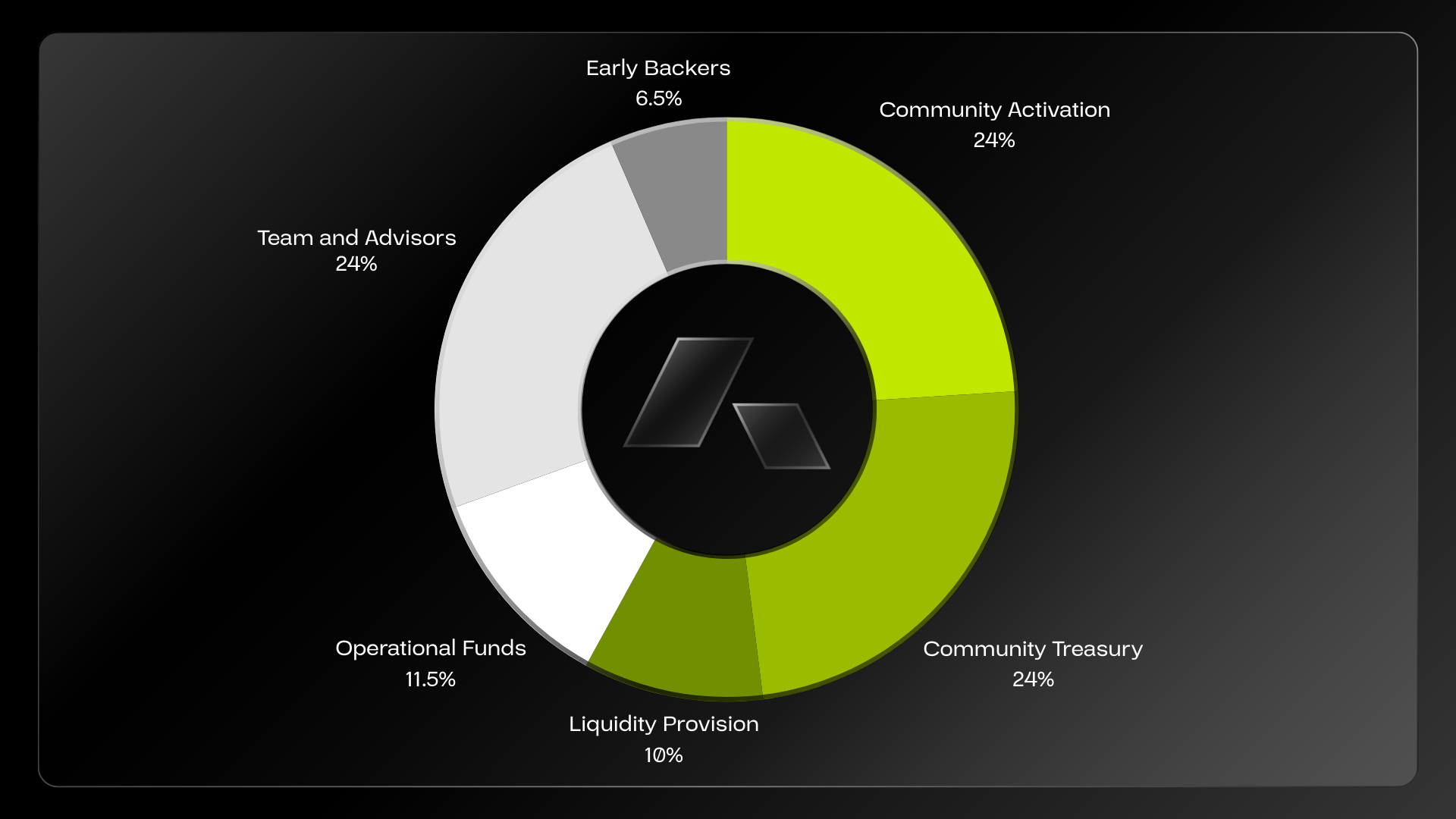
- Early Investor Share: Limited to 6.5%
Approximately 70% of the total supply is allocated directly to the community or community-focused funds. Tokens allocated to the team and advisors have the longest lock-up periods, ensuring strong alignment with the long-term vision.
Token Distribution
- Early Backers: 6.5%
- Team & Advisors: 24%
- TGE Community Activation: 24%
- Community Treasury: 24%
- Operational Funds: 11.5%
- Liquidity Provision: 10%
Vesting

ACU Token Use Cases
The ACU token serves many critical functions, including network fees, staking, settlement, and governance. Thanks to the Proof of Stake-based structure, token holders can participate in staking via delegation. The burn mechanism applied in settlement processes aims to preserve the system’s integrity.
On the governance side, ACU holders have voting rights on issues such as protocol updates and the use of ecosystem funds.
Acurast (ACU) Investors
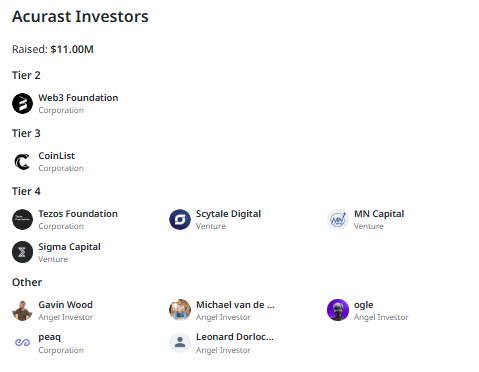
Acurast has attracted interest from respected investors in the Web3 and blockchain ecosystem from an early stage. Having raised $11 million to date, the project aims to minimize centralization risks with its balanced investor structure.
Investors:
- Web3 Foundation
- CoinList
- Tezos Foundation
- Scytale Digital
- MN Capital
- Sigma Capital
- Gavin Wood
- Michael van de Poppe
- ogle
- peaq
- Leonard Dorlochter
Acurast (ACU) Team
Behind Acurast is a core team with deep technical expertise in blockchain, cryptography, and distributed systems. The team aims to bring the protocol’s long-term vision to life with an open-source and community-focused approach.
Team Members:
- Alessandro De Carli (Co-Founder)
- Pascal Brun (Co-Founder)
- Mike Godenzi (CTO)

Official Links