

 Emre Yumlu
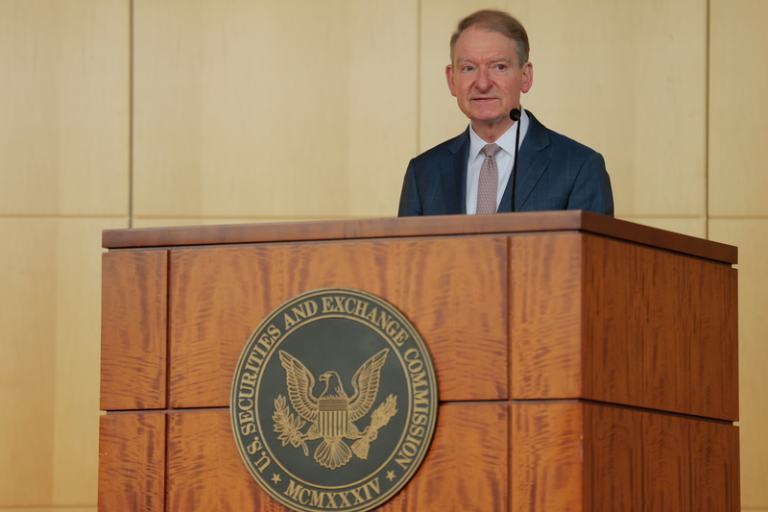
The U.S. Securities and Exchange Commission (SEC) appears to be entering a new phase in its approach to digital assets. SEC Chairman Paul Atkins recently acknowledged that the agency missed a significant opportunity in how it handled the evolution of the crypto ecosystem in prior years. He emphasized that regulators are now working to recover lost time and reposition the United States more competitively in the digital finance landscape.
According to Atkins, regulatory structures failed to keep pace with technological innovation, creating uncertainty for market participants. In his view, the gap between innovation and oversight weakened the country’s ability to lead in a rapidly developing sector.
The Gensler Era: Enforcement-First Oversight
Under former SEC Chair Gary Gensler, the agency adopted a cautious and enforcement-driven stance toward crypto. A substantial number of digital assets were treated as securities, and numerous enforcement actions were brought against firms—primarily over registration-related violations.
While this approach aimed to protect investors and enforce compliance, critics within the industry argued that regulatory clarity was lacking. Rather than establishing forward-looking frameworks, the SEC relied heavily on litigation, which many believed slowed innovation and discouraged institutional development in the sector.
A More Constructive Regulatory Direction
With the Trump administration in office, the SEC’s tone toward crypto has shifted. The agency has formed a dedicated crypto task force and withdrawn several high-profile enforcement cases initiated during the previous period. In addition, it launched “Project Crypto,” an initiative designed to modernize regulatory standards and adapt them to emerging financial technologies.
Atkins has acknowledged the volatility inherent in individual cryptocurrencies but has expressed strong support for the broader potential of distributed ledger technology (DLT). He highlighted its possible applications in payment infrastructure, clearing, and settlement systems—areas where blockchain-based efficiencies could significantly reshape financial operations.
Tokenization and the 24/7 Market Vision
A notable milestone came with the SEC granting exemptive relief to WisdomTree for its Treasury Money Market Digital Fund. The approval allows 24/7 trading and instant settlement—an unprecedented development in the U.S. market for tokenized money market products.
Atkins also indicated that tokenized bank deposits may be the next step. These developments suggest a broader transition toward on-chain financial infrastructure, signaling an effort to modernize U.S. markets and regain leadership in digital finance.
This content does not constitute investment advice.
Also, in the comment section, you can freely share your comments and opinions about the topic. Additionally, don’t forget to follow us on Telegram, YouTube and Twitter for the latest news and updates.