

 Yeliz Akmaca
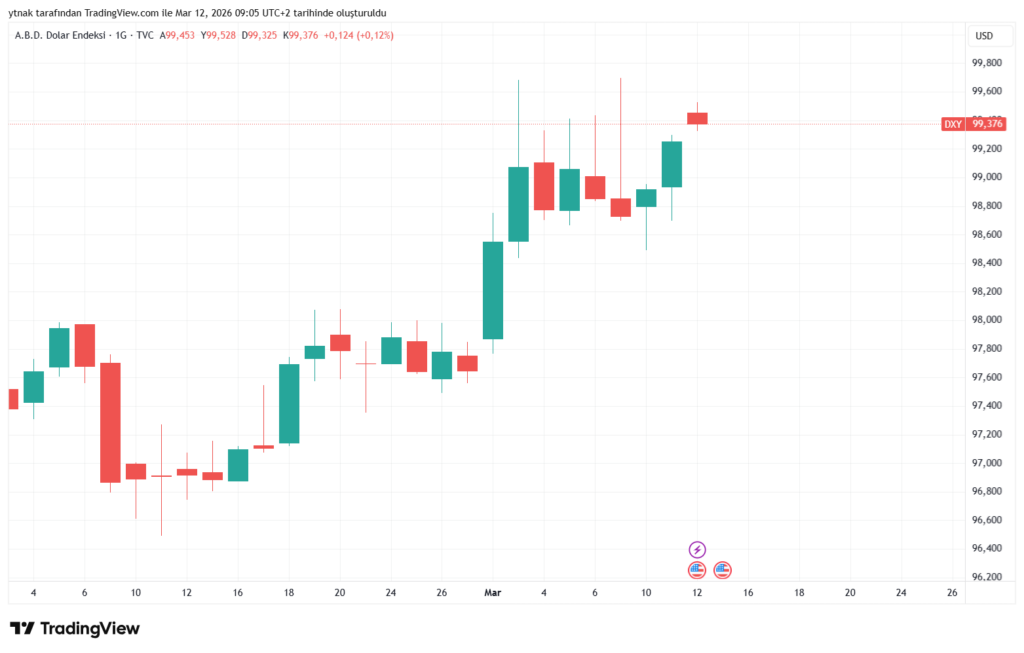
Today in global financial markets, the DXY surpassed 99.00. The move was somewhat sudden, actually. Analysts link this surge to escalating conflicts in the Middle East. This is the most pronounced increase observed since March 2025. In other words, the dollar remains a safe haven in times of international uncertainty. Markets acted quickly; investors shifted portfolios into dollars. Other currencies are feeling some pressure.
The US Dollar Index (DXY) doesn’t track the dollar against a single currency—it measures it collectively against six major currencies: the euro, Japanese yen, British pound, Canadian dollar, Swedish krona, and Swiss franc. So when DXY tops 99.00, it shows the dollar’s overall strength on a global scale, not just against one currency.
DXY Breakout and Technical Dynamics
The index measures the dollar against six major currency pairs. In morning trading, it crossed 99.00. Volumes spiked. Truthfully, this came after a few months of consolidation—a sharp move. The euro and pound fell, yen also dropped. In other words, there’s a coordinated risk-off sentiment.
For instance, historically, geopolitical crises and dollar strength are tightly linked. Actually, in 2022, during the first days of the Russia-Ukraine conflict, similar patterns appeared. Back then, markets also quickly moved toward safe-haven assets.
Currently, staying above 99.00 could put the 100.00 level in sight. But uncertainty still dominates the market.
Middle East Conflict: Driving Safe-Haven Demand
Why is the dollar rising? Simply put: escalating military tensions in the Middle East and threats to global energy supply. Investors are fleeing riskier assets, turning to the US dollar as a safe haven. This perception of geopolitical risk is the main force pushing DXY above 99.00.
The intensifying military activity isn’t just a security issue—it also threatens the global energy supply chain. Conflicts are complex, involving many actors. Oil prices have risen—currently around $97.75 per barrel—but the dollar is moving faster. Some traders are focusing more on liquidity than commodities. In the short term, this risk-off sentiment strongly supports the dollar.
Currency Pairs and Corporate Impacts
When the dollar strengthens, winners and losers emerge. Emerging market currencies are particularly vulnerable. Debt is often in dollars, making repayments more expensive. The euro has hit lows in recent weeks. The Japanese yen is falling due to loose monetary policy, while the Fed’s hawkish stance pushes USD/JPY up. Could this conflict influence Fed interest rate decisions? Potentially, yes. Rising risks blur the economic outlook; if energy costs rise or growth slows, the Fed may postpone plans, directly affecting the dollar’s trajectory.
For companies, the impact is twofold. Overseas earnings shrink when converted to dollars, while importers benefit from stronger purchasing power. Historical examples show safe-haven moves start quickly, then slow. There’s currently no coordinated global intervention. So the dollar could remain strong in the near term.
Key Currency Pair Moves
-
EUR/USD: Down 1.2% due to regional risk and energy concerns.
-
USD/JPY: Up 1.5% from Fed-BoJ policy divergence.
-
GBP/USD: Down 0.8% amid general risk-off sentiment.
Market Watch
-
Fed Communication: Any change in interest rate guidance?
-
Geopolitical Developments: Diplomacy progress or rising tensions?
-
Commodity Prices: How are oil and gold moving?
-
Capital Flows: Are funds moving into US assets?
Conclusion: DXY surpassing 99.00 highlights market concern. Escalating Middle East tensions triggered classic safe-haven demand. The move impacts currency pairs, corporate strategies, and global finance outlooks. In the short term, the dollar may continue to strengthen. Ultimately, the trajectory depends on geopolitical developments and central bank responses. Still, the dollar remains the world’s primary safe-haven asset.
Also, you can freely share your thoughts and comments about the topic in the comment section. Additionally, please follow us on our Telegram, YouTube and Twitter channels for the latest news and updates.