

 Emre Yumlu
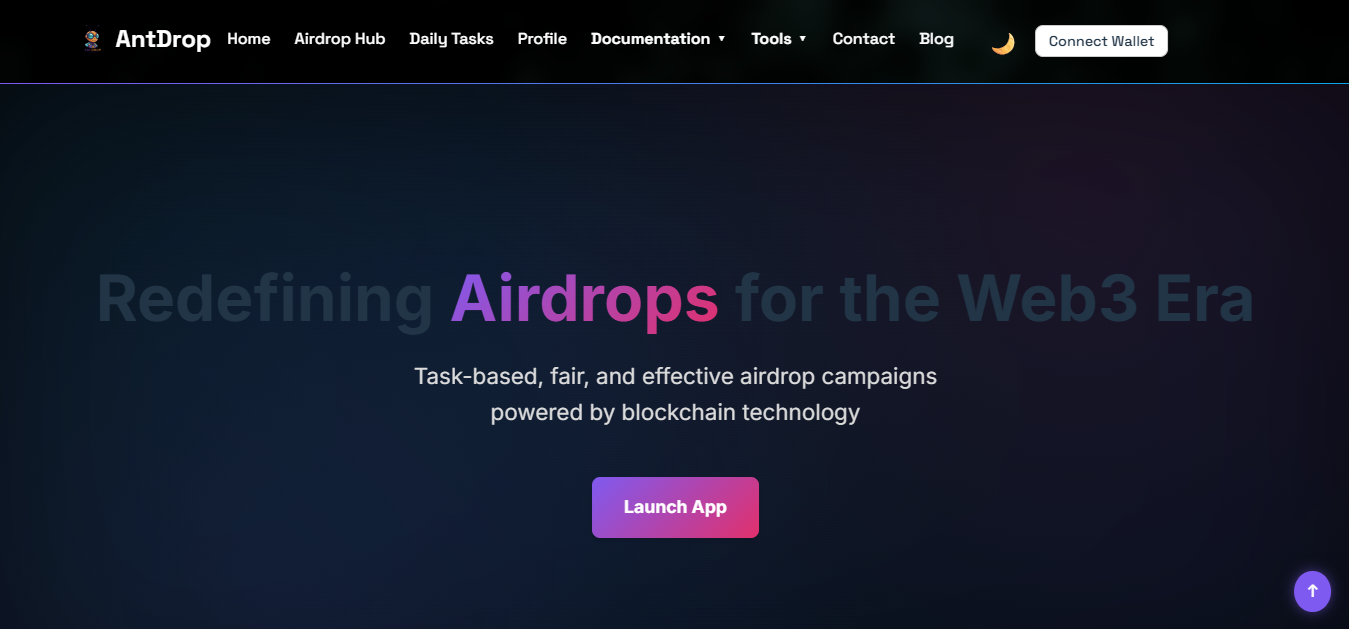
In the Web3 ecosystem, airdrops have become a critical tool for projects in user acquisition and community building processes. However, bot activities, low-quality participation, and inefficient distribution models seriously challenge the sustainability of traditional airdrop systems. AntDrop (ANT) stands out as a next-generation Web3 growth and reward platform developed to solve these problems, focusing on task-based and community-oriented mechanics.
AntDrop offers a task-reward ecosystem where users earn points by completing specific tasks and access airdrop rewards through these points. The platform’s main goal is to make airdrop processes more fun, measurable, and sustainable in the long term.
Core Purpose and Vision of AntDrop (ANT)
At the center of AntDrop lies fair participation and real user engagement. The platform goes beyond being a classic airdrop tool that only distributes tokens, serving as a comprehensive “growth engine” for Web3 projects.
The project’s core missions can be summarized as follows:
- Fair reward distribution that prevents bot activities
- Measurable participation that incentivizes real users
- Sustainable community growth for projects
- Transparent and decentralized reward system for users
This structure aims to create a win-win ecosystem for both projects and users.
How Does AntDrop (ANT) Work?
AntDrop is built on a task-based mechanism. Users participate in listed campaigns on the platform and complete both on-chain and off-chain tasks.
Task Types
Tasks offered on the platform generally cover the following areas:
- Interactions on Telegram, X (Twitter), and Discord
- Wallet connection and on-chain transactions
- NFT or token-based tasks
- Participation activities in project communities
Upon completion of tasks, users earn points, and these points qualify them for the airdrop rewards of the relevant campaign.
Protection Against Bots and Fair Distribution Mechanism
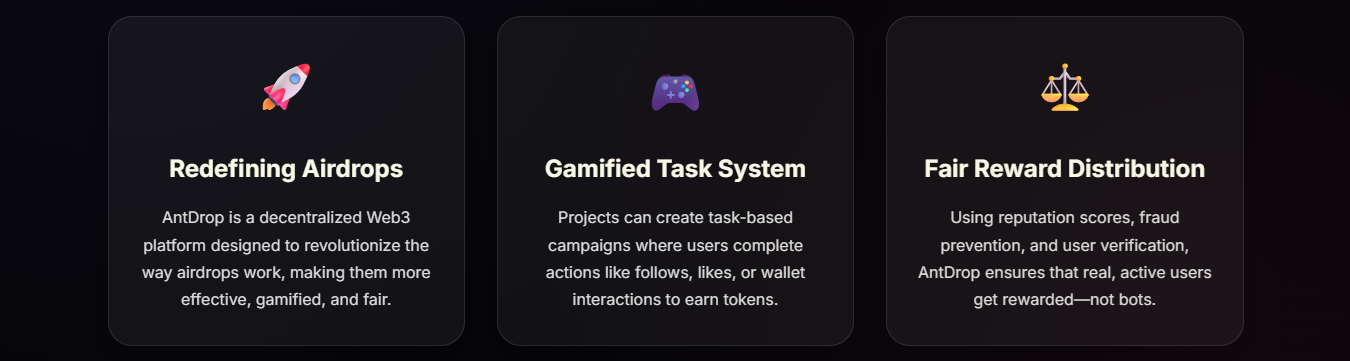
One of the most important elements distinguishing AntDrop from similar platforms is its anti-manipulation infrastructure. The platform uses advanced verification and reputation systems to prevent bot activities and fake accounts.
Thanks to these systems:
- Real users are rewarded
- Individual user participation is protected
- Campaign efficiency increases
- Projects’ ROI (return on investment) becomes measurable
This approach ensures that airdrops evolve from random token distributions into tools that serve real community building.
Key Features of AntDrop (ANT)
- Real Participant-Focused Structure The combination of gamification and bot protection ensures that projects connect with active and engaged users rather than fake interactions.
- Easy Campaign Management Projects can create airdrop campaigns with a single click thanks to an intuitive interface. The need for technical knowledge is minimized.
- Advanced Analytics Tools Participant profiles, task completion rates, and campaign performance metrics can be analyzed in detail.
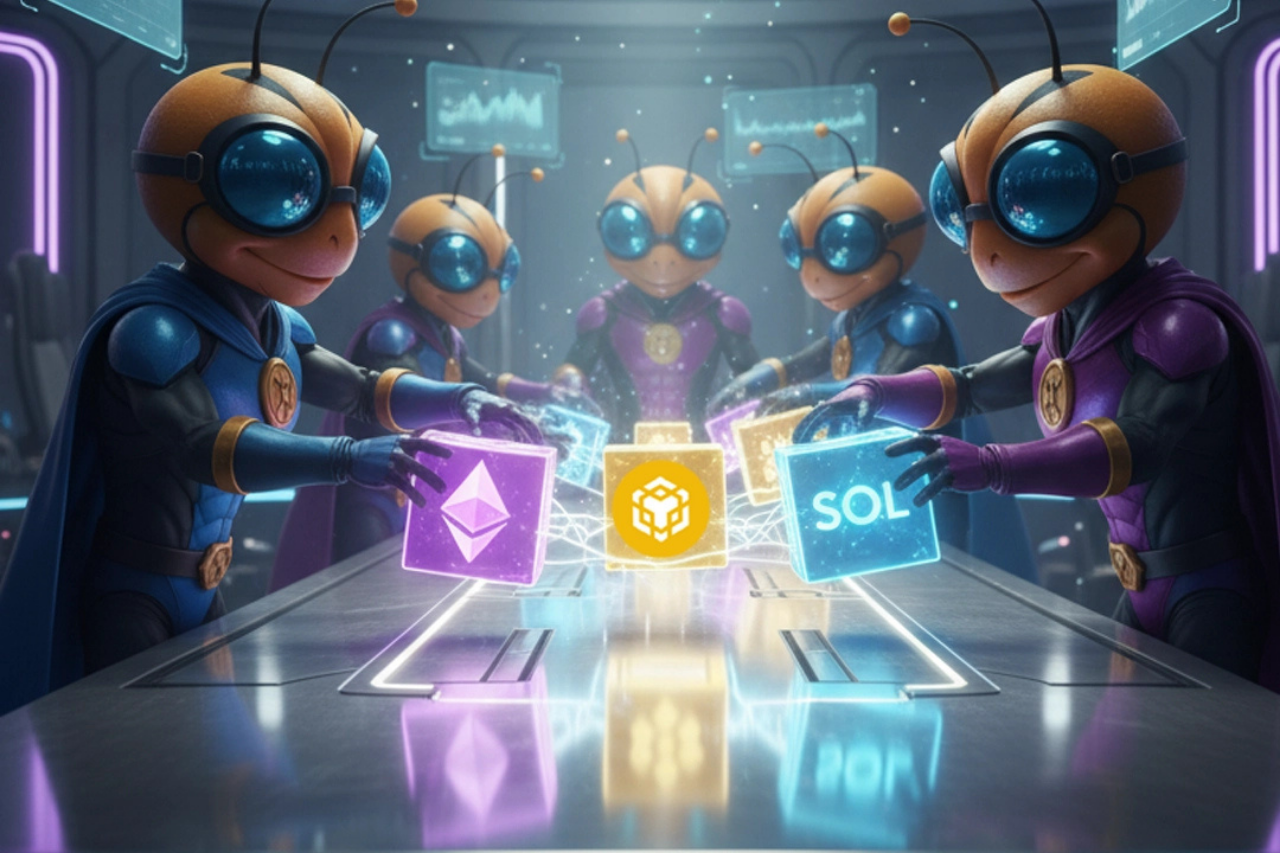
- Multi-Chain Support AntDrop has a multi-chain infrastructure, primarily supporting Ethereum, BSC, Solana, and EVM-compatible networks.
- DAO Governance Decisions regarding the platform’s future are shaped by the community through a decentralized governance model.
What is ANT Token and What Is It Used For?
ANT is the native utility token of the AntDrop ecosystem and sits at the center of all economic activities on the platform. The token is not merely an exchange medium; it is also used for governance, staking, and access to premium features.
Main Use Cases of ANT Token
- Staking: APY rates ranging from 15% to 45%
- Governance: Participation in DAO voting
- Premium Membership: Access to exclusive and high-value airdrops
- Ecosystem Incentives: Campaign rewards and platform advantages
This structure aims to provide ANT token with direct and sustainable utility.
AntDrop (ANT) Tokenomics
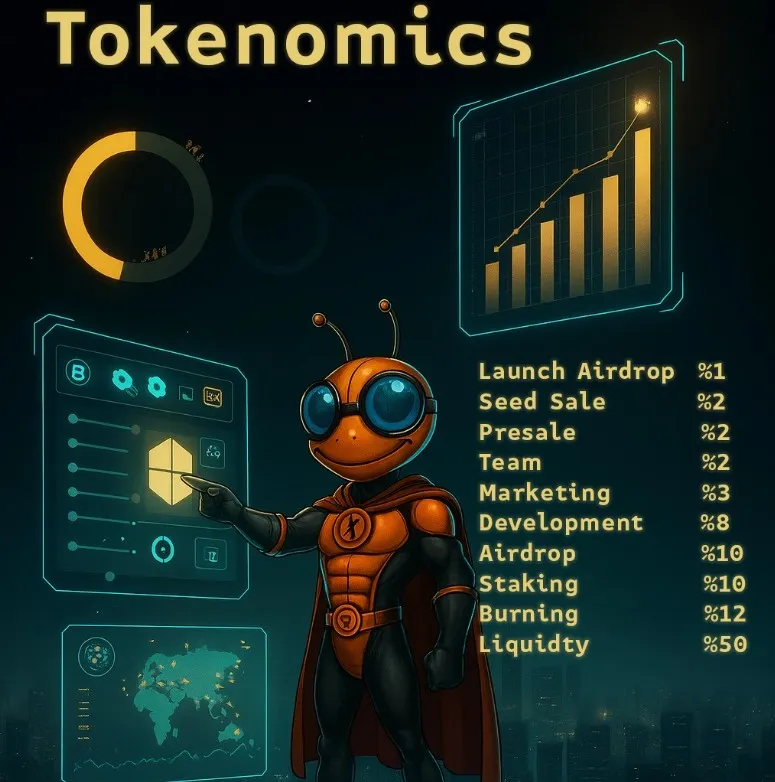
The AntDrop ecosystem is built on a total supply of 1 billion ANT. The token economy is designed to support long-term growth and market stability.
Token Distribution
- Liquidity: 50%
- Burning: 12%
- Airdrop: 10%
- Staking: 10%
- Development Fund: 8%
- Marketing: 3%
- Seed Sale: 2%
- Optional Pre-Sale: 2%
- Team: 2%
- Launch Airdrop: 1%
The initial market cap is set at approximately $2 million.
Liquidity Management and Supply Control
The 50% allocation to liquidity is structured to ensure trading depth on both DEX and CEX platforms. Notable aspects on the liquidity side:
- All liquidity is locked for 1 year
- Emergency reserve fund
- Structure aimed at protecting market stability
This approach targets the reduction of sudden supply shocks and manipulation risks.
AntDrop (ANT) Roadmap
Q1 2026 – Expansion Phase
- Integration with Ethereum, BSC, and Solana
- Activation of DAO voting system
- Launch of “AntScore” reputation system
- Beta version of mobile application for Android and iOS
- Burning of 10 million ANT tokens
Q2 2026 – Scaling Phase
- Full DAO governance
- Additional burning of 10 million ANT tokens
- Platform V2.0 update
- Tier-1 exchange listings
- Target: 200 projects and 100,000 users
AntDrop (ANT) Team
AntDrop is developed by a team experienced in Web3, blockchain development, marketing, and community management. The team pursues a vision that simultaneously advances technical infrastructure and community growth.
Team Members:
- Francois Qui – Marketing Developer
- Gabriel Rous – Strategy Developer
- Hector Log – Blockchain Developer
- Michael Faith – Community Team Leader

Official Links
You can freely share your thoughts and comments about the topic in the comment section. Additionally, please don’ t forget to follow us on our Telegram, YouTube and Twitter channels for the latest news.