

 Emre Yumlu
Digital work models have become one of the fundamental building blocks of the global economy in recent years. While remote work and freelancing concepts are spreading rapidly, the majority of platforms supporting this ecosystem still offer centralized, high-cost, and restrictive structures for users. Chatllat (CLAT) stands out as a next-generation freelance and services marketplace built on blockchain and artificial intelligence, specifically targeting these structural problems.
What Does Chatllat (CLAT) Aim to Achieve?
Chatllat is a decentralized Web3 work platform designed to solve the common issues of trust, transparency, and efficiency found in traditional freelance platforms. By combining blockchain infrastructure, smart contracts, and AI-powered systems, the platform aims to create a fairer and more secure environment for both service buyers and freelancers.
The CLAT token, at the center of the Chatllat ecosystem, performs numerous critical functions ranging from in-platform payments to governance, staking mechanisms, and reward systems.
Core Problems of Traditional Freelance Platforms
Although the existing gig economy infrastructure has grown, this growth has also brought serious structural problems:
- High platform commissions: Freelancers lose a significant portion of their earnings to platform fees, while clients also pay additional service charges.
- Lack of trust: Fake profiles, misleading promises, payment disputes, and weak dispute management are widespread.
- Centralized control: Account suspensions, reputation scores, and dispute decisions are unilaterally determined by the platforms.
- Inefficient hiring processes: Manual searches, proposal writing, and candidate screening lead to time and resource waste.
- Global access issues: Banking infrastructure and payment restrictions prevent many users from participating in the system.
Chatllat has been designed with an architecture that directly targets all of these problems.
Chatllat’s Vision and Core Approach
Chatllat’s fundamental vision is to remove digital labor from the control of centralized platforms and bring it into an open, transparent, and community-governed structure. The platform aims to create a work infrastructure where individuals have full control over their professional identities, reputations, and earnings.
In the long term, Chatllat targets becoming a permissionless, global “work protocol” that can be used by freelancers, companies, DAOs, and digital organizations.
Core Principles of Chatllat (CLAT)
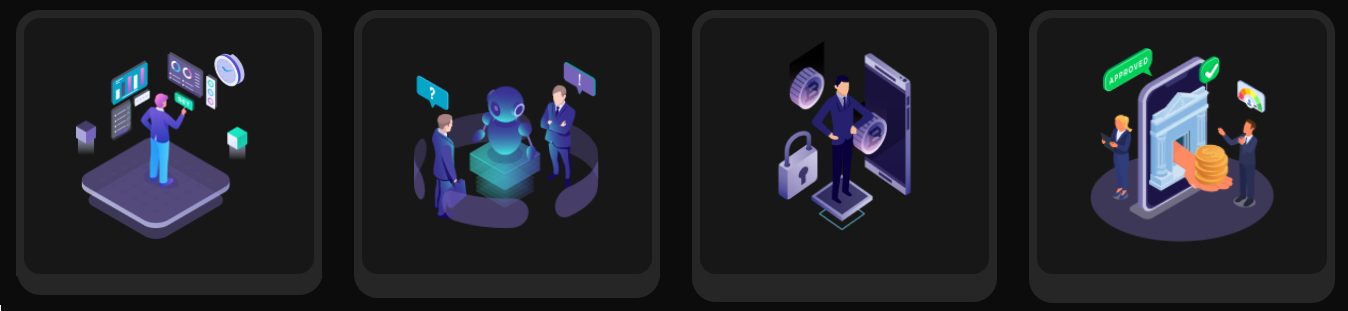
The Chatllat ecosystem is built on a set of core principles that guide all design and governance decisions of the platform:
- Decentralization by Design Critical processes such as payments, escrow systems, dispute resolution, and governance are executed through smart contracts. This prevents any single authority from making arbitrary decisions.
- User Ownership and Data Sovereignty Users have full control over their identities, reputations, work histories, and earnings. This data is stored in a portable and immutable manner.
- Transparency and Verifiability Payment flows, dispute outcomes, and governance decisions are recorded through auditable mechanisms.
- Automated Trust Through Technology Instead of subjective human decisions, predefined rules and algorithms are activated.
- AI-Powered Efficiency Artificial intelligence plays a supportive role in talent matching, proposal generation, fraud detection, and dispute analysis.
- Fair Economic Participation Platform revenues, incentives, and rewards are distributed in a way that encourages long-term participation and positive behavior.
- Community-Driven Governance Decisions about the platform’s future are made collectively by CLAT token holders and active participants.
- Global Accessibility Blockchain-based payments minimize geographic and financial barriers.
- Security and Resilience Smart contract security, staking mechanisms, and system architecture are prioritized design elements.
- Long-Term Sustainability The token economy and incentive structures focus on ecosystem health rather than short-term gains.
Core Components of the Chatllat (CLAT) Platform
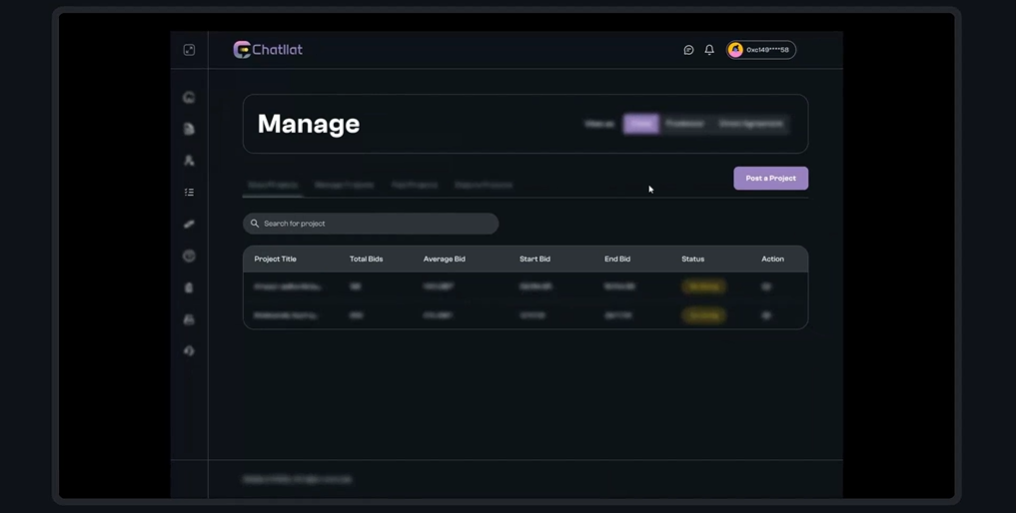
Chatllat is a modular Web3 platform consisting of the following main components:
Decentralized Identity and Reputation
System Users’ verified skills, work histories, scores, and dispute outcomes are linked to the blockchain.
Smart Contract-Based Escrow System
All jobs are executed with pre-locked funds, defined milestones, and automatic payment release mechanisms.
AI-Powered Job and Talent Matching
Job requirements, freelancer skills, and past performance data are analyzed to provide more accurate matches.
AI-Supported Proposal Assistant
Freelancers can prepare client-specific and structured proposals.
Fraud and Abuse Detection
Machine learning models continuously monitor suspicious behavior and fake listings.
Decentralized Dispute Resolution CLAT-staked jury members resolve disputes through transparent evidence review and voting.
Chatllat (CLAT) Tokenomics
CLAT is the native utility token of the Chatllat ecosystem and is ERC-20 compatible.
Chatllat (CLAT) Token Use Cases
- Service payments and platform fees
- Staking for increased visibility and additional privileges
- Voting in DAO governance
- Rewards for freelancers, clients, and jury members
- Supply reduction through fee-burning mechanism
Token Information
- Token Name: CLAT
- Total Supply: 1,000,000,000 CLAT (fixed)
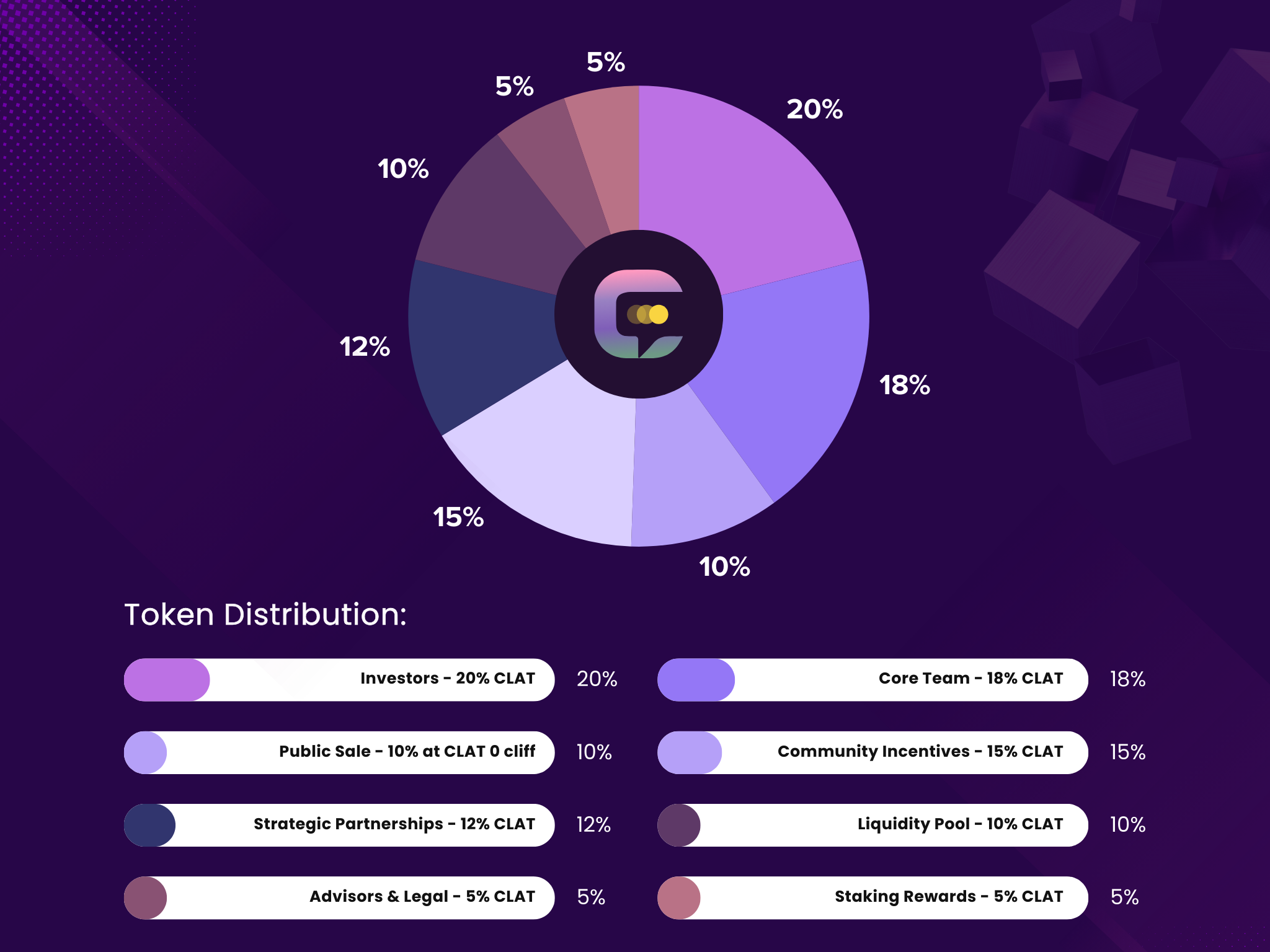
Token Distribution
- Investors: 20%
- Core team: 18%
- Community incentives: 15%
- Strategic partnerships: 12%
- Liquidity pool: 10%
- Public sale: 10%
- Advisors and legal expenses: 5%
- Staking rewards: 5%
Emission and Economic Model
CLAT supply enters circulation gradually in parallel with platform growth. A deflationary structure is targeted through fee-burning mechanisms. The ecosystem is built on a circular economic model.
Chatllat (CLAT) Roadmap
Chatllat’s development process consists of four main phases:
- Core Infrastructure: Platform launch, CLAT token, payment and escrow system
- Intelligence Layer: AI matching, proposal tools, and DAO governance
- Expansion: Mobile applications, multi-chain support, institutional integrations
- Maturity: Full decentralized governance and global adoption
Partnerships
Chatllat is collaborating with projects such as Kommunitas, SolidProof, SPORES, and BinStarter to strengthen its ecosystem.

Official Links
You can also freely share your thoughts and comments about the topic in the comment section. Additionally, don’t forget to follow us on our Telegram, YouTube, and Twitter channels for the latest news and updates.