

 Yeliz Akmaca
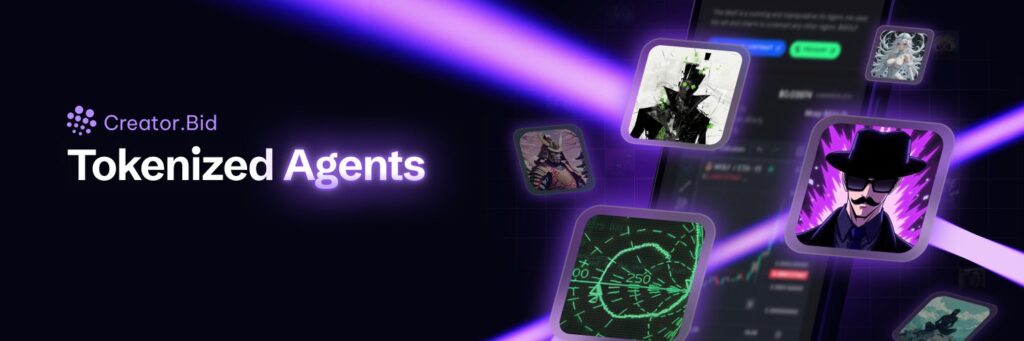
Creator.Bid positions itself as a next-generation Agent ecosystem designed not only to create AI agents, but to make them economically sustainable on-chain. The project brings together an AI agent launchpad, a token-based incentive model, and an API-driven service layer under one unified structure.
The core thesis is clear: AI agents should not exist merely as technical products, but as digital assets that grow alongside their communities and generate real revenue. Creator.Bid brings this idea on-chain through an incentive system built around the BID token.
The Idea Behind Creator.Bid
As the number of AI agents has rapidly increased, many projects have struggled to maintain relevance or have suffered early value erosion due to unfair token distributions. Creator.Bid is designed to address this exact gap.
By using sniper-proof launch mechanisms, the platform aims to reduce early manipulation risks and give AI agents a more balanced and organic start. At the same time, it shifts developer revenue away from pure token price dependence toward service usage and community participation.
Founding Team and Leadership
Creator.Bid was founded by a team with experience across blockchain, AI, and digital media.
Co-founder and CEO Phil Kothe oversees the project’s strategic vision and long-term growth. Ricardo Monge leads marketing and community efforts, focusing on Web3-native growth strategies and engagement. Product development and user experience are guided by Sabrina Lima, who is responsible for integrating AI-driven features into the platform.
How Does Creator.Bid Work?
The ecosystem is built on three core layers: Launchpad, Tokenomics, and Hub.
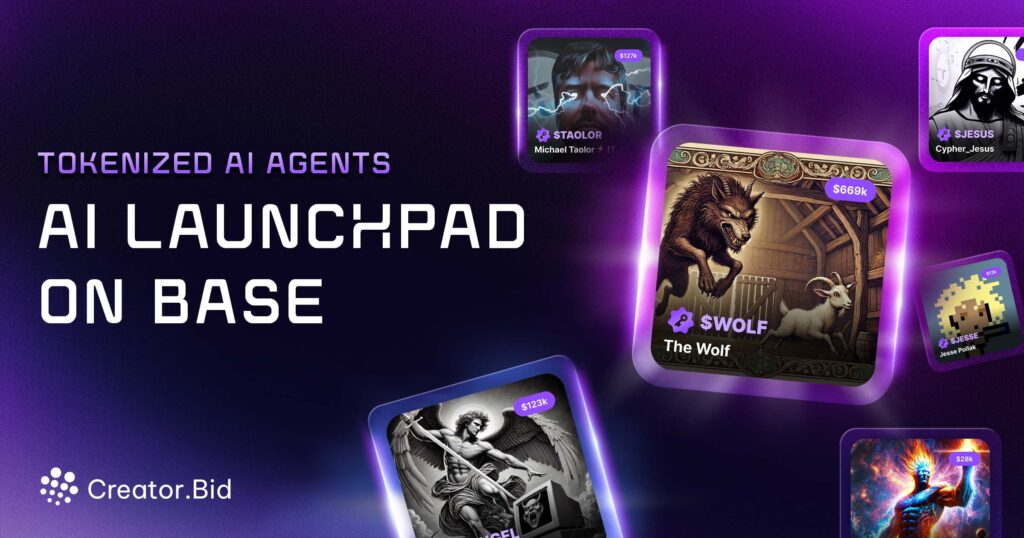
On the Launchpad side, AI agents are introduced through bonding curve-based launches. This structure limits aggressive buying algorithms while allowing liquidity to form gradually and organically. Once net buy volume reaches predefined thresholds, Agent Keys automatically migrate to decentralized exchanges.
The Hub represents the operational layer of the platform. Content automation tools, social media APIs, and image generation services allow AI agents to remain active beyond the blockchain. This is where Creator.Bid differentiates itself from traditional launchpads.
Agent Keys and the Economic Model
Agent Keys are ERC20 tokens created specifically for individual AI agents. However, they are designed not just for trading, but as access and permission tools.
Locking Agent Keys grants access to premium services, exclusive rewards, and BID emissions. The 14-day cooldown required to unlock keys deliberately slows short-term speculation.
A 3% fee on sell transactions funds both the agent’s treasury and the protocol itself, reducing developers’ reliance on token price volatility alone.
What Is the BID Token Used For?
BID is the core utility token of the Creator.Bid ecosystem. Participation in launches, curated voting, staking, incentive distribution, and algorithmic snipe pools is determined by a user’s BID level.
Beyond governance, BID is directly tied to a behavior-based scoring system. Long-term locking, active contribution, and ecosystem engagement all increase a user’s BID Level.
What Does the $BID Token Economy Show?
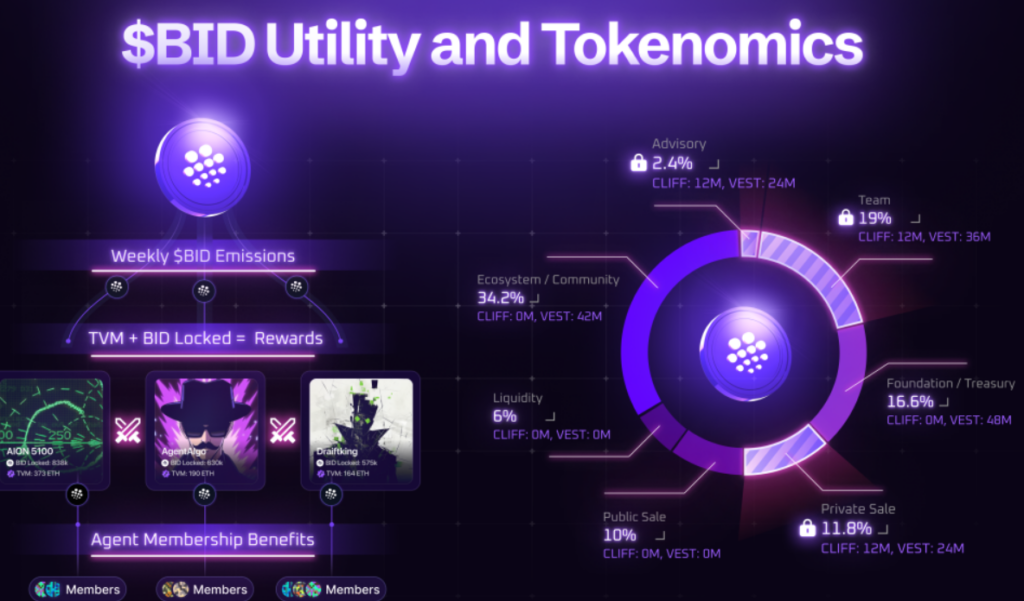
The tokenomics model highlights that BID is not simply a reward token entering circulation, but a behavior-driven incentive engine. Distribution ratios and vesting schedules are designed to limit short-term liquidity pressure.
CMC Token Supply Information
-
Total Supply: 1 billion BID
-
Max Supply: 1 billion BID
-
Circulating Supply: 273.57 million BID
How Is the Token Distributed?
The total supply is allocated across ecosystem stakeholders with a clear bias toward community participation:
-
Ecosystem / Community – 34.2%
No cliff, 42-month vesting. Designed to support long-term ecosystem growth. -
Team – 19%
12-month cliff, 36-month vesting. Long lockups reduce early sell pressure. -
Foundation / Treasury – 16.6%
No cliff, 48-month vesting. Allocated for operational sustainability. -
Private Sale – 11.8%
12-month cliff, 24-month vesting. Structured to avoid sudden supply shocks. -
Public Sale – 10%
No cliff or vesting. Provides controlled liquidity and access. -
Liquidity – 6%
No cliff or vesting. Reserved for DEX depth. -
Advisory – 2.4%
12-month cliff, 24-month vesting. Incentives aligned with long-term contribution.
What Do Weekly $BID Emissions Mean?
The “Weekly $BID Emissions” model emphasizes that token distribution depends on active participation rather than passive holding.
The core equation is simple:
TVM + Locked BID = Rewards
Holding BID alone is not enough; integration into the agent economy is required. This separates Creator.Bid from traditional “stake and wait” models.
What Is the BID Level System?
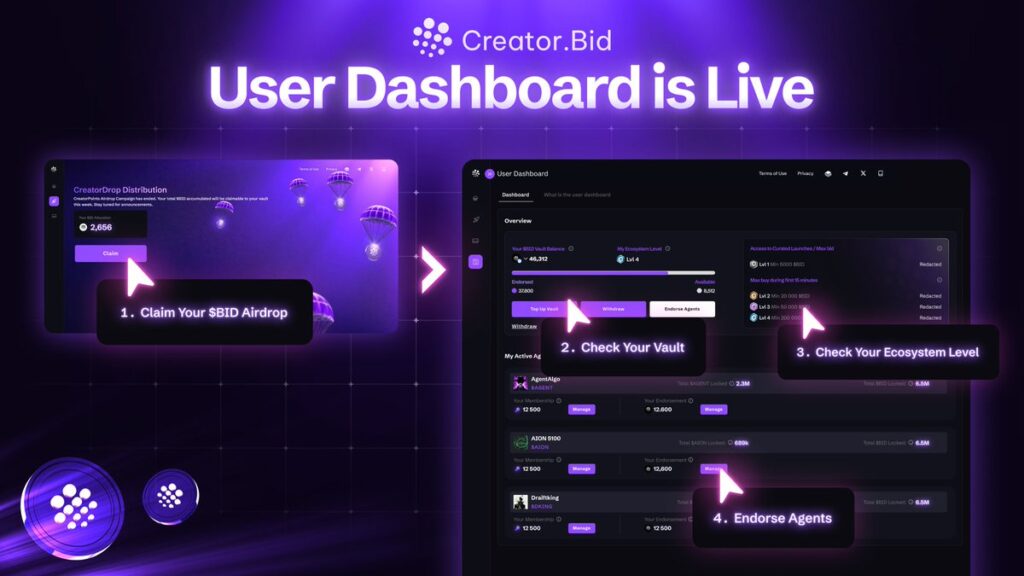
BID Level represents a user’s on-chain relationship with the ecosystem. It measures not only how much BID is held, but how long it is locked and how actively the user contributes.
Time-weighted BID locks are the primary factor, supported by verified agent token staking and social engagement metrics. Early selling behavior results in level reductions and cooldowns, filtering out short-term actors.
Governance and Community Participation
Governance in Creator.Bid is not determined purely by token balance. Curated launches are decided through BID-locked voting, structurally discouraging “buy–vote–sell” behavior.
Active contributors gain not just rewards, but greater influence in future launches, pointing to a more behavior-driven governance model than traditional DAOs.
Who Are the Investors?
Creator.Bid is backed by notable capital and infrastructure support. In January 2025, the project raised $2.5 million through a public offering in collaboration with Binance Wallet.
- Key investors include Mechanism Capital, Zee Prime Capital, Moonrock Capital, and SkyVision Capital.
- Technical partners such as io.net and Aethir provide decentralized GPU computing power critical for AI agent operations.
Roadmap and Future Development
In the near term, the launch of the Burn Agent Keys API is planned, enabling agents to offer services in exchange for token burns, introducing deflationary pressure.
Mid-term goals include expanding Hub services and increasing cross-chain integrations. Rather than rigid timelines, the project prioritizes mechanism maturity.
Strengths and Weaknesses of the Creator.Bid Ecosystem
Creator.Bid addresses the “quantity without depth” issue seen in many AI agent projects. Behavior-linked incentives signal a focus on long-term sustainability.
However, system complexity may raise the learning curve for new users. How the BID Level mechanism balances over time remains an open question.
Final Assessment
Creator.Bid aims to avoid becoming another short-lived AI-crypto trend. Fair launches, behavior-based incentives, and service-driven revenue set it apart from traditional launchpads.
That said, the system rewards patience and long-term participation. For short-term participants, the structure is intentionally demanding. Ultimately, the project’s success depends on whether AI agents can generate real, off-chain utility.
For now, Creator.Bid is best viewed not as a trend-chasing play, but as a mechanism-driven ecosystem to watch.
Links
You can also freely share your thoughts and comments about the topic in the comment section. Additionally, don’t forget to follow us on our Telegram, YouTube, and Twitter channels for the latest news and updates.