

 Emre Yumlu
Crypto ETF (Exchange-Traded Funds) are traditional financial products that allow investors to gain exposure to crypto assets through regular brokerage accounts, without directly purchasing cryptocurrencies or dealing with storage risks.
There are different types of ETFs for many cryptocurrencies such as Bitcoin and Ethereum in Canada and the United States.
Just like traditional ETFs, crypto ETFs are traded on exchanges and gain or lose value based on the price movements of the asset or basket of assets they track. What is a crypto ETF? Let’s examine it in detail.
What Is a Crypto ETF? What Advantages Does It Offer?
The simplest answer to the question “What is a crypto ETF?” is that they are investment funds that turn cryptocurrencies into exchange-traded products.
Crypto ETFs can be bought and sold through standard brokerage accounts, just like stock or commodity ETFs. This allows investors to access popular cryptocurrencies such as Bitcoin and Ethereum—or baskets containing these assets—without holding the asset physically. Various spot or futures-based ETF types exist in many countries, especially in Canada and the United States.
These funds track the price movements of the underlying assets either directly or with high accuracy. Since crypto ETF shares trade on exchanges, their price is determined throughout the day based on supply and demand. This allows investors to benefit from both the regulatory framework and security of traditional finance and from the price exposure of crypto assets.
-
Easy Trading
You can purchase an ETF just like buying a stock, without the need to open a crypto exchange account.
-
Tax Advantage (TFSA/RRSP example for Canada)
Direct crypto purchases may not be eligible for such accounts, but crypto ETFs may qualify.
-
Easy Storage
Wallet management and private key storage difficulties are eliminated.
Things to Consider Before Investing
Crypto ETFs are still affected by the volatility in the crypto market.
Tracking error may occur in ETFs; the ETF return may not always match the actual return of the underlying asset.
Management fees (MER) may be higher than those of traditional ETFs.
Types of Crypto ETFs
-
Spot Crypto ETFs — Direct Exposure
Spot ETFs physically purchase and hold the cryptocurrency they track.
For example, a Bitcoin Spot ETF holds actual BTC within the fund.
Advantage:
It provides direct price exposure without the need to buy or store the crypto itself.
-
Futures Crypto ETFs — Forward-Looking Pricing
These ETFs do not hold the cryptocurrency physically; they track the price through futures contracts.
Note: Due to futures contracts, price differences may occur and costs may be higher.
What Is an ETF (Exchange-Traded Fund)?
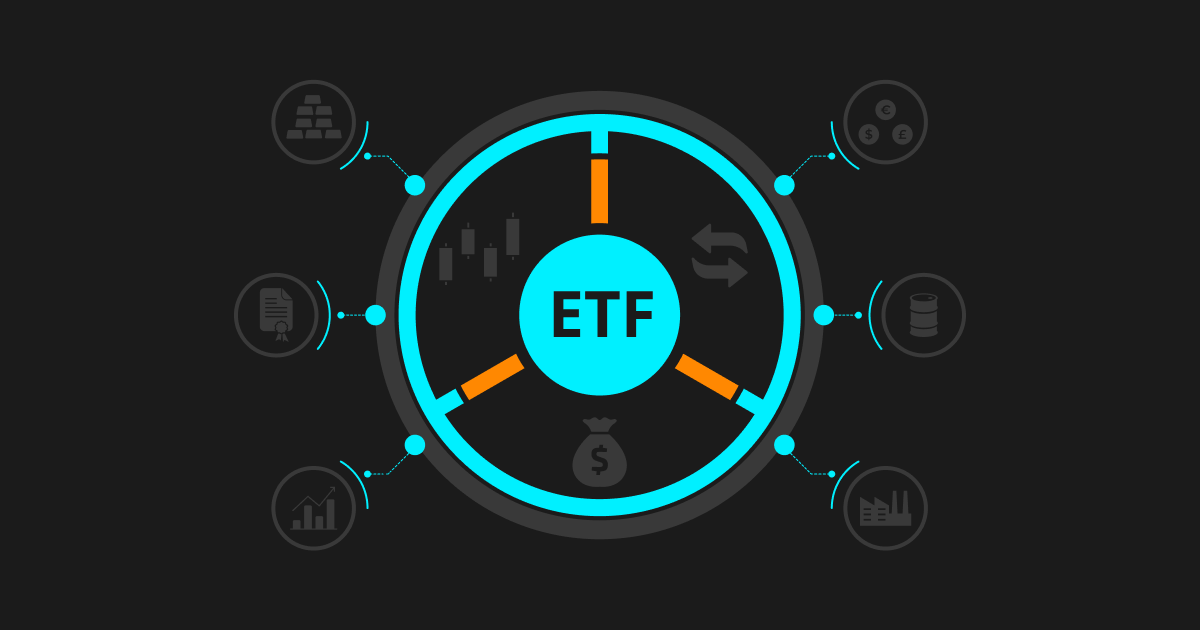
An ETF is an investment fund consisting of assets such as stocks, bonds, commodities, or currencies and traded on exchanges.
The goal is to track the price movements of the underlying asset.
ETFs:
Are bought and sold throughout the trading day
Are generally low-cost
Offer portfolio diversification
Crypto ETFs are the application of this structure to crypto assets.
How Does a Crypto ETF Work?
When a company issues a crypto ETF:
It holds the underlying asset (e.g., BTC) or buys futures contracts.
It releases ETF shares corresponding to this asset into the market.
Investors buy and sell these shares through brokerage firms.
Investors do not hold the crypto directly but benefit from its price movements.
Difference Between Blockchain ETFs and Crypto ETFs
Blockchain ETF: Tracks companies related to blockchain technology (Coinbase, MicroStrategy, mining firms, etc.).
It does not directly invest in cryptocurrency.
Crypto ETF: Provides direct exposure to the price movements of cryptocurrencies.
What Is a Bitcoin Spot ETF?
A Spot Bitcoin ETF is an exchange-traded fund that tracks Bitcoin’s real-time market price. ETFs give investors exposure to an asset class, a basket of assets, or a single asset without requiring direct ownership of the underlying asset.
With a Spot Bitcoin ETF, investors can benefit from Bitcoin’s price movements without buying or storing BTC themselves. This removes the need for managing private keys, handling digital wallets, or dealing with the technical side of crypto trading.
What Is a Bitcoin Futures ETF?
Bitcoin futures ETFs track the futures price of Bitcoin, not the spot price. Examples such as BITO, XBTF, and BTF are currently active. These ETFs rely entirely on futures contracts and their price may be more volatile.
Regulation Status
The U.S. delayed approval of Bitcoin spot ETFs for many years but in 2024 approved spot BTC ETF applications from companies such as BlackRock, Fidelity, and Grayscale.
Canada, on the other hand, approved the world’s first Bitcoin spot ETF (BTCC) in 2021 and today has multiple spot BTC and ETH ETFs.
What Is an Ethereum ETF?
A Spot Ethereum ETF operates similarly to its Bitcoin counterpart. It follows the real-time price of Ether (ETH) and holds actual ETH in its reserves. This structure distinguishes it from futures-based Ethereum ETFs, which rely on contracts that speculate on ETH’s future price rather than holding the asset directly.
While Spot Ethereum ETFs make it easier for investors to gain exposure to ETH, they also come with certain trade-offs. These may include additional management fees and the limitation of trading only during traditional market hours—unlike the crypto markets, which operate 24/7.

What Is a Solana (SOL) Spot ETF?
A Solana Spot ETF is an exchange-traded fund that holds actual SOL tokens, giving investors direct price exposure without requiring them to manage wallets or store crypto assets themselves.
Advantages of Crypto ETFs
Bringing traditional finance and crypto together: Lowers the entry barrier for institutional investors.
Portfolio diversification: Multiple assets can be included within a single ETF.
Convenience: Eliminates issues like wallet management, transfer fees, and security.
Tax and regulatory compliance: Many funds trade on regulated platforms, making them more reliable.
Disadvantages of Crypto ETFs
Sacrifice of decentralization: Assets are held by a custodian, violating the “Not your keys, not your crypto” principle.
High management fees: Some crypto ETFs may be expensive.
No crypto-to-crypto trading: Direct BTC → ETH conversions are not possible.
Tracking error risk: ETF performance may not match the underlying asset.
Liquidity risk: Price discrepancies may occur.
How Do ETFs Work?
- Traded throughout the day on exchanges
- Bought and sold like stocks
- Track a basket of assets
- Generally passively managed
- These features make ETFs both practical and cost-effective for investors.
You can also freely share your thoughts and comments about the topic in the comment section. Additionally, don’t forget to follow us on our Telegram, YouTube, and Twitter channels for the latest news and updates.