

 Emre Yumlu
Wilder World (WILD), positioned at the intersection of artificial intelligence, blockchain, and virtual reality technologies, stands out as the most expansive online multiplayer metaverse platform developed to date. Set in the neon-lit, cyberpunk-themed city of Wiami, this platform offers players opportunities to build, explore, and defend. Managed by a decentralized economy, Wilder World provides a community-focused virtual reality universe that rewards users’ creativity and participation. So, what is Wilder World, how does it work, and why is it important? Let’s examine it.
What is Wilder World (WILD)?
Wilder World is a decentralized metaverse platform that combines photorealistic graphics, artificial intelligence, and blockchain technologies. This universe, set in the virtual city of Wiami, encompasses a cyberpunk metropolis of 1,024 km², covering 10 districts and over 100 neighborhoods. Users, known as “Wilders,” can create avatars, race high-performance vehicles, extract resources to build empires, and battle forces threatening the city. Supported by the $WILD token, the platform offers an economy where every asset (from avatars to vehicles) is represented as an NFT. These NFTs are not merely collectibles but dynamic entities usable in the game. Backed by strong partners like Samsung, Epic Games, Polygon, Celestia, and MetaGravity, Wilder World envisions a community-governed “network state” aiming to create a digital economy with millions of active citizens.
Key Features of Wilder World (WILD)
Wilder World draws attention with its innovative features:
Photorealistic and Decentralized Metaverse
A virtual universe supported by blockchain, artificial intelligence, and virtual reality technologies, governed by the community.
Wiami: The Capital of the Metaverse
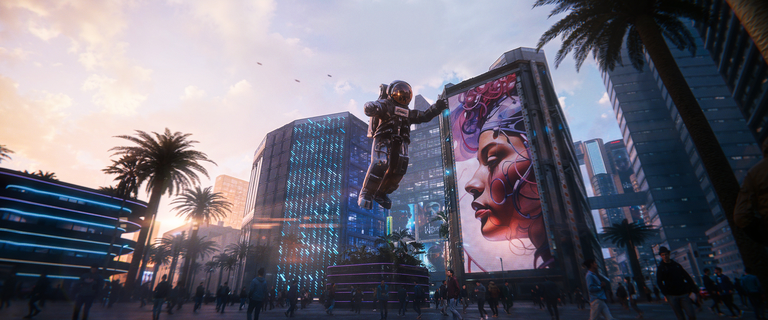
The 1,024 km² cyberpunk city of Wiami, with 4,444 unique parcels, serves as a resource-rich hub.
$WILD Token
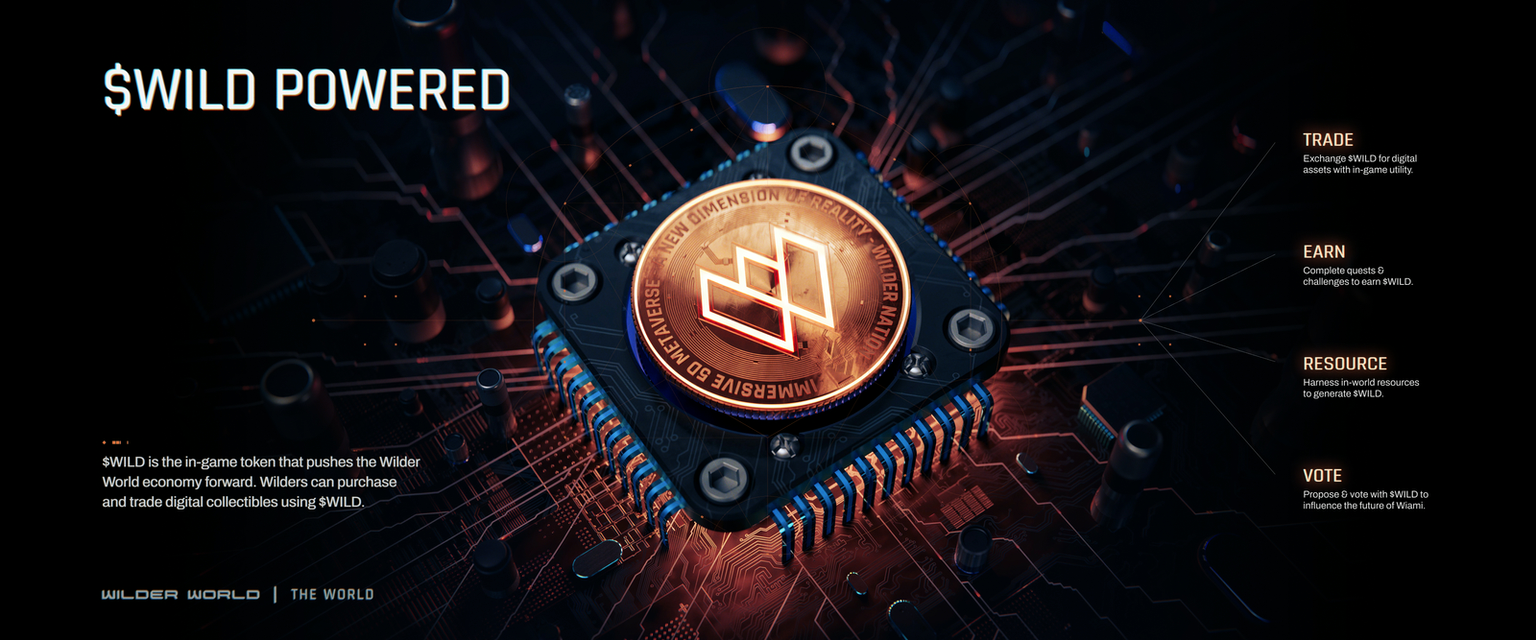
The ERC-20-based $WILD is the platform’s primary currency, used for transactions, governance, and rewards.
NFT-Based Economy
Avatars, vehicles, lands, and more are NFTs that can be used in the game and bought/sold.
Decentralized Economy: Metropolis
Metropolis is a player-focused economic system supported by $WILD tokens and DAOs.
Multiple Game Modes
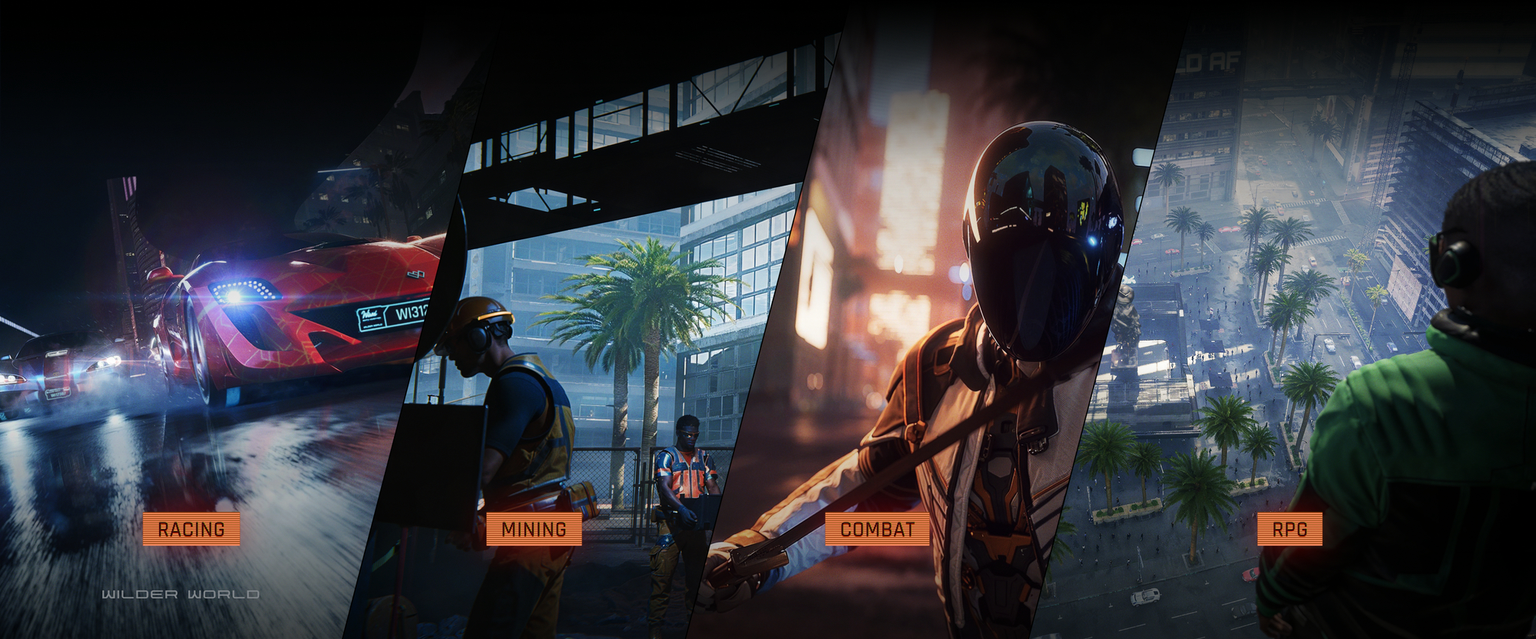
It offers a rich gaming experience with modes like racing, combat, exploration, and resource extraction.
Robust Technological Infrastructure
Simulation OS, Z Chain, The GRID, and AURA AI support the platform’s scalability and immersion.
How Does Wilder World (WILD) Work?
Wilder World operates as an ecosystem that rewards players’ creativity and participation:
Avatar and Identity Creation: Players create and customize unique avatars with ZERO ID (ZID).
Game Modes: Different roles are assumed in Wiami through modes like racing, combat, exploration, and resource extraction (driver, defender, miner, hacker).
NFT and Economy: Every asset is an NFT that can be bought and sold on the Wilder World Metaverse Market (WWMM). Transactions are conducted with $WILD tokens.
Metropolis Economy: The cycle of resource extraction, processing, production, and trade enables players to contribute to the economy.
Governance: Players shape the platform’s future through DAOs using $WILD tokens.
Technological Infrastructure: Z Chain (high-speed blockchain), The GRID (decentralized computing), and AURA AI (artificial intelligence agents) underpin the platform.
Social Experiences: Concerts, NFT galleries, and business centers provide a community-oriented metaverse experience.
Wilder World creates an economy where parcels in Wiami are supported by resources, built by players. Metropolis offers a deflationary system by burning $WILD tokens and distributing value through DAOs.
Benefits of Wilder World (WILD) to Stakeholders
- Players: They earn rewards by leveraging their creativity, own assets, and participate in governance.
- Creators: Through Wiami.fun, they create their own designs (skins, tokens, NFTs) and generate income.
- Community: It contributes to the platform’s development through DAOs and campaigns like Operation Wildfire.
- Investors: They gain a share from the ecosystem’s growth via $WILD and NFTs.
Wilder World (WILD) Tokenomics
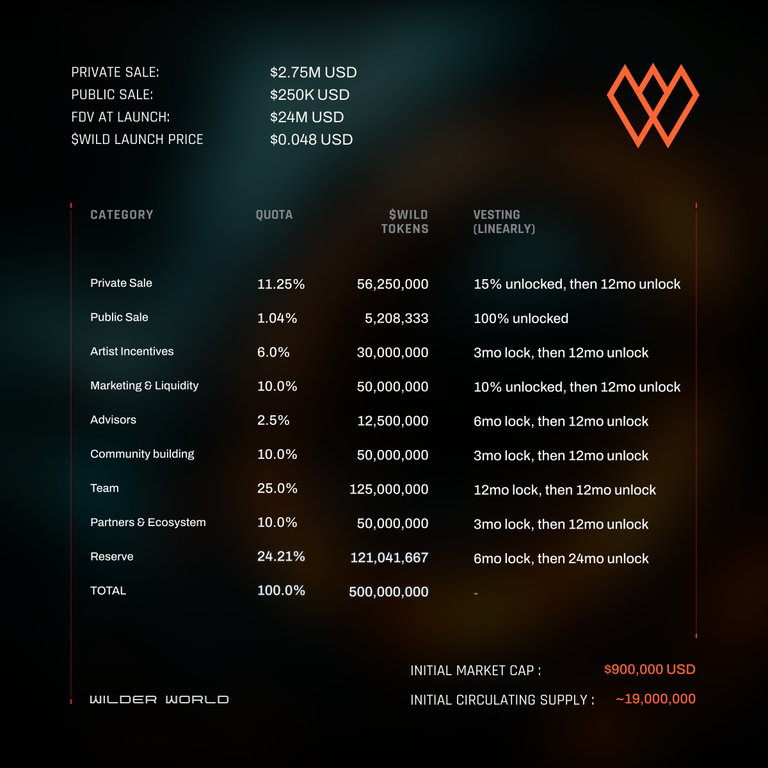
$WILD is the utility token of Wilder World:
Token Name: WILD
Total Supply: 500 million (fixed)
Distribution:
- Private Sale: 11.25%
- Public Sale: 1.04%
- Artist Incentives: 6%
- Marketing Liquidity: 10%
- Advisors: 2.5%
- Community Development: 10%
- Team: 25%
- Partners and Ecosystem: 10%
- Reserve: 24.21%
Use Cases:
- Payments: Asset purchases and transaction fees.
- Governance: Voting rights in DAOs.
- Rewards: In-game activities and staking rewards.
- Deflationary Mechanism: 80% of transaction fees are burned, with the remaining 20% going to DAO treasuries.
Wilder World Roadmap
Wilder World is expanding its metaverse infrastructure:
- 2021: $WILD token launch and Wilder.Cribs NFT sale.
- 2023: Foundations of Z Chain and Metropolis laid.
- 2024: Partnerships with Samsung, Epic Games, Polygon, Celestia, and MetaGravity; Super Early Access launch.
- 2025: Launch of Avatar NFTs and Legend of the WILD tournament.
Wilder World (WILD) Investors
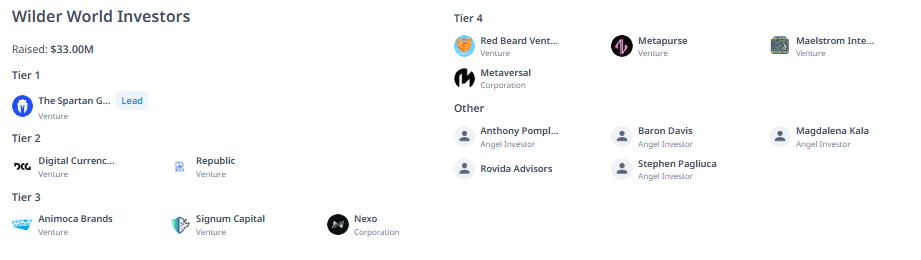
Wilder World is a metaverse platform that has raised a total of 33 million dollars in funding, supported by leading investors. At Tier 1 level, The Spartan Group; at Tier 2, Digital Currency Group (DCG) and Republic; at Tier 3, Animoca Brands, Signum Capital, and Nexo; at Tier 4, Red Beard Ventures, Metapurse, Maelstrom Interactive, and Metaversal, along with venture and institutional investors. Additionally, individual angel investors such as Anthony Pompliano, Baron Davis, Magdalena Kala, Rovida Advisors, and Stephen Pagliuca contribute to the project.
Wilder World (WILD) Team
Wilder World is developed by an experienced team. Names like Frank Wilder (Art Director, renowned crypto artist), Brandon Gobey (Lead Concept Artist, Dune and Blade Runner projects), Jonathan Reilly (Lead Character Artist, The Witcher), Aram Khachatryan (Lead Game Developer, D-Link background), Meline Shahnazarian (Project Lead, Renderforest experience), Marcus Reynolds (Vehicle Dynamics Lead, GTR and WRC games), and Kadir Yilmazer (Senior Game Artist, Alan Wake 2) form the team’s creative and technical strength.
Official Links
You can also freely share your thoughts and comments about the topic in the comment section. Additionally, don’t forget to follow us on our Telegram, YouTube, and Twitter channels for the latest news and updates.