

 Yeliz Akmaca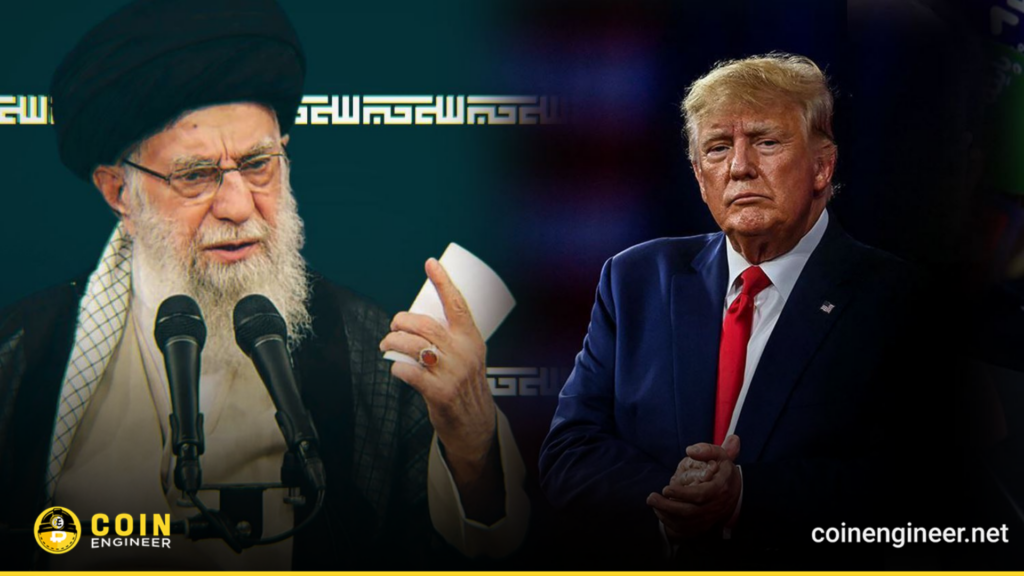
Saturday, the US and Israel launched their most ambitious operation in decades. The target was Iran’s Supreme Leader Ayatollah Ali Khamenei. The operation resulted in Khamenei’s death, and the region immediately escalated. At this point, the question arises: why did Washington go so far?
Why Is the US Attacking Iran?
Washington and Tel Aviv initiated this operation to permanently eliminate Iran’s nuclear weapons capabilities, limit the missile threat to American bases in the region, and trigger popular demands for regime change in response to human rights violations.
Nuclear Threat: Trump’s Red Line
In his video message, Trump repeatedly emphasized, “Iran can never possess nuclear weapons.” He claimed that June’s bombings had “obliterated” the program, but this week, he said Iran attempted to revive it:
“Just imagine how bold this regime would be if it truly possessed nuclear weapons to deliver its message.”
This is actually the core reason behind the US’s attack. June strikes were carried out because Iran had come very close to producing nuclear weapons. The UN’s International Atomic Energy Agency (IAEA) and US intelligence assess that Iran ended its nuclear weapons development in 2003. Tehran denies seeking nuclear weapons. However, Western powers argue that high-level uranium enrichment has no credible civilian justification, and the IAEA considers this a “serious concern.”
Cities in the Missile Range and Trump’s Red Line
Trump stated that Iran’s long-range missile program poses an increasing threat:
“They continue to develop long-range missiles that can now threaten our friends in Europe, our troops overseas, and eventually the American homeland.”
Notably, Iranian media claims the country has a missile capable of reaching the US. So the threat is both verbal and technical. The operational strike aimed to neutralize this threat.
American and Allied Security
Trump made the objective clear:
“We took this step to protect the American people and eliminate imminent threats from the Iranian regime. This regime is a very hard, vicious group of people.”
He reminded past incidents:
-
1979: US Embassy takeover, 444 days of hostage captivity
-
1983: Attack on US Marine barracks in Beirut, killing 241 American soldiers
-
Recent years: “Countless” attacks against US forces in the Middle East
-
Support for Hamas, which launched a deadly cross-border attack on Israel on October 7, 2023
Thus, the operation addresses not just the present, but accumulated past threats.
Protests and Human Rights
Trump said Iran suppressed protests violently:
“Tens of thousands were killed as they protested in the streets.”
The US-based HRANA group recorded 7,007 verified deaths and 11,744 under review. The Iranian government reported 3,117 deaths, confirming at least 5,000, including 500 security personnel.
This situation justifies, in part, the US’s emphasis on human rights violations. Regardless of exact figures, repression and deaths were significant.
Regime Change and Khamenei’s Death
In Tehran, Parliament Speaker Mohammad Bagher Ghalibaf said the US and Israel crossed a “red line” and vowed consequences. Israel’s citizens sought shelter, while Defense Minister Israel Katz confirmed that the army continues defensive operations.
Trump called on the Iranian people:
“The hour of your freedom is at hand. When we are finished, take over your government. It may be your only chance for generations.”
Scope of the Operation and Trump’s Stern Message
The target was not limited to Khamenei; Iran’s General Staff Chief Abdolrahim Mousavi was also killed in the strikes. Reuters sources confirmed that military strategy remains unchanged, continuing to target senior officials and missile infrastructure. On Sunday, Trump posted on Truth Social:
“Iran said they will strike hard today, but they better not. If they do, we will hit them with unprecedented force.”
Leadership Gap in Tehran and Regional Reverberations
Iran’s senior official Ali Larijani announced a temporary leadership council, acknowledging the power vacuum. Parliament Speaker Ghalibaf emphasized the red line breach and consequences, while state media accused the US and Israel of trying to plunder the country. Meanwhile, severe explosions reported in Dubai and Doha on Sunday show the operation’s effects have already spread beyond Iran’s borders.
For Trump and Israel, this attack represents a high-risk foreign policy step combining nuclear prevention, missile containment, protection of Americans and allies, human rights enforcement, and regime change goals. On the ground, however, reactions, Iran’s retaliation potential, and regional stability remain uncertain.
You can also freely share your thoughts and comments about the topic in the comment section. Additionally, don’t forget to follow us on our Telegram, YouTube, and Twitter channels for the latest news and updates.