

 Emre Yumlu
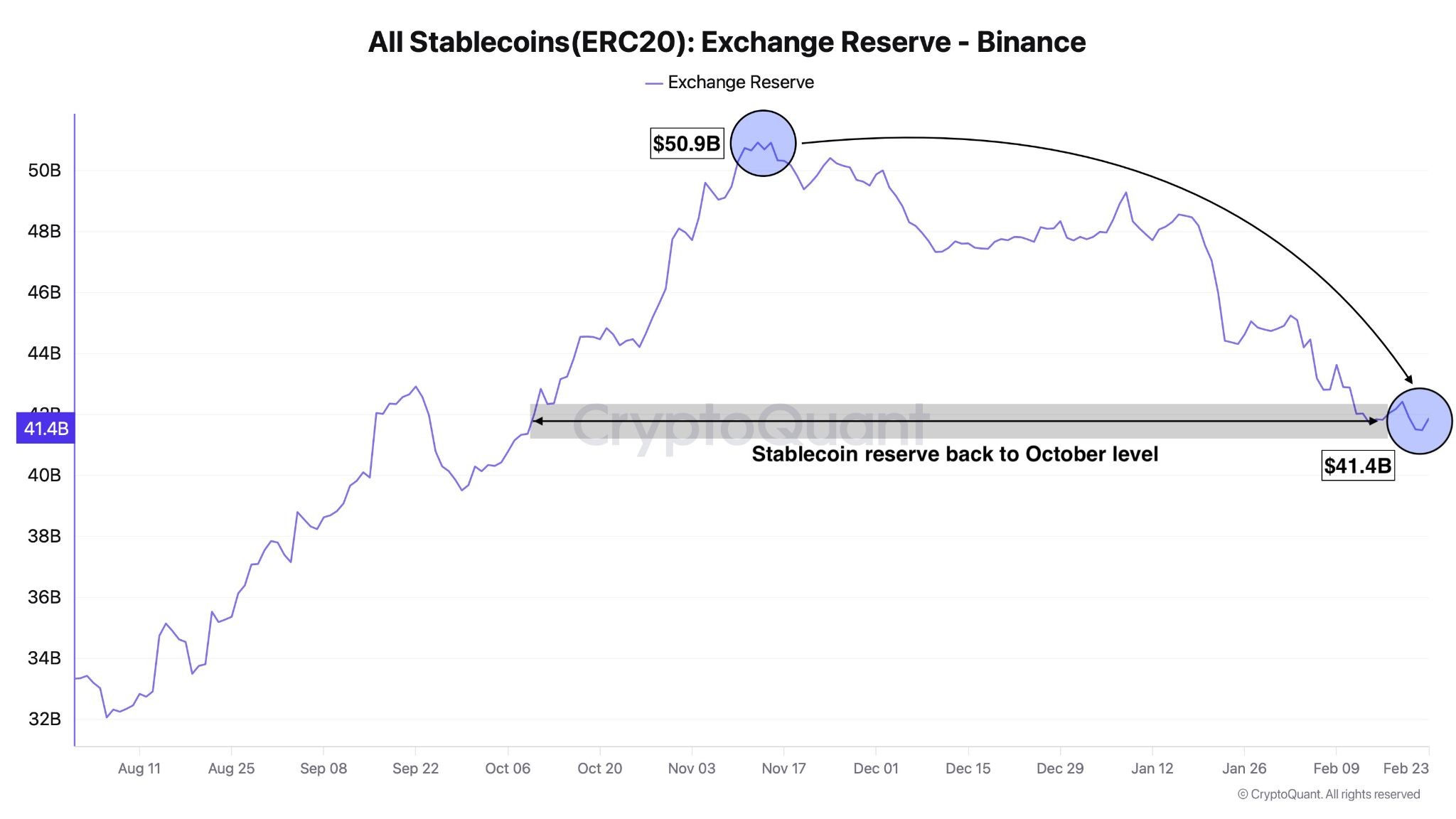
The ongoing liquidity squeeze in crypto markets is becoming increasingly visible in exchange data. Recent on-chain metrics show that stablecoin reserves on Binance, the world’s largest cryptocurrency exchange, have declined by approximately 18.6% since November. This contraction reflects shifting investor behavior and weakening capital flows across the broader digital asset ecosystem.
From $50.9 Billion to $41.4 Billion
In November, Binance held roughly $50.9 billion in stablecoin reserves. That figure has now fallen to around $41.4 billion, marking a decline of close to $10 billion in just three months. As a result, reserves have returned to levels not seen since October.
Stablecoin balances on exchanges are widely viewed as a proxy for deployable liquidity. Funds parked in stablecoins often represent “dry powder” ready to re-enter the market. When these balances shrink, it can signal that investors are either stepping to the sidelines or converting digital holdings back into fiat currencies.
Binance Still Dominates, But Signals Matter
Despite the decline, Binance continues to account for approximately 64% of total stablecoin reserves held across all cryptocurrency exchanges. That dominance underscores its central role in global crypto liquidity.
However, when a platform of this magnitude experiences a noticeable contraction in reserves, it becomes a development worth monitoring. A sustained reduction may suggest cooling demand, reduced trading activity, or a broader pullback in risk appetite.
Generally, falling exchange stablecoin reserves indicate that investors are withdrawing liquidity rather than positioning for near-term re-entry into crypto markets. This dynamic can contribute to softer price action and limit the strength of potential rebounds.
Total Stablecoin Market Caps Remain Flat
According to DeFiLlama data, the total stablecoin market capitalization has plateaued slightly above $300 billion since October. This follows two years of significant expansion, during which stablecoin circulation increased by roughly 150%.
The last major contraction occurred in mid-2022 following the Terra/Luna collapse, with recovery only gaining traction in November 2023—about 18 months later.
Fed Policy Adds Pressure
Crypto liquidity is also closely tied to U.S. monetary policy. At present, expectations for a rate cut in March remain low. CME futures markets indicate a 95.5% probability that interest rates will stay unchanged, limiting the likelihood of a near-term liquidity boost for risk assets.
Also, in the comment section, you can freely share your comments and opinions about the topic. Additionally, don’t forget to follow us on Telegram, YouTube and Twitter for the latest news and updates.