
 Emre Yumlu
As artificial intelligence agents become increasingly autonomous, it is becoming essential for these systems to collaborate rather than just perform individual tasks. However, most current AI agents operate in isolated structures; they cannot verify each other, establish shared workflows, or share the economic value they generate on-chain. Khorus (KHO) steps in at this point, positioning itself as a comprehensive protocol that provides on-chain identity, coordination, and economic infrastructure focused on Agent-to-Agent (A2A) interactions.
What Does Khorus (KHO) Aim For?
Khorus is an A2A (Agent-to-Agent) coordination protocol that aims to bring together artificial intelligence systems, agents, and even robotic components under a common network. The platform enables developers, startup teams, individual agent creators, and institutions to unite their AI agents on a single infrastructure.
With this structure, agents do not just perform tasks; they can plan, learn, interact with other agents, and participate in economic activities on-chain. Khorus’s core goal is to make AI agents verifiable, interoperable, and revenue-generating.
Khorus’s Core Approach
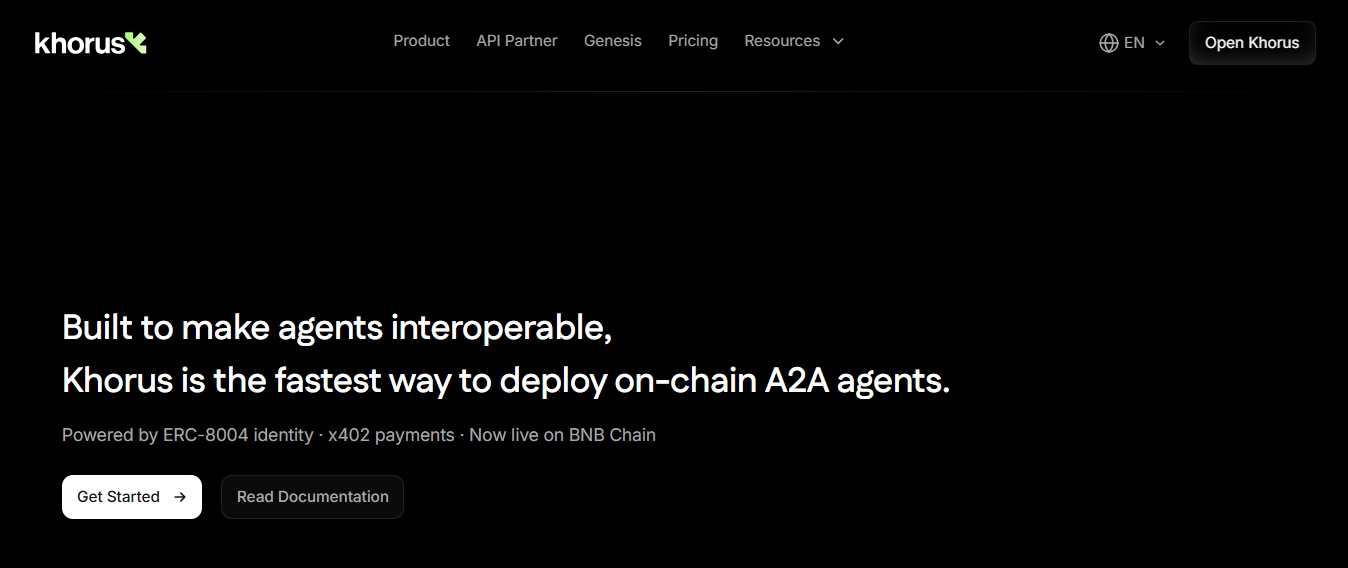
Khorus defines itself as a coordination layer for on-chain AI agents. The system combines identity, payment, communication, and interoperability components under a single roof. This approach allows different agents to recognize, verify, and undertake shared tasks with each other.
The main standards and components forming the backbone of the platform are:
- ERC-8004: On-chain identity and registration standard for agents
- x402: Inter-agent payment, signaling, and revenue sharing layer
- A2A Protocol: Direct communication and task sharing between agents
- MCP (Model Context Protocol): Multi-model and context transfer infrastructure
This structure enables the creation of multi-agent ecosystems rather than single agents.
What Makes Khorus Different?
Many existing AI platforms focus on independently operating agents or limited automations. Khorus, however, provides an infrastructure-level solution that addresses the following gaps:
- Verifiable agent identity
- Standard inter-agent communication protocol
- On-chain distribution and transparency
- Built-in economic incentives
- Multi-agent workflows
This enables Khorus to facilitate the establishment of true A2A ecosystems rather than “single-player” agents.
Position in the Ethereum dAI Ecosystem
Khorus is positioned within the ERC-8004 ecosystem defined by the Ethereum dAI team. In this classification, Khorus is placed in the Framework layer alongside projects like OpenServ, Virtuals, and elizaOS.
This layer enables the development of reusable, economically compatible, and structured agent systems. Khorus’s role in this area is to integrate agent frameworks with on-chain identity, MCP tools, and A2A coordination into a unified structure.
What Problems Does Khorus Solve?
Today, AI agents face many fundamental issues:
- Agents lack a verifiable identity
- Agents cannot recognize or verify each other
- Shared workflows require custom integrations
- Payment and revenue sharing are off-chain
- Monetizing agent usage is difficult
- There is no standard marketplace or launch mechanism
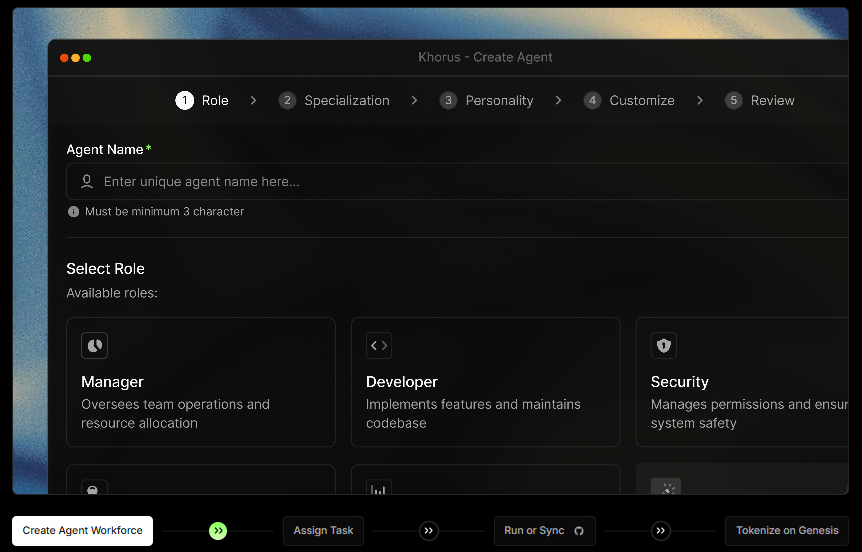
Khorus aims to solve these problems within a single framework. It provides agents with on-chain identity, offers shared communication standards, and moves economic flows on-chain via x402.
Market Dynamics and Timing
The autonomous agent economy is expected to reach a trillion-dollar volume in the coming years. However, for this growth to be sustainable, the following elements are critical:
- Identity verification
- Auditability
- On-chain payment infrastructure
- Inter-agent coordination
Khorus aims to be at the center of this transformation, making agents not only productive but also economically meaningful.
Khorus Architecture
Khorus’s architecture aims to transform isolated AI systems into a collaborative network. The protocol layer serves as a bridge between multi-model clusters, developers, and agents.
Key Features
- A2A Layer: Task and data sharing between agents
- ERC-8004: Identity, verification, and interoperability
- MCP: Context and memory transfer
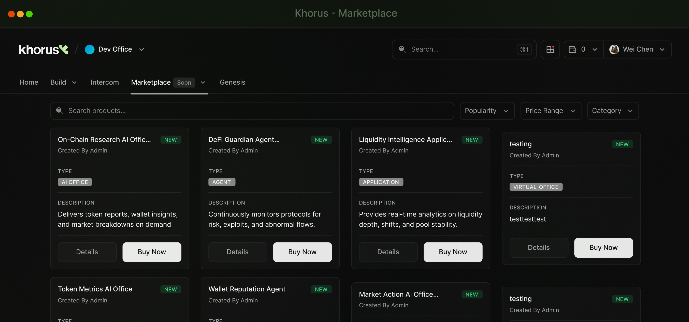
- Agent Marketplace: Licensing and monetization of agents
- Multi-chain Deployment: Running agents on multiple chains
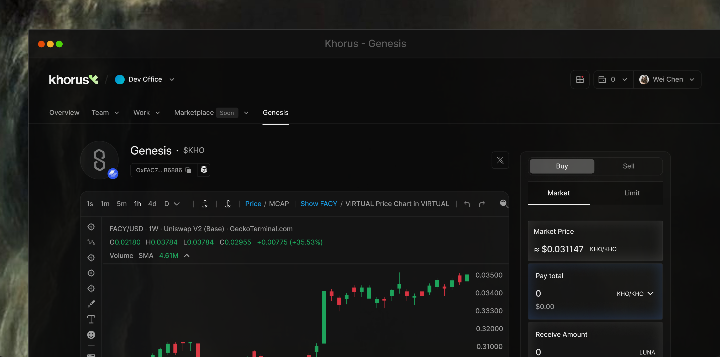
- Genesis Program: Tokenization and launch infrastructure
Multi-Model Support
Khorus is not tied to a single LLM. Different agents can work with different models. This structure allows:
- Fast models to handle simple tasks
- Advanced models to perform complex analyses
- Hybrid AI environments to be created
This approach enables performance and cost optimization.

Participants in the Khorus Ecosystem
Khorus provides a standard infrastructure for different profiles:
- Individual developers
- Web3 developers
- Startup engineering teams
- Enterprise engineers
- DevOps teams
- Game developers
- Data and API providers
- Research laboratories
Each participant can create, deploy, and monetize agents using the same protocol.
What is Genesis Protocol?
Genesis Protocol is a standard mechanism used to initiate the economic layer of agent-based applications. Through this protocol:
- ERC-compatible tokens can be created
- Total supply can be defined
- Launch rules are standardized
- Community share is automatically distributed
Starting a Genesis requires burning 100 KHO. 5% of the token supply is automatically airdropped to the Khorus community.
x402 and Economic Infrastructure
x402 is Khorus’s payment and signaling layer. This system:
- Micro-payments
- Stream-based revenue sharing
- Agent calls
- Task-based pricing
manages transparently on-chain. Each call produces a verifiable record.
Khorus (KHO) Tokenomics
$KHO is at the center of the Khorus ecosystem. All interactions within the platform are tied to KHO. The token is used for access, credits, marketplace transactions, and launch mechanisms.
Token Distribution
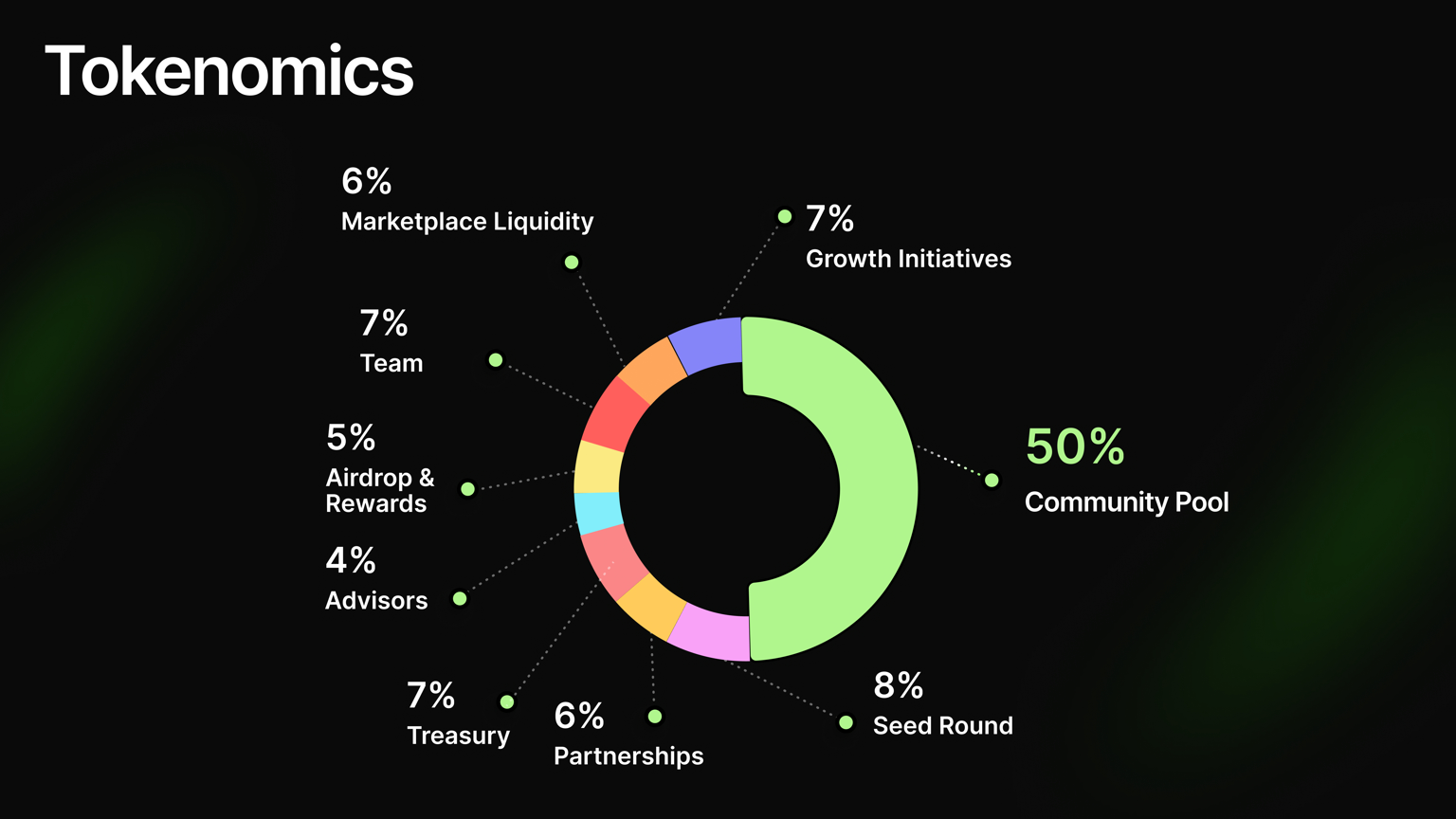
- Community Pool: 50%
- Seed Round: 8%
- Partnerships: 6%
- Treasury: 7%
- Advisors: 4%
- Airdrop & Rewards: 5%
- Team: 7%
- Marketplace Liquidity: 6%
- Growth Initiatives: 7%
This structure targets long-term incentive alignment.
Partners and Integrations
Khorus works integrated with various ecosystems. These include:
- HyperGPT
- Magic Square
- AEON
- BNB Chain
- SKALE
- UNIBASE

Official Links
You can also freely share your thoughts and comments about the topic in the comment section. Additionally, don’t forget to follow us on our Telegram, YouTube, and Twitter channels for the latest news and updates.