

 Yigit Taha OZTURK
The development of AI systems depends on high-quality, accurate, and ethically sourced data. However, generating, verifying, and sharing this data is problematic in centralized systems. This is where Tagger comes in.
Tagger is a Web3 infrastructure project that supports a decentralized data economy focused on AI. It brings data producers, verifiers, and consumers together on the blockchain, aiming to create a secure, transparent, and reward-based system.
What Tagger Offers
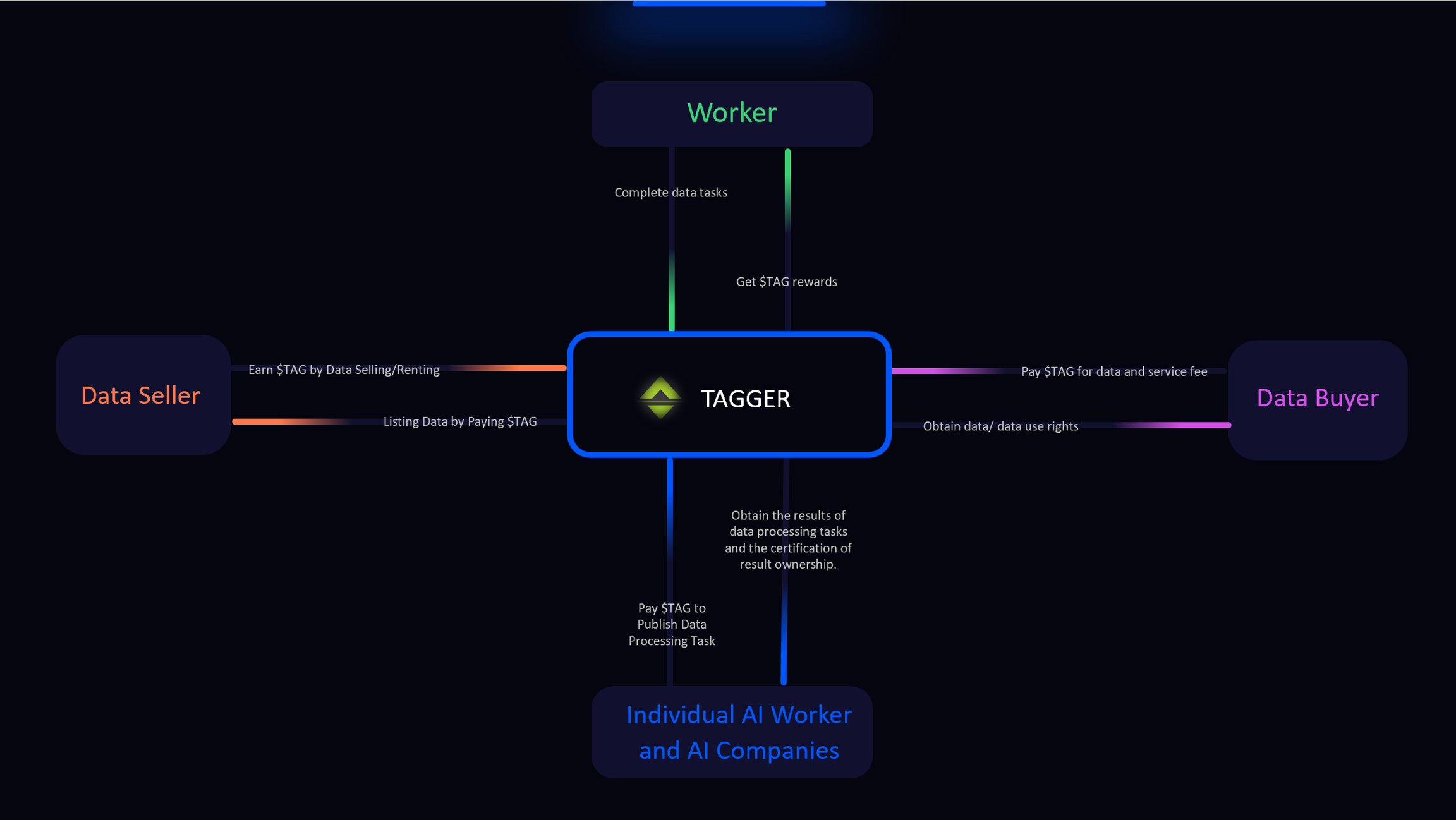
Tagger promotes quality data generation for AI systems. Participants collect, label, and verify text, image, video, or audio data. In return, they earn $TAG tokens. All data is represented as NFTs and can be traded transparently on the marketplace.
The platform comprises four main components:
- Data Verification Protocol: Enables NFT-based data ownership and traceability.
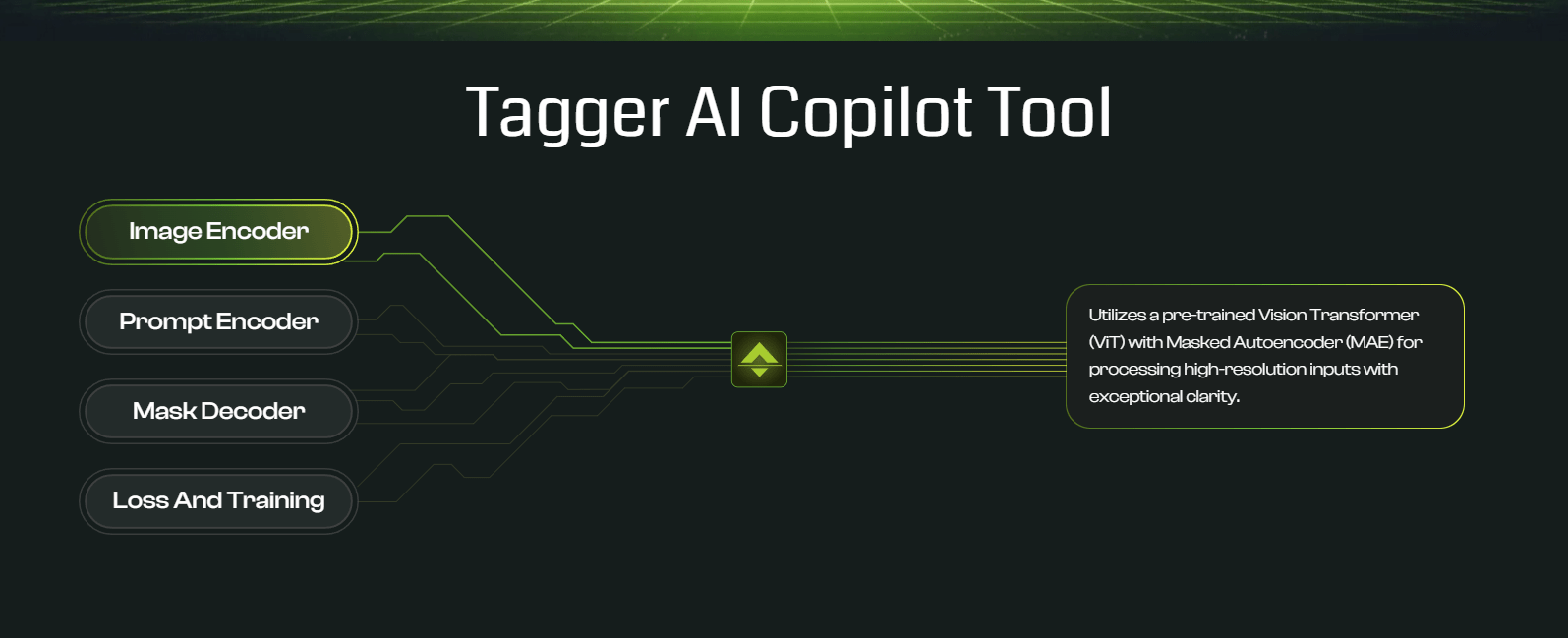
- AI Copilot: An AI-supported tool that assists users during data labeling.
- Tagger Marketplace: A decentralized marketplace where data can be bought or rented.
- Task System: AI companies define data needs, and participants complete tasks to earn rewards.
Who’s behind Tagger?
Founder Trevor Xu is a software engineer with previous success developing the Marsladder EdTech platform in Australia and has achieved Olympiad-level competitions.
Development lead Reagan Wu is a postdoctoral computer vision expert from Fudan University with experience at Huawei and Volkswagen.
Marketing lead Colton Zau has managed projects on OpenSea and Coinmarketcap.
You Might Be Interested In: Kraken-Backed Ethereum Layer 2 Launches INK Token to Rival Base
Additionally, the Tagger team includes over eight developers who consult and teach for the National Open‑Atomic Open Source Foundation.
Investors and Initial Funding
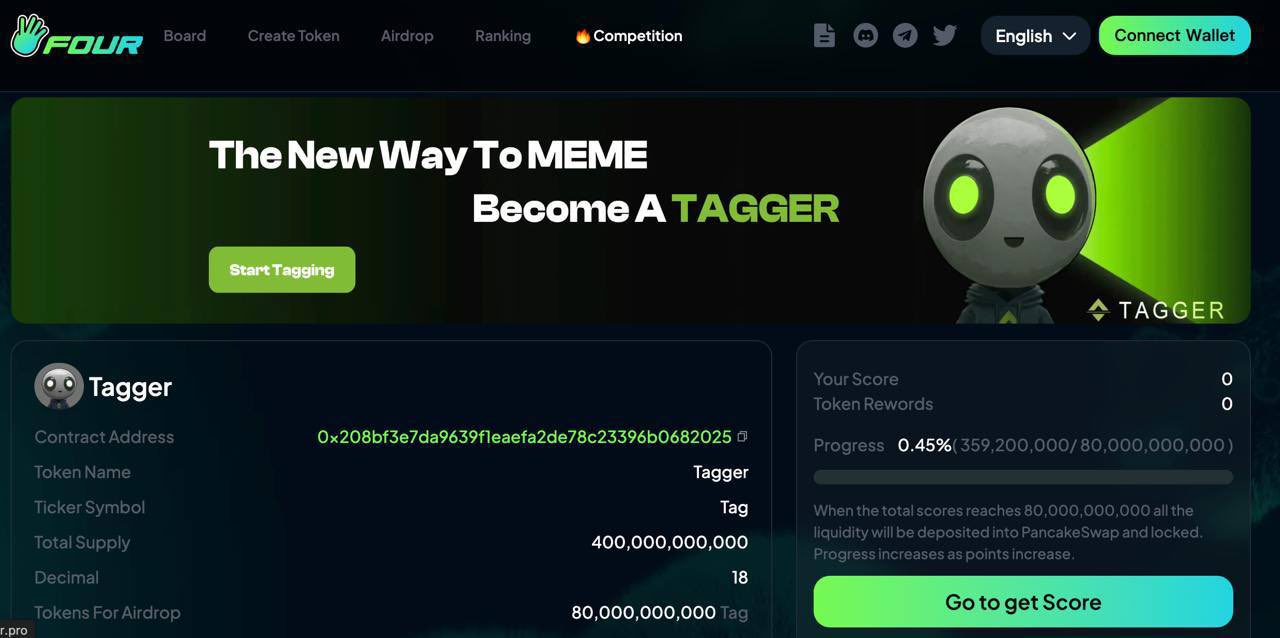
Tagger began with its own funds and completed a private funding round in Q1 2024. An experimental campaign via four.meme rewarded users with $TAG tokens for completing data labeling tasks—106,726 tasks worth $50,000.
What Is the $TAG Token and What Is It Used For?
$TAG is the native token of the Tagger ecosystem. Participants earn it by completing tasks. It’s also used to:
- Stake for task creation
- Purchase or rent datasets
- Access platform tools
- Support the platform’s economy
Token issuance relies on a Proof‑of‑Human‑Work model, and inflation is controlled using a halving mechanism.
Tagger ($TAG) Token Economics
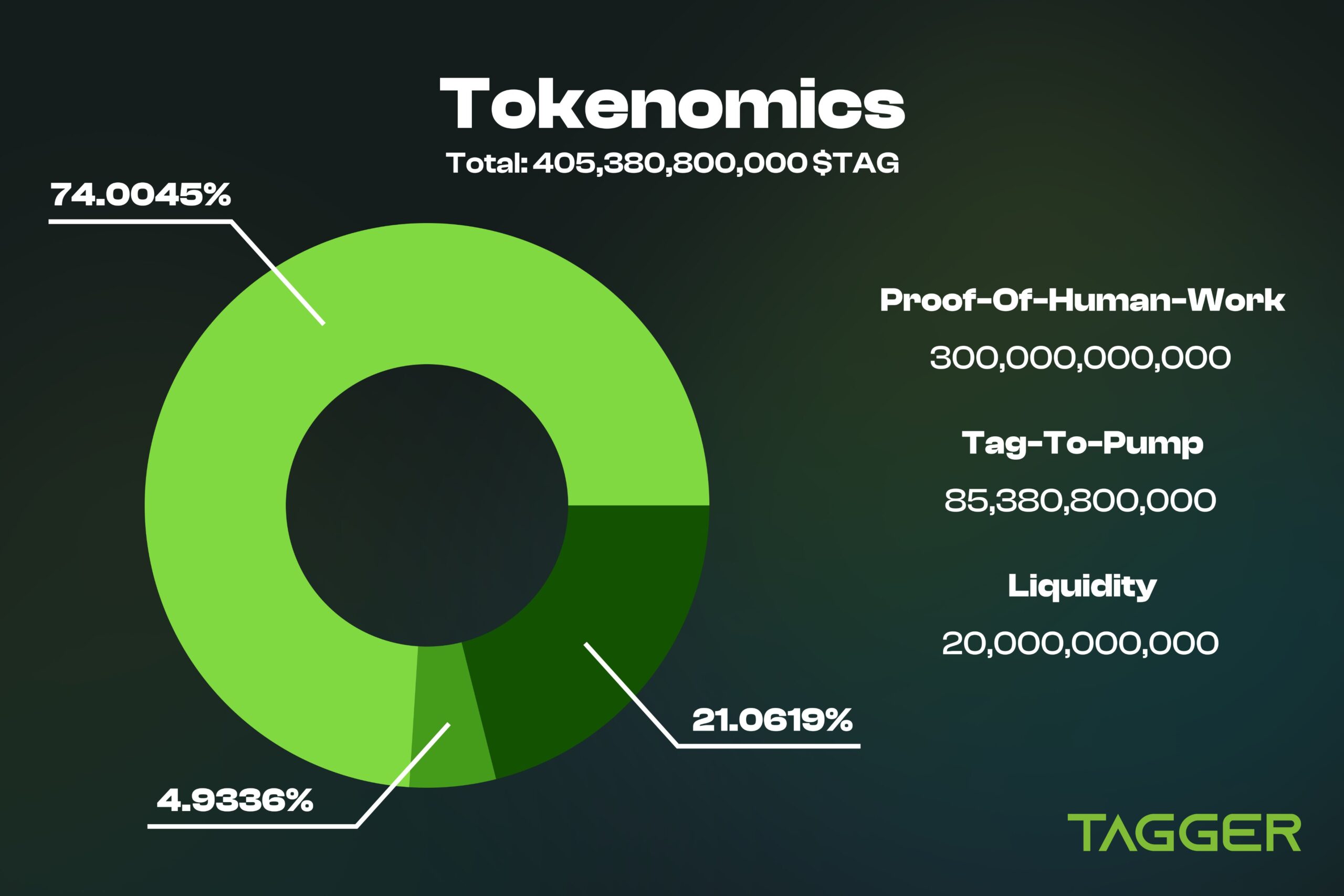
The total supply of $TAG is 405,380,800,000 tokens, and issuance is based purely on participant contributions.
$TAG can be used for staking, dataset purchases, software subscriptions, and AI model customizations. The distribution is:
- Proof‑of‑Human‑Work (74.00%): Participants complete tasks—like data labeling and review—to earn tokens. The system uses AI-based audits and human checks to ensure fair distribution.
- Tag‑to‑Pump (21.06%): Tokens distributed via four.meme as part of an experimental DeCorp campaign involving 106,726 labeling tasks.
- Liquidity (4.93%): 20 billion $TAG paired with $50,000 of BNB to provide initial liquidity on PancakeSwap.
A halving mechanism is embedded in the reward calculations. Each halving is triggered when the number of issued tokens equals the number remaining, reducing token issuance gradually to maintain scarcity and sustainability.
Roadmap
- 2023 Q4: Project design, market research, team assembly.
- 2024 Q1: System architecture, AI Copilot design, private funding completed.
- 2024 Q2: Data authorization protocol, labeling tool, IDE development.
- 2024 Q3: Platform launch, marketplace activation, internal testing.
- 2024 Q4: Community growth, incentive programs, social media engagement.
- 2025 Q1–Q2: Launch of hardware-based data collection devices and AGI-enabled smart contracts.
Ecosystem and Long-Term Vision
Tagger aims to transform the data economy through labor-based token issuance and transparent data ownership. Long-term goals include:
- Real-time data collection via hardware devices
- Industry-specific data protocols
- Open-source developer community
- AGI-integrated agent-based data workflows
Tagger plans to integrate Web3 and AI ecosystems by supporting these developments.
You can also freely share your thoughts and comments about the topic in the comment section. Additionally, don’t forget to follow us on our Telegram, YouTube, and Twitter channels for the latest news and updates.